



































Beyond the Text: How ASL Translation is Revolutionizing Media Accessibility for the Deaf Community

For decades, the standard for media accessibility has been static, tethered to the written word. Since the advent of closed captioning in the 1970s, the television and film industry has relied almost exclusively on text to bridge the communication gap for the Deaf and hard-of-hearing community. However, as modern research and advocacy groups have increasingly pointed out, text is not a universal solution. For the 430 million people living with hearing loss globally—including 34 million children—written captions often represent a secondary barrier rather than a gateway to content.
A pioneering partnership between streaming giants and the innovative platform SignUp Media is now shifting this paradigm. By integrating American Sign Language (ASL) directly into the viewing experience, this initiative is transforming how Deaf audiences, particularly children, engage with television and film.
The Core Innovation: Moving Beyond Subtitles
The fundamental issue with relying solely on closed captions is a matter of linguistics and developmental psychology. For a child who has not yet mastered written English, or for adults whose primary language is ASL, reading captions is an cognitively demanding process that often strips media of its emotional resonance.
"Those words go by so fast," explains Minneapolis-based translator Everett Glenn, who has become a prominent voice in this movement. "Captions are hard to sometimes match up with the emotion of what’s happening. I’m trying to figure out what they’re saying and reading it at the same time."
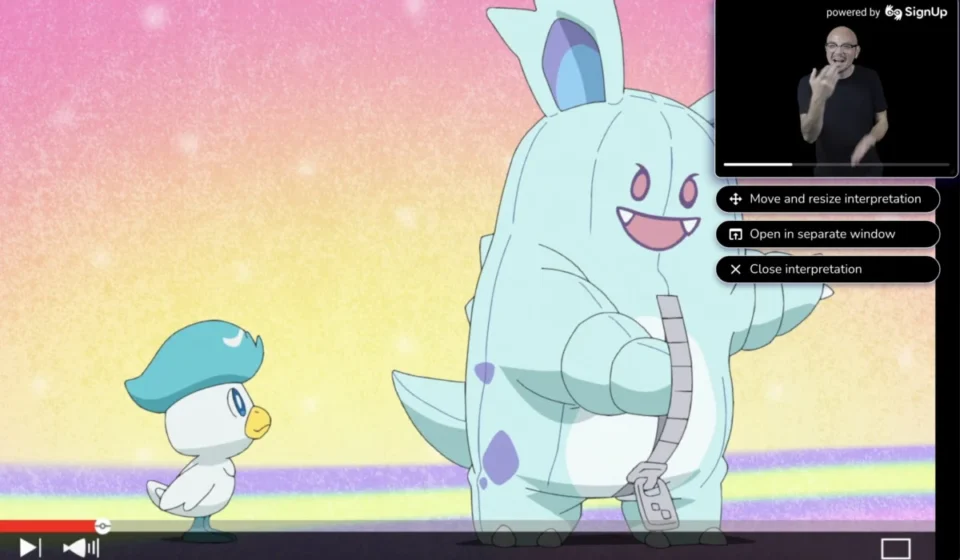
Glenn, a social worker and aspiring mental health therapist, understands this frustration intimately. As a Deaf individual whose native language is ASL, he recalls the fatigue of trying to keep pace with text during his own childhood. Today, he is working to eliminate that struggle for the next generation. Through a collaboration between SignUp Media and Netflix, Glenn is bringing stories to life through visual performance, appearing in a dedicated, on-screen window that allows viewers to experience dialogue, nuance, and character personality in their primary language.
A Chronology of Access: From Grassroots to Global Platforms
The journey toward this evolution in media began in 2021, driven by the vision of then-17-year-old Mariella Satow. Recognizing the lack of accessible content for Deaf youth, Satow founded SignUp Media with an initial library of just three translated titles.
The growth of the platform has been rapid, reflecting a massive, underserved demand. In just a few years, the service has expanded to serve over 25,000 monthly active users. The trajectory of the organization can be summarized as follows:
- 2021: SignUp Media is established by Mariella Satow; the initial library launches with three translated titles.
- 2022: The platform begins building its user base, emphasizing educational and family-oriented content.
- 2023: Everett Glenn joins the team as a lead translator, bringing his professional background in social work and his deep fluency in ASL to the table.
- 2024–2025: Strategic partnerships with major streaming platforms, most notably Netflix, are solidified.
- 2026: The collaboration sees a massive expansion, with over 70 movies and TV shows now featuring on-screen ASL, including major titles like Pokémon Horizons, Shang-Chi and the Legend of the Ten Rings, and The Grinch Who Stole Christmas.
Supporting Data: The Literacy Gap
The necessity of this shift is underscored by sobering statistics regarding education and language acquisition. Research indicates that the median literacy rate for Deaf high school graduates has stagnated at a 4th-grade level for over a century.
This is largely attributed to "language deprivation"—a term used by experts to describe the lack of consistent exposure to a language that is fully accessible during the critical early years of brain development. When a child is not provided with a fluent, visual language like ASL from birth, their ability to acquire a second, written language (like English) is significantly compromised.
By providing high-quality, engaging, and accessible content in ASL, platforms like SignUp Media are not just offering entertainment; they are providing vital linguistic nourishment. "There are a lot of problems in the Deaf community with language deprivation," Glenn notes. "This platform provides that [access] for so many kids."

The Art of Translation: Crafting Identity
The translation process for a project like Pokémon Horizons—which saw Glenn translate 45 hours of content—is far more than a simple conversion of words. It is an act of performance and cultural adaptation.
The Methodology of a Translator
Glenn’s process begins with an immersive viewing of the source material. He watches the episodes in their entirety to absorb the pacing and tone. Only then does he begin the painstaking work of deciding how to sign specific vocabulary and, more importantly, how to embody the characters.
"I figure out how I want to sign something, and what the meaning is behind some of the vocabulary," he explains. He uses a combination of expressive facial movements, shifting posture, and precise, intricate hand movements to convey character distinctiveness. This allows him to shift fluidly between multiple roles, providing a rich, multi-dimensional experience that text simply cannot replicate.
The Importance of Name Signs
One of the most complex challenges in translating serialized animation is the creation of "name signs." In the Deaf community, a name sign is a unique, identifying gesture that functions as a shorthand for a person’s name.
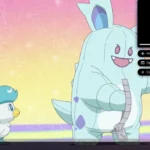
In a franchise like Pokémon, where there is a massive cast of characters, simply fingerspelling names would be tedious and impersonal. Glenn worked to develop unique sign names for the cast, often basing them on physical characteristics or personality traits. For the iconic character Pikachu, for example, Glenn developed a sign that incorporates the character’s dimples. These creative choices allow Deaf children to develop the same emotional connection and immediate recognition of characters that hearing children experience.
Implications for the Future of Media
The implications of this initiative extend well beyond the Deaf community. While the primary goal is to provide accessibility for those who need it, the platform has inadvertently become a valuable educational tool for hearing audiences. Many users report that watching content with an ASL translator is an intuitive and enjoyable way to learn the language.
A New Standard for Inclusivity
The success of the Netflix-SignUp Media partnership suggests that the "text-only" era of accessibility is coming to a necessary close. By treating ASL as a full-fledged, valid, and primary language—rather than a secondary accommodation—the industry is finally acknowledging the diverse ways in which humans consume information.
"Every generation figures out a way to do it better," says Glenn. His work represents a commitment to that principle. As he balances his professional pursuits as a mental health therapist with his work in media translation, he remains focused on the long-term goal: a world where language deprivation is a thing of the past and where every child, regardless of hearing status, has the opportunity to see themselves represented on screen.
Looking Ahead
As more streaming platforms recognize the success of these initiatives, it is likely that on-screen ASL will become an industry standard rather than a niche feature. The movement is gaining momentum, and as technology continues to lower the barriers to high-quality production, the potential for growth is immense.
For now, the thousands of families who tune in to watch Glenn sign the adventures of Ash Ketchum or the action sequences of Marvel films are part of a growing movement that is redefining what it means to "watch" television. They are moving away from the strain of decoding text and toward a more fluid, expressive, and human-centric way of consuming the stories that define our culture. In the words of Glenn, it is about more than just access—it is about the joy of language, the power of storytelling, and the right of every individual to participate fully in the shared narratives of our time.