




















































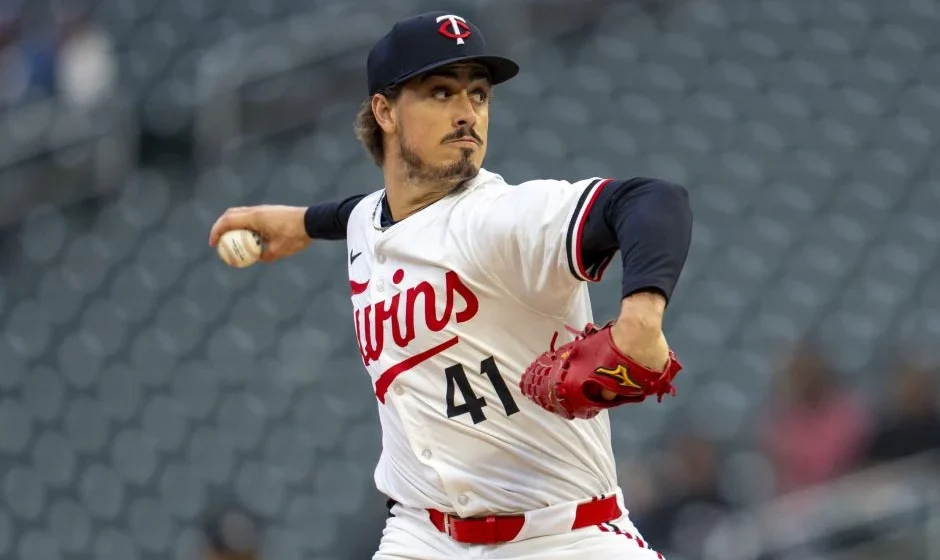

The State of the Union: Mediocrity in the Wild-Card Era
The current landscape of Major League Baseball, defined by its expanded wild-card format, has inadvertently created a breeding ground for professional stagnation. As the calendar flipped from June to July, the American League resembled a crowded, uninspiring traffic jam rather than a competitive pursuit of greatness. Of the 15 teams in the AL, a staggering nine failed to maintain a .500 winning percentage, painting a picture of a league-wide dip in quality that the Minnesota Twins have firmly embraced.
In the hunt for the third and final AL wild-card berth, five teams—all of them hovering around or below the .500 mark—remained within 4.5 games of one another. The Twins, a franchise currently navigating the choppy waters of organizational transition, are at the center of this mediocrity. For a fanbase still stinging from the disillusionment of the 2025 season’s “selloff” strategy, the current iteration of the Twins feels less like a contender and more like an unfinished experiment. Despite the arrival of a new manager, a new head of baseball operations, and a generational shift in leadership with Tom Pohlad stepping into the chairman’s seat, the atmosphere at Target Field remains decidedly muted.
A Chronology of Decline: From Playoff Hopes to Positionless Chaos
The trajectory of the 2026 Twins has been a study in volatility. The season began with a vision of versatility, but that vision has rapidly devolved into a chaotic game of musical chairs.
- Opening Day (Baltimore): The team fielded an infield core of Royce Lewis (3B), Brooks Lee (SS), Luke Keaschall (2B), and Victor Caratini (1B).
- Late June: A surge of fan interest—driven by a three-game set against the Los Angeles Dodgers—briefly masked the team’s structural issues. A crowd of over 105,000 attended the series, including a sellout for a Shohei Ohtani start. However, this proved to be an outlier.
- Early July: As the trade deadline looms on August 3, the roster reality has shifted. Lewis, Lee, and Keaschall are no longer playing their Opening Day positions. The constant reshuffling has hindered development and consistency, leaving the coaching staff to scramble for defensive stability.
The instability has been exacerbated by a series of crushing injury blows. The loss of ace Pablo Lopez to season-ending Tommy John surgery was the primary catalyst, but the cascading effects of Bailey Ober’s elbow inflammation and Ryan Jeffers’ fractured hamate bone have left the team without its spine. By attempting to bridge the gap with cost-effective, unproven youngsters and utility players, the front office has effectively bet on potential over stability—a gamble that has, thus far, failed to pay dividends.
Supporting Data: The Defensive Deficit
The most damning indictment of the 2026 Twins is not their record, but the way they play the game. According to Sports Info Solutions (SIS), the Twins entered July ranked dead last in Major League Baseball in Defensive Runs Saved (DRS). The numbers are stark: the team holds negative values at every defensive position save for center field.
The struggle to turn routine ground balls into outs is particularly alarming. While the MLB average for converting grounders into outs is 73.4%, the Twins sit at a dismal 69.9%. The positional breakdown reveals the depth of the crisis:
- Shortstop: The Twins’ unit posted a cumulative -15 DRS. Individually, Tristan Gray and Brooks Lee were tied for last among 112 qualified shortstops with a -7 DRS each.
- Second Base: Luke Keaschall, struggling with the transition to the middle infield, ranked 134th out of 136 players with a -6 DRS.
Manager Derek Shelton has frequently defended this “new-age” philosophy of positional flexibility, noting, “Very few players in the game today, unless you’re a superstar, play only one position. If you can play in the middle of the diamond, you can play anywhere.” While the sentiment holds weight in theory, the practical application has been disastrous. Unlike previous eras where players were granted full off-seasons and spring training cycles to learn new positions, the modern Twins are forced to learn on the fly during the heat of a division race.
Official Responses and Strategic Philosophy
Tom Pohlad, in his capacity as chairman and CEO, has maintained a consistent public stance: the club must win to remain relevant. However, the tension between this mandate and the fiscal realities imposed by the front office is palpable.
The front office finds itself at a philosophical impasse. The traditional, proven method of developing a player at one position and allowing them to master it has been abandoned in favor of a "plug-and-play" utility model. Critics argue that this creates a lack of defensive identity, as players like Keaschall (now in right field) and Lewis (at first base) are stripped of the comfort required to perform at an elite level.
The front office now faces the "Buy or Sell" dilemma. While calling up a prospect like shortstop Kaelen Culpepper—a standout from Class AAA St. Paul—offers a potential spark, it does not solve the fundamental issue of pitching depth. In a market where every contending team is starved for arms, the Twins’ ability to acquire help without gutting their future is limited.
Implications: The Moral and Financial Imperative
The path forward for the Twins is not necessarily through a fire sale, but through a radical pivot toward retaining and rewarding their own talent. With Byron Buxton locked in via a no-trade clause and expressing his commitment to the club, the focus must shift to the remaining pillars: catcher Ryan Jeffers and starting pitcher Joe Ryan.
The implications of trading these two assets are severe. Both players have reached a level of professional maturity that makes them invaluable in a clubhouse filled with prospects. Joe Ryan, at 30, has transitioned into a seasoned veteran capable of anchoring a rotation. His public willingness to hold the front office accountable—most notably his critique of the organization for letting Sonny Gray walk—proves he is invested in the team’s success, not just his own paycheck.
The Case for Retention
- Veteran Leadership: With youngsters like Walker Jenkins and Kaelen Culpepper approaching the big leagues, the presence of mentors like Jeffers and Ryan is non-negotiable.
- Market Value: Replacing quality starting pitching in free agency is exponentially more expensive and less reliable than extending a proven commodity.
- Restoring Trust: The fanbase has been subjected to a narrative of austerity and broken promises regarding the potential sale of the team. Extending these players would serve as a tangible signal that the “new” regime under Tom Pohlad is distinct from the past.
Conclusion: Defining the Pohlad Era
The Twins are currently caught in a cycle of “same act, different name.” The attendance figures, trailing last year’s pace by 30,000, serve as a clear barometer for the fans’ temperature. While promotions, happy hours, and live music can drive weekend ticket sales, they cannot replace the fundamental connection between a team and its community—a connection forged only through a commitment to winning.
As the August deadline approaches, the Twins have a choice. They can continue to view themselves as a small-market team forced to cycle through veterans like disposable goods, or they can invest in their internal core and signal a genuine desire to compete. The latter is not just a strategic decision; it is a moral one. For a franchise that has historically relied on the loyalty of its fans, the question is no longer about whether they can keep their stars—it is about whether they are willing to prove they deserve them. The era of Tom Pohlad is young, but the window to define it as something other than a continuation of the past is closing rapidly.