





















































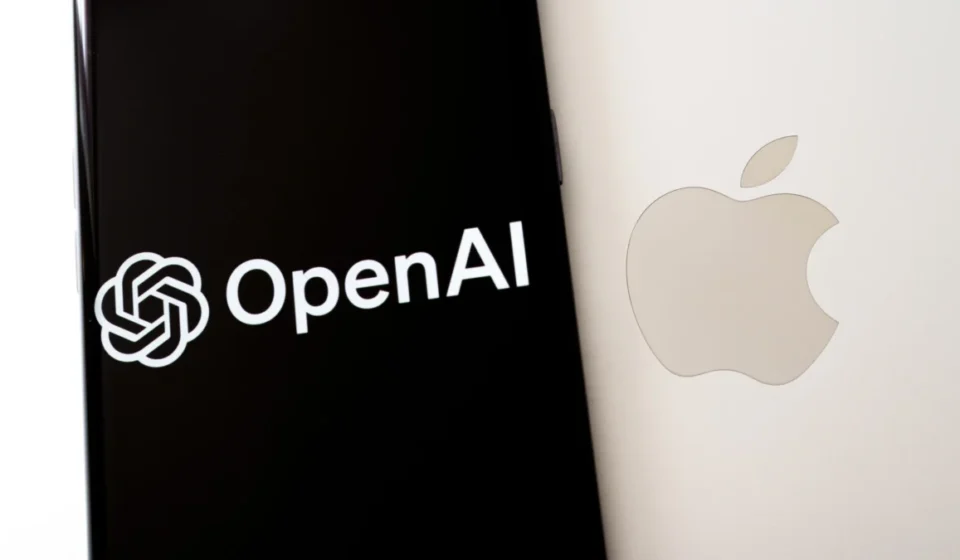
The Silicon Valley Siege: Why Apple and OpenAI Are Locked in a High-Stakes Legal Standoff

The intersection of artificial intelligence and hardware manufacturing has become the latest, and perhaps most volatile, battleground in the tech industry. Apple, a company synonymous with proprietary vertical integration, has launched an aggressive legal assault against OpenAI, alleging a systematic campaign of trade secret misappropriation. At the heart of the dispute is a fundamental question: When does aggressive recruiting cross the line into corporate espionage? As the legal proceedings unfold, the focus has shifted toward a procedural flashpoint—Apple’s demand for expedited discovery and OpenAI’s vigorous resistance.
The Core Allegations: A Treasure Trove Under Siege
The lawsuit, which has sent shockwaves through Silicon Valley, centers on claims that OpenAI—bolstered by a significant influx of former Apple employees—has engaged in a coordinated effort to harvest Apple’s intellectual property. Apple contends that its manufacturing process technology, developed over decades of iterative engineering and multi-billion-dollar investment, is being illicitly funneled into OpenAI’s nascent hardware initiatives.
Perhaps the most damning allegation involves an incident where OpenAI allegedly pressured a shared manufacturing partner to demonstrate proprietary Apple manufacturing processes. Apple views this not merely as a breach of contract, but as a deliberate attempt to gain an unfair competitive advantage by bypassing the research and development lifecycle that Apple has meticulously cultivated. From Cupertino’s perspective, these trade secrets are the "crown jewels" of its hardware division; to lose them is to lose the very differentiation that sustains the brand’s market dominance.
Chronology of a Corporate Conflict
The tension between the two firms has been building for months, characterized by a steady stream of talent migration and mounting suspicion.
- August 2023: A critical threshold, according to Apple’s legal filings. This date serves as the anchor point for the current discovery requests, marking the period when the alleged data exfiltration intensified.
- Early 2024: Former Apple Vice President for Product Design, Tang Tan, departs for OpenAI. His exit serves as a focal point for Apple’s accusations, with the company alleging that Tan and other high-level recruits facilitated the transfer of sensitive data.
- Mid-2024: Apple files its formal lawsuit, alleging "rotten to the core" practices at OpenAI regarding the acquisition of hardware-related trade secrets.
- August 2026: Apple moves to expedite the discovery process, arguing that every day of delay allows OpenAI to further integrate stolen knowledge into its proprietary hardware development, creating irreversible harm.
Supporting Data and the Burden of Proof
Apple’s demand for "expedited discovery" is not a request to be taken lightly in federal court. It entails a rigorous schedule of document production, forensic imaging of digital devices and cloud accounts, and a series of high-stakes witness depositions. Apple has requested that this process be compressed into a 30-to-50-day window, a timeline that would put immense pressure on OpenAI’s legal team and corporate operations.
The rationale behind this urgency is rooted in the "irreparable harm" doctrine. Apple’s legal team argues that if OpenAI is permitted to continue its current development trajectory using, as Apple alleges, "stolen information," the damage to Apple’s market position will become unrecoverable. In the context of hardware, once a manufacturing process is implemented and scaled, it is difficult to isolate the source of the knowledge—or "unwind" the competitive advantage gained.
OpenAI, for its part, has pushed back, characterizing Apple’s requests as overly broad, burdensome, and strategically designed to disrupt its business operations. OpenAI has specifically contested the scope of the discovery, suggesting that Apple should limit its inquiry to more specific timeframes and topics. Furthermore, OpenAI has maintained that its recruitment of Apple staff—which reportedly numbers around 400 individuals, including high-profile figures like Jony Ive—represents standard industry practice rather than a predatory raid.
Official Responses and the "Nothing to Hide" Paradox
The public and legal posturing of both companies reveals a stark divide in narrative. OpenAI’s defense has been twofold: first, that it is building an entirely new category of product that operates independently of Apple’s legacy technology; and second, that if Apple had truly wanted to protect its secrets, it should have implemented more robust security protocols.
This "blame the victim" defense has not sat well with observers or, by extension, the legal team at Apple. The philosophical quandary is simple: If OpenAI is truly building something from the ground up, as it claims, then the forensic discovery process should, in theory, vindicate them. By resisting the expedited timeline, OpenAI has inadvertently fueled speculation. If there is nothing to hide, why not provide the requested documentation and clear the air?
From a legal standpoint, however, the strategy is common. Even an innocent company may resist expedited discovery because of the sheer cost and the risk of "fishing expeditions," where a plaintiff uses the discovery process to uncover unrelated, yet potentially embarrassing, internal information.
Implications for the AI and Hardware Landscape
The outcome of this case will set a precedent for how AI companies interact with traditional hardware manufacturers. As the lines between software-defined AI and physical hardware continue to blur, the movement of talent between these sectors will only increase.
1. The Talent War
The sheer number of ex-Apple employees at OpenAI—estimated at nearly 400—highlights the intense competition for talent in the AI race. If courts begin to favor companies that argue for "inevitable disclosure" of trade secrets, it could stifle the free movement of engineers in Silicon Valley, creating a chilling effect on the labor market.
2. The Definition of Trade Secrets
This case forces a re-examination of what constitutes a "trade secret" in the age of AI. Is it the code? The manufacturing process? Or is it the "institutional knowledge"—the specific way a team solves problems—that employees carry in their heads? If Apple wins, it could establish that the methodology of manufacturing is as protected as the patent for a specific device.
3. The IPO Factor
OpenAI’s path to a potential IPO is currently clouded by this litigation. Investors are famously risk-averse, and a lingering lawsuit involving the theft of trade secrets is a significant liability. For OpenAI, clearing this hurdle quickly is not just a matter of legal strategy; it is a matter of corporate survival and valuation.
4. The Cupertino Perspective
For Apple, this is a matter of protecting its moat. The company has spent decades building a supply chain and manufacturing ecosystem that is the envy of the world. Allowing a competitor to "shortcut" the process by hiring away the architects of that system poses an existential threat to Apple’s long-term hardware strategy.
Conclusion: The Court of Law vs. The Court of Public Opinion
While the legal technicalities regarding discovery will be decided by a judge, the broader implications of the case are already being played out in the public sphere. OpenAI’s attempts to frame the lawsuit as a desperate move by an aging giant to stifle innovation are meeting resistance, particularly given the specific, evidence-backed claims Apple has presented regarding manufacturing partnerships.
As the case moves toward trial, the key to the resolution will lie in the forensic evidence. If Apple can prove that its internal processes were directly mirrored in OpenAI’s development pipeline, the company will likely secure a significant victory. Conversely, if OpenAI can demonstrate that its innovations are truly original, the lawsuit may be relegated to a footnote in the history of the AI gold rush.
For now, the standoff remains. Apple is digging in, demanding transparency and speed, while OpenAI is bracing for a long, drawn-out battle. In the high-stakes game of Silicon Valley, the only thing more valuable than the technology itself is the right to call it your own. Whether that right holds up in court remains to be seen, but one thing is certain: the era of "move fast and break things" is officially colliding with the reality of "protect your assets or lose them."