
















Adobe’s New Era: Anil Chakravarthy Named CEO as Tech Giant Pivots Toward the Age of AI Agents

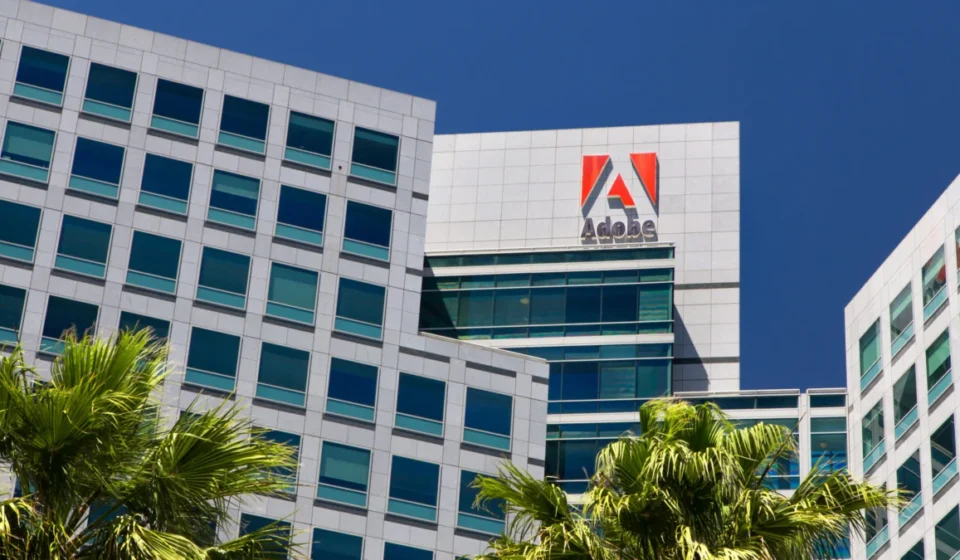
After a rigorous six-month search that captivated the technology sector and sparked intense speculation among Wall Street analysts, Adobe has finally unveiled its future leadership. In a move that signals a strategic recalibration toward customer experience and autonomous AI workflows, the San Jose-based software giant announced that Anil Chakravarthy, currently the president of Adobe’s Digital Experience business, will assume the role of Chief Executive Officer, effective December 1, 2026.
The transition marks the end of an era for the company. Shantanu Narayen, the architect of Adobe’s transformation from a boxed-software vendor to a cloud-native powerhouse, will step down after 18 years at the helm. Narayen will remain with the organization, transitioning into the role of Executive Chair, where he will continue to advise on high-level strategy and long-term vision.
The Chronology of a Leadership Transition
The roadmap to this transition began in earnest in early 2026. Below is the timeline of the events that led to today’s announcement:
- March 2026: Shantanu Narayen, having served as CEO since 2007, publicly announced his intention to step back from day-to-day operations. The announcement triggered an immediate internal and external search process led by the Adobe Board of Directors.
- Spring 2026: Market speculation reached a fever pitch. Analysts largely focused on internal candidates, with David Wadhwani, the highly regarded president of Digital Media, emerging as the clear frontrunner given his oversight of the business unit responsible for nearly 75% of Adobe’s total revenue.
- Summer 2026: The Board conducted an exhaustive evaluation of the company’s future needs. While Wadhwani’s track record in Creative Cloud and Document Cloud was stellar, the Board increasingly leaned toward a candidate who could bridge the gap between creative tools and the burgeoning "AI Agent" economy.
- September 3, 2026: Adobe officially confirmed the appointment of Anil Chakravarthy as the incoming CEO. Simultaneously, the company announced that David Wadhwani would be departing the firm, creating a significant reshuffle in the company’s executive hierarchy.
- December 1, 2026: The official date of the leadership handover, at which point Chakravarthy will take the reins and Narayen will assume the Executive Chairmanship.
Supporting Data: The Weight of the Portfolio
To understand why the choice of Chakravarthy is so significant, one must look at the structural composition of Adobe’s revenue and the shifting landscape of enterprise software.
Adobe’s business is traditionally bifurcated into two primary pillars: Digital Media and Digital Experience. Under the leadership of David Wadhwani, the Digital Media segment—which includes flagship products like Photoshop, Illustrator, and Acrobat—has been the engine of Adobe’s consistent growth, contributing approximately 75% of the company’s annual revenue.
However, the Digital Experience segment, led by Chakravarthy, represents the future growth vector for the company. This division focuses on customer experience orchestration, leveraging massive data sets to help enterprises personalize content at scale. As Adobe shifts its focus toward AI agents—autonomous software capable of executing complex marketing workflows without human intervention—Chakravarthy’s deep expertise in this domain became his strongest asset.
Investors are looking at a market where generative AI is no longer a novelty but a requirement. By elevating the leader of the Experience business, the Board is signaling to shareholders that they believe the next decade of value creation will be found in the integration of creative content with automated, data-driven delivery systems.
Official Responses and Internal Shifts
The announcement of the new CEO was accompanied by a bittersweet acknowledgement of the departures and transitions within the C-suite.
In a statement released via Business Wire, Adobe’s Board praised Narayen’s transformative tenure. "Shantanu has been the guiding force behind Adobe’s evolution into a digital powerhouse," the statement read. "His decision to move into the Executive Chair role ensures that we retain his strategic acumen while empowering a new generation of leadership to take the company into the era of AI agents."
For his part, Anil Chakravarthy expressed gratitude for the opportunity. "I am honored to lead Adobe into this next chapter," Chakravarthy noted. "We are at an inflection point where the lines between creativity and data are blurring. My priority will be ensuring that Adobe remains the indispensable partner for businesses and creators as they embrace the autonomous capabilities of AI."
The most significant friction point in this transition is the departure of David Wadhwani. In a heartfelt message posted to LinkedIn, Wadhwani addressed his exit, noting that while he had hoped to lead the company, he was proud of the legacy he left behind in the Digital Media segment. "Change is the only constant in technology," Wadhwani wrote. "I am proud of what we built, and I look forward to seeing how the company continues to innovate under Anil’s leadership."
Implications: The Age of AI Agents
The selection of Chakravarthy is not merely a change in personnel; it is a declaration of Adobe’s future roadmap. The "Age of Agents" refers to the shift from passive AI tools—where a user provides a prompt and gets an output—to active AI agents that can perform multi-step, complex operations across various software ecosystems.
1. Re-engineering Marketing Workflows
Adobe’s focus is now firmly on the "orchestration" of content. Companies are no longer satisfied with just creating a graphic; they need that graphic to be optimized for a specific audience segment, A/B tested, and deployed across social media channels automatically. Chakravarthy’s background suggests that Adobe will lean heavily into this end-to-end automation, potentially putting it in direct competition with enterprise-grade automation platforms.
2. The Talent Vacuum
The departure of David Wadhwani leaves a vacuum in the Digital Media division. Wadhwani was widely credited with the successful transition of Adobe’s creative suite to a subscription-based cloud model. The challenge for Chakravarthy will be to identify a successor who can maintain the momentum of Creative Cloud while navigating the potential cannibalization that generative AI might pose to traditional creative roles.
3. Wall Street and Shareholder Sentiment
Initial market reactions to the news have been cautiously optimistic. While the loss of a veteran like Wadhwani is viewed as a risk, the clear direction toward AI-driven enterprise solutions has provided a sense of clarity that investors often crave. The stock price has remained resilient as analysts digest the news, with many citing the need for a leader who understands the intersection of enterprise data and creative output.
4. Competitive Positioning
With this move, Adobe is positioning itself to stay at the center of the enterprise software stack. By moving away from the "creativity-only" narrative and toward a "creativity + data orchestration" model, Adobe is attempting to insulate itself from the rise of standalone generative AI startups. The bet is that enterprise clients will prefer a comprehensive, integrated suite of agents over a fragmented collection of point solutions.
Conclusion: A New Horizon
As December 1, 2026, approaches, the focus at Adobe will shift from the drama of the CEO search to the execution of its long-term AI strategy. Anil Chakravarthy inherits a company with a formidable balance sheet, a dominant market position, and a culture of innovation that has survived multiple technological paradigm shifts.
However, the pressure will be immense. The transition to an agent-led architecture requires not only technical prowess but also a cultural shift within the organization. Whether Chakravarthy can successfully navigate the integration of Adobe’s creative soul with its data-driven ambitions will define the next decade of the company’s history. For now, the transition represents a deliberate, albeit risky, evolution—one that mirrors the broader transformation of the global software industry in the face of the most significant technological disruption of the 21st century.