
























































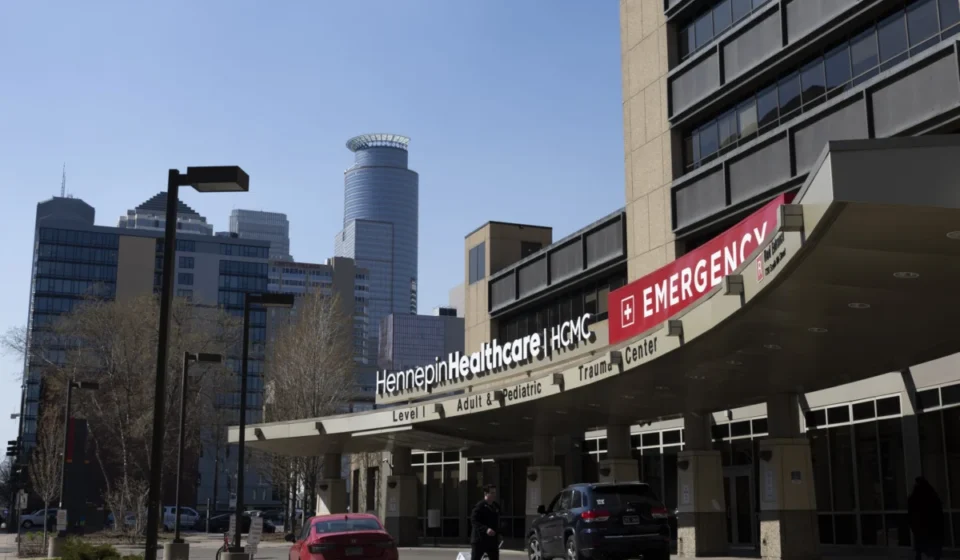

As the clock ticks toward the May 18 conclusion of Minnesota’s legislative session, the fate of Hennepin County Medical Center (HCMC)—the state’s premier safety-net hospital and busiest Level 1 trauma center—hangs in a precarious balance. Faced with a staggering projected deficit and the looming threat of closure, state lawmakers are engaged in a high-stakes legislative scramble, attempting to bridge the gap between emergency stopgap funding and long-term, structural financial reform.
The crisis at HCMC, a cornerstone of the Hennepin Healthcare system, has reached a fever pitch. With experts warning that the hospital’s collapse could trigger a regional healthcare catastrophe, the pressure on the Minnesota Legislature to finalize a rescue package has never been more intense.
The Financial Precipice: Why HCMC Is at Risk
HCMC occupies a unique and vital role in the Minnesota healthcare ecosystem. As a safety-net facility, it provides critical, often life-saving care to patients regardless of their insurance status or ability to pay. However, this commitment to the community has become a source of profound financial strain.
Internal projections recently shared with the Hennepin County Board’s budget committee paint a dire picture: the institution faces an estimated $1.7 billion in losses over the next decade. This shortfall is driven by a "perfect storm" of economic pressures:
- Uncompensated Care: The overwhelming majority of HCMC’s patient base relies on public insurance or has no coverage at all, leading to significant unreimbursed costs.
- Federal Policy Shifts: Impending cuts to federal Medicaid funding threaten to further erode the hospital’s revenue streams.
- The UCare Collapse: The recent shutdown of the Minnesota-based health insurer UCare left a massive $115 million hole in HCMC’s balance sheet, a debt that remains unpaid and complicates the hospital’s ability to manage day-to-day operations.
Hennepin County Commissioner Angela Conley has issued a stark warning: if the legislature fails to provide a viable financial lifeline, the hospital could begin the process of shutting down as early as June. The financial cost of such an event—not to mention the human cost—is estimated at $100 million just to execute the closure, a prospect that has sent shockwaves through the Capitol.
Chronology: From Warning Signs to ‘Red Alert’
The road to the current legislative standoff was marked by a series of escalating warnings:
- Early 2026: Financial audits and internal reports began signaling that the $1.7 billion decade-long deficit was not just a theoretical risk but an impending reality.
- March 2026: The Hennepin County Board of Commissioners formally reviewed the catastrophic financial projections, setting the stage for urgent advocacy at the State Capitol.
- April 2026: The situation moved from the boardroom to the public sphere. Legislative proposals began to surface, and stakeholders intensified their lobbying efforts.
- April 21, 2026: National Nurses United (NNU), the nation’s largest registered nurse union, formally placed HCMC on "Red Alert." In a press statement, the union emphasized that the potential closure would have a "drastic, irreversible impact" on patients and healthcare workers across the entire Midwest.
- Late April 2026: The Senate Health and Human Services committee passed a major budget bill, signaling the first legislative movement toward stabilization.
Legislative Solutions: The Debate Over Tax and Spend
The primary vehicles for saving HCMC currently reside in two competing tax bills, both of which propose modifying the 2007 Hennepin County sales tax—originally established to fund the Minnesota Twins’ Target Field—to generate revenue for the hospital.
The Senate Approach: The "Modest" Path
Authored by Sen. Ann Rest (DFL-New Hope), the Senate bill (SF 4986) proposes increasing the current 0.15% sales tax to 0.25%. A Department of Revenue analysis suggests this would generate roughly $84 million annually. Under this plan:
- $50 million would go to HCMC.
- $21 million would be allocated to North Memorial in Robbinsdale for uncompensated care.
- $9 million would be earmarked for Target Field improvements.
- $4 million would support county libraries and youth programs.
Sen. Rest has defended this approach, arguing that while any tax increase is regressive, a smaller hike is more "absorbable" for the average taxpayer.
The House Approach: The Aggressive Investment
The House bill (HF 4841), co-authored by Rep. Danny Nadeau (R-Rogers) and Rep. Esther Agbaje (DFL-Minneapolis), takes a much more aggressive stance. It proposes a 1% sales tax rate, which would generate an estimated $337 million annually. Under this proposal, HCMC would receive over $300 million, with smaller portions diverted to North Memorial and ballpark upkeep.
The "Shot in the Arm": One-Time Funding
Recognizing that systemic change takes time, the Senate is also pursuing a one-time emergency funding bill (SF 4612), authored by Sen. Melissa Wiklund (DFL-Bloomington). This bill proposes nearly $300 million in "stabilization funding," with $150 million dedicated specifically to HCMC and $114.8 million for a broader state hospital relief program.
Official Responses and Strategic Disagreements
The legislative process is currently defined by a tension between the need for immediate cash and the desire for long-term reform.
Senator Melissa Wiklund has been vocal about the limitations of short-term fixes. "I’ve been clear that one-time support alone won’t solve the underlying problem," she stated. She views Senator Rest’s tax proposal as a necessary step toward addressing the systemic issue of uncompensated care, which she predicts will only worsen under federal Medicaid cuts.
Representative Danny Nadeau highlighted that the path forward is complicated by more than just the tax rate. "Many discussions in the Legislature revolve around HCMC’s governance structure and the hospital’s shaky financial track record," he noted, suggesting that legislators are looking for accountability in exchange for taxpayer dollars.
Commissioner Jeffrey Lunde remains a pragmatic voice in the negotiations. As chair of the Hennepin Health Board, he has been central to the coalition of county officials pushing for bipartisan support. "Getting a bill on the table is really important," Lunde observed. "People undersell that… but if you can’t get a bill on the table, you got nothing to work with."
Implications: A Regional Healthcare Crisis
The implications of HCMC’s failure extend far beyond the borders of Minneapolis. As a Level 1 trauma center, HCMC is the definitive destination for the most severe injuries and complex medical cases in the state.
The Humanitarian Impact
If HCMC were to close or severely scale back its services, the "safety net" would evaporate. Thousands of patients who rely on the hospital for primary, specialty, and emergency care would be forced to seek services elsewhere. Surrounding hospitals—already operating at capacity—would likely be overwhelmed by the influx, leading to longer wait times, delayed care, and increased mortality rates across the region.
The Governance and Policy Shift
The legislative focus on "governance structure" suggests that this crisis will lead to a new era of state oversight for the hospital. Lawmakers are not merely interested in writing a check; they are interested in ensuring that HCMC’s financial management is modernized. The potential for a surcharge redirection, as proposed in other House bills, indicates a desire to move toward a more collaborative, cross-system funding model where profitable hospitals help subsidize the essential work of safety-net facilities.
A Test of Bipartisanship
The current situation is a litmus test for the Minnesota Legislature. With the May 18 deadline looming, the ability to reconcile the $84 million versus $337 million tax proposals, while balancing the demand for immediate, one-time emergency relief, will define the session’s legacy.
As Sen. Rest noted, there is a sense of cautious optimism among those at the negotiating table. "I sometimes get discouraged, but I think we’re going to come through," she said.
For the staff, patients, and residents of Hennepin County, the stakes could not be higher. Whether through a modest tax adjustment or a sweeping investment, the consensus at the Capitol is shifting toward a realization that the cost of inaction—the loss of a critical, irreplaceable medical institution—is a price Minnesota simply cannot afford to pay. As negotiations enter the final stretch, the eyes of the state remain fixed on the Capitol, waiting to see if a deal can be reached before the doors of the hospital are forced to close.