
























































The EU’s Digital Markets Act Crackdown: Google, AI Interoperability, and the New CISO Paradigm

The landscape of digital competition in Europe has shifted dramatically. In a landmark move signaling a new era of regulatory enforcement, the European Commission has issued two definitive rulings against Google, directly invoking the powers of the Digital Markets Act (DMA). By mandating unprecedented levels of interoperability for the Android operating system and requiring the sharing of proprietary search data, Brussels is effectively dismantling the "walled garden" architecture that has defined Google’s market dominance for over a decade.
While the primary battle is legal and economic, the ripple effects are being felt in the deepest corridors of corporate IT. For Chief Information Security Officers (CISOs), these rulings represent more than just a change in antitrust policy; they signify a fundamental breakdown of the "containerized" security models that have protected enterprise data for years.
Chronology: The Road to the DMA Mandates
The European Union’s pursuit of "fair and open" digital markets has been a long-gestating project. The journey to the recent rulings can be traced through several key milestones:
- December 2020: The European Commission proposes the Digital Markets Act, aiming to curb the gatekeeper power of Big Tech companies.
- November 2022: The DMA officially enters into force, establishing a framework for regulating platforms like Google, Apple, and Meta.
- September 2023: The Commission designates six "gatekeepers," including Alphabet (Google), subject to strict interoperability and data-sharing obligations.
- Early 2024: Formal investigations into Google’s compliance with DMA Article 6—which focuses on self-preferencing and interoperability—begin in earnest.
- October 2024: The Commission issues its formal guidance and rulings, explicitly ordering the opening of Android to third-party AI assistants and the release of proprietary search data to competitors.
The Core Mandates: Breaking the Walled Garden
The European Commission’s directives are twofold, each targeting a different pillar of Google’s ecosystem.
1. Opening the Android OS to AI Agents
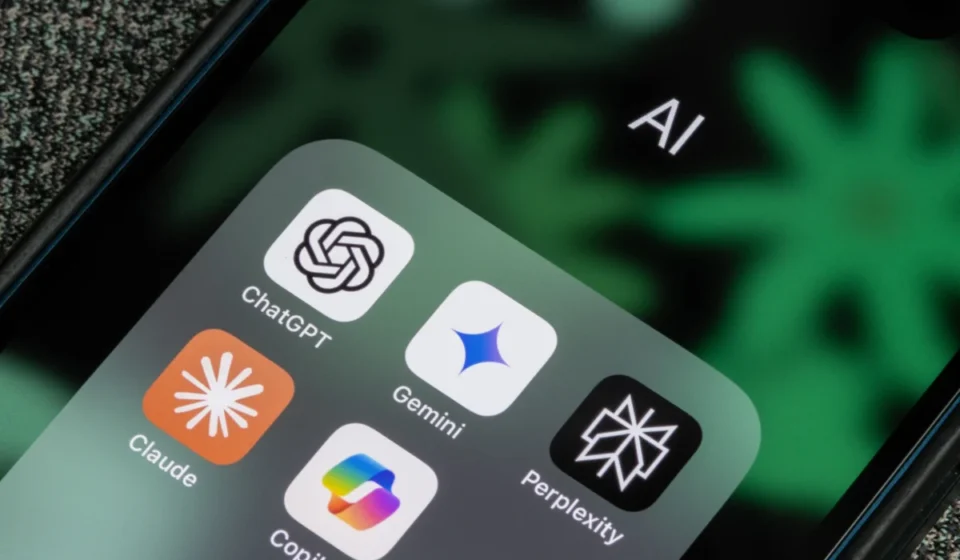
Historically, Google has maintained tight control over how AI assistants—most notably its own Gemini—interact with the Android operating system. By integrating its AI deeply into the OS, Google ensured that Gemini had privileged access to screen context, background services, and system-level APIs. The EU’s new ruling mandates that Google must provide third-party AI developers with the same level of access. The goal is to prevent Google from using its control over the OS to favor its own AI tools at the expense of emerging competitors.
2. The Democratization of Search Data
Perhaps more controversial is the mandate to share search data. Google’s search engine operates on a feedback loop: more queries lead to better data, which leads to better results, which in turn attracts more users. The Commission has argued that this cycle creates an insurmountable barrier to entry for smaller search engines. By forcing Google to share "click-and-query" data, the EU hopes to level the playing field, allowing smaller, privacy-focused search engines to train their own algorithms on a scale previously reserved for the industry titan.
Supporting Data: Market Concentration and Regulatory Logic
The regulatory logic behind these moves rests on the sheer scale of Google’s footprint. Current market data suggests that Google Search retains a market share of over 90% in Europe, while Android holds a similarly dominant position in the mobile operating system market.
According to the European Commission’s findings, the "network effect"—where the value of a service increases as more people use it—has reached a point where competition is no longer possible through traditional market forces. The Commission’s guidance suggests that without regulatory intervention, the "AI-search integration" would cement Google’s dominance for the next generation of computing.
However, the cost of this intervention is a matter of intense debate. Economists note that while interoperability can stimulate innovation, it can also lead to "lowest common denominator" security standards, where the weakest link in an integrated ecosystem becomes the primary point of failure for all users.
Official Responses: A Clash of Perspectives
Google’s response was swift and uncompromising. Kent Walker, President of Global Affairs at Google, utilized the company’s official blog to frame the decision not as a victory for competition, but as a risk to the digital safety of European citizens.
"Today’s decisions risk undermining vital privacy and security guardrails for millions of Europeans," Walker wrote. "We have repeatedly offered solutions to safeguard users while satisfying the DMA’s goals, but these rulings discount extensive evidence of user harm."
Google’s argument centers on the concept of "system integrity." By forcing the OS to grant broad, system-level access to external third-party AI agents, Google contends that the Commission is effectively asking them to open the "front door" of the user’s device to unknown or potentially malicious third-party actors. From Google’s perspective, the "walled garden" wasn’t just a business strategy—it was a security framework.
The CISO’s Dilemma: A New Security Paradigm
For enterprise security leaders, the implications are profound. Roman Stanek, CEO of Good Data AI, argues that the EU’s move inadvertently creates a massive new attack surface for corporate environments.
The Breakdown of the "App Box" Assumption
"Enterprise security has always leaned on a simple assumption," Stanek explains. "The assumption is that apps are boxes, and the OS decides what crosses the box. You have an email app, a browser, and a calculator, and the OS manages the permissions for each. But once you introduce multiple AI agents that have equal, system-level reach, the ability to read screen context, and the power to perform cross-app actions, that assumption breaks."
From App Permissions to Agent Governance
Under the current model, a CISO might restrict a malicious app from accessing sensitive data. However, if a user authorizes an AI assistant to "assist" them with their workflow, that assistant could potentially act as a "man-in-the-middle" between the user and their enterprise data.
"CISOs need to stop treating ‘AI assistant’ as a single, well-understood permission," Stanek notes. "They must start treating it as a category risk. You have to govern it like you govern app stores and Mobile Device Management (MDM) policies today."
Strategic Shifts for the Enterprise
To mitigate these risks in a post-DMA environment, CISOs should consider several strategic adjustments:
- Device-Level Agent Policies: Move beyond simple app whitelisting. Implement policies that specifically identify which AI agents are permitted to hold system-level permissions.
- Context-Aware DLP: Traditional Data Loss Prevention (DLP) tools monitor file movement. Modern DLP must evolve to monitor "agent behavior"—detecting when an AI assistant is reading, summarizing, or acting upon enterprise-sensitive data in the background.
- Conditional Access Evolution: Access rules should no longer be based solely on user identity or device posture. They must now incorporate "agent context." If an AI assistant is active on the device, the security policy should dynamically restrict access to high-sensitivity databases.
Conclusion: The Long-Term Outlook
The European Commission’s rulings represent a bold experiment in digital regulation. While the intention is to foster a more competitive market for AI and search, the side effects will require a significant re-architecting of enterprise security.
As Google navigates the legal challenges to these rulings, CISOs are left to bridge the gap. The era of the "secure, closed system" is fading, replaced by a more fragmented, interoperable, and inherently riskier digital landscape. For the security professional, the message is clear: the responsibility for safety is shifting from the platform provider to the end-user organization. In this new reality, governance over AI agents is no longer an optional security layer—it is the new front line of defense.