





















































Also, the Rivian Spinoff, Finally Hits the Road: A Deep Dive into the High-Stakes Launch of the TM-B

After months of mounting customer frustration, opaque supply chain hurdles, and the intense pressure of transitioning from a corporate skunkworks project to an independent entity, Also—the micromobility startup born from the vision of Rivian CEO RJ Scaringe—is finally moving its first product to the consumer.
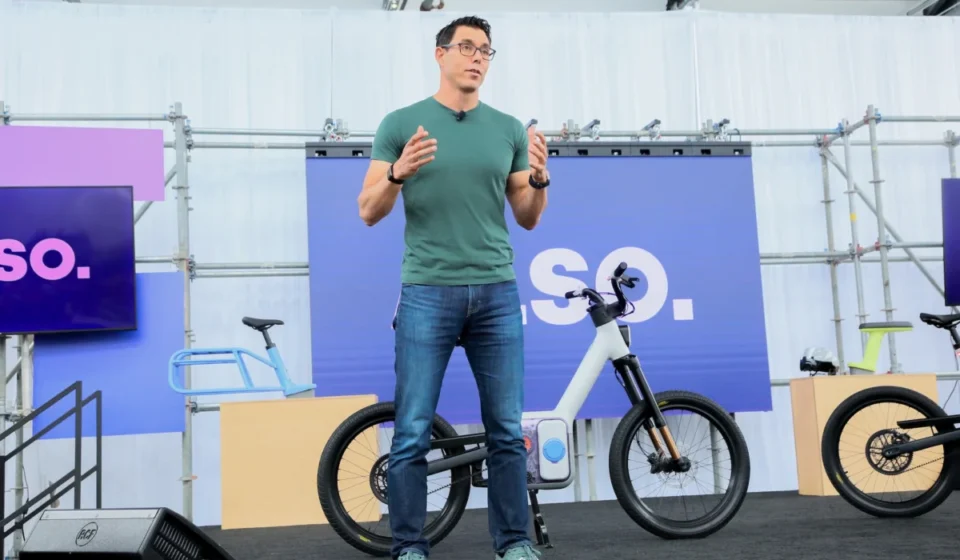
The company confirmed to TechCrunch this past Friday that it has officially begun shipping the “Launch Edition” of its flagship TM-B e-bike. The $4,500 premium vehicle is currently en route from its manufacturing facilities to a central distribution hub in the United States. Following a series of delays that pushed the original “Spring 2026” delivery window deep into the summer, the startup now projects that all Launch Edition units will reach their owners between early August and September.
The Genesis: From Rivian Skunkworks to Independent Startup
The story of Also is inextricably linked to the ambition of Rivian, the electric vehicle giant known for its rugged, adventure-ready trucks and SUVs. In 2022, Scaringe, looking to expand his brand’s footprint into the “outdoorsy” lifestyle market, initiated a secret project within the company to explore the potential of high-end, modular e-bikes.
This was not a casual endeavor. Recognizing the need for a design language that matched the sophistication and durability of the Rivian brand, the team engaged LoveFrom, the legendary design firm helmed by former Apple design chief Jony Ive. The collaboration helped establish the sleek, modular aesthetic that would eventually define the TM-B.
By March 2025, the project had grown enough to warrant its own identity. Rivian officially spun out the entity as “Also,” securing $105 million in venture capital funding led by Eclipse. The move signaled a strategic pivot: Rivian would focus on its core four-wheeled electrification efforts, while Also would pursue the broader, burgeoning field of micromobility with the backing and pedigree of its parent company.
A Chronology of Delays and Execution
The road to the first delivery has been anything but smooth. When the TM-B was unveiled in October 2025, it was marketed as a high-end, versatile vehicle designed for both urban commuting and trail riding. The initial promise of a Spring 2026 delivery date created significant hype, but the realities of global manufacturing soon took hold.
- October 2025: Also reveals the TM-B to the public, setting a price of $4,500 and a “Spring 2026” ship date.
- Early 2026: The startup begins navigating the complexities of independent procurement and assembly.
- June 2026: The company issues a formal update on its support portal, admitting that its spring timeline is no longer feasible. The culprit, according to the startup, was a “rapid, industry-wide spike in demand for raw materials and electronic components.”
- July 2026: As the end of the month approached, the lack of definitive tracking information fueled a firestorm of customer complaints on social media platforms, specifically the r/ALSOmicromobility subreddit.
- August 2026: The company confirms that shipments are finally moving from the factory to U.S. warehouses, aiming for a full fulfillment window by the end of September.
The Supply Chain Conundrum
The primary challenge cited by Also throughout this ordeal has been the fragility of the global supply chain. In its June statement, the company noted that “current stress on global supply chains” had severely impacted its ability to meet the original manufacturing ramp-up schedule.
However, the lack of transparency regarding specific components has left analysts and customers speculating. While Also has steadfastly refused to name the specific parts causing the bottleneck, the industry has seen widespread shortages ranging from specialized battery management system (BMS) chips to high-grade aluminum and carbon fiber components.
For a startup, these delays are not just logistics issues; they are existential tests. When a company positions itself as a “premium” brand—demanding a $4,500 price point—the customer expectation for communication and reliability is exponentially higher than that of a mass-market budget brand. By missing the initial delivery window, Also risked losing the very “early adopter” base that the company needs to establish its reputation.
Beyond the TM-B: A Vision for “Vehicles,” Not Just Bikes
While the TM-B occupies the spotlight, it is arguably the smallest piece of the puzzle for the startup. Also’s leadership has been careful to frame the company as a “vehicle” manufacturer, not merely a bicycle company. This distinction is critical for their long-term growth strategy.
The startup’s roadmap is heavily tied to commercial partnerships. Most notably, Amazon has entered into an agreement to purchase thousands of pedal-assist cargo vehicles from the spinoff, aiming to bolster its “last-mile” delivery capabilities with more sustainable, agile solutions. Furthermore, the company is actively developing autonomous delivery vehicles for DoorDash.
These commercial contracts suggest that the TM-B serves a dual purpose: it is a consumer-facing product designed to build brand equity and user data, and it is a technology demonstrator. If Also can successfully prove that its drivetrain, battery efficiency, and software stack are reliable at the consumer level, the leap to commercial-grade, autonomous, or semi-autonomous delivery vehicles becomes significantly more credible.
Customer Sentiment and the Challenge of Trust
Despite the technical milestones, the human element of this launch has been fraught. On the final day of July, the tension reached a boiling point on digital forums. The frustration expressed by early reservation holders was not merely about the time lost, but about the perceived "miscommunication" and lack of updates.
One Reddit user articulated the broader sentiment, stating: “Why do they keep making these promises about shipping timelines just to blow right past them without any communication or actual updates?”
This level of public outcry serves as a cautionary tale for tech-heavy hardware startups. In the modern era, social media provides an immediate feedback loop. When a company is transparent about failures, customers are often forgiving. When a company remains silent or provides vague, corporate-speak updates, they risk a rapid erosion of the brand loyalty they spent millions to cultivate. For Also, the next few weeks—the time between the warehouse arrival and the actual doorstep delivery—will be critical in repairing this relationship with their most loyal customers.
Implications for the Micromobility Sector
The saga of the TM-B rollout provides a snapshot of the current state of the micromobility industry. As venture capital interest shifts away from "growth at all costs" and toward companies that can demonstrate a clear path to profitability and manufacturing maturity, firms like Also are under a microscope.
The transition from a “skunkworks project” within a major automaker to a standalone entity is a path that few companies navigate perfectly. If Also manages to deliver the TM-B to the satisfaction of its customers, it will have cleared the first major hurdle of its existence. If it continues to struggle with supply chain management and customer relations, the $105 million in funding from Eclipse will be depleted far faster than planned.
Ultimately, the success of the TM-B will be judged not by the design prowess of Jony Ive’s firm, nor the pedigree of its parent company, but by the performance of the bike itself and the company’s ability to scale. The micromobility market is littered with the corpses of startups that had excellent designs but poor execution. As of this week, Also is finally moving out of the “promise” phase and into the “delivery” phase—a high-stakes transition that will define the future of the company and its ambitious, four-wheeled, autonomous aspirations.