













































By Jonny Evans | July 16, 2026
For decades, the narrative surrounding consumer electronics has been one of offshoring—a global race to the bottom where final assembly and component fabrication were chased across borders in search of lower labor costs and optimized supply chains. However, as of mid-2026, that narrative is undergoing a radical, multi-billion-dollar rewrite.
Apple’s recent $30 billion multi-year procurement agreement with Broadcom, coupled with a staggering $100 billion expansion by TSMC in Arizona, signals a tectonic shift in the geography of the semiconductor industry. As Apple works in tandem with the U.S. government to forge an end-to-end silicon supply chain on American soil, the question is no longer whether chip manufacturing is returning to the U.S., but rather which parts of the stack are coming home and which remain globalized.
Main Facts: The Anatomy of the Investment
The current strategy being executed by Apple and its manufacturing partners represents a departure from the "assembly-first" mindset of the early 2000s. Instead, the focus has shifted toward high-value, capital-intensive, and technically complex processes.
At the heart of this strategy is the $30 billion agreement with Broadcom. While Broadcom is not manufacturing Apple’s primary application processors—the "brains" of the iPhone—it is producing a massive volume of critical silicon. This includes custom radio frequency (RF) and wireless connectivity components, such as Wi-Fi and Bluetooth chips, as well as complex FBAR filters and Application-Specific Integrated Circuits (ASICs).
Simultaneously, the expansion of TSMC’s Arizona presence—now totaling a $265 billion commitment when accounting for prior investments—is the lynchpin of this transition. By establishing facilities capable of producing 2nm and sub-2nm process nodes, TSMC is ensuring that the most sophisticated silicon in the world is no longer reliant on overseas fabrication plants. Furthermore, the inclusion of advanced packaging facilities ensures that the entire "System on a Chip" (SoC) architecture can be assembled, integrated, and finalized within the United States.
Chronology: The Road to Domestic Silicon
To understand the magnitude of this shift, one must look at the timeline of Apple’s American Manufacturing Program (AMP), which has accelerated rapidly over the last 24 months.
- August 2025: Apple officially launches the American Manufacturing Program (AMP) as the cornerstone of its four-year, $600 billion U.S. investment commitment. The goal is clear: to integrate advanced domestic manufacturing into the company’s core product lifecycle.
- Late 2025 – Early 2026: Throughout this period, Apple quietly establishes supply chain partnerships, identifying key players in domestic high-tech manufacturing to participate in the AMP framework.
- Q2 2026: TSMC posts a revenue of $402 billion, bolstered by the global AI-driven chip demand. During this financial window, TSMC officially announces an additional $100 billion investment to build four new fabrication plants in Arizona, specifically targeting advanced logic chips.
- July 2026: The $30 billion Broadcom deal is formalized, cementing a long-term pipeline for wireless and connectivity components. This move is publicly framed as a critical step in building an "end-to-end" silicon supply chain in America.
Supporting Data: The Scale of the Commitment
The sheer scale of these investments is difficult to contextualize, but the numbers speak to a fundamental change in corporate strategy.

- The $295 Billion Pillar: Combined, the TSMC Arizona expansions ($265 billion) and the Broadcom deal ($30 billion) account for roughly 1.5 times Apple’s total annual revenue in the Americas.
- Employment Impact: Beyond the capital expenditure, these facilities are creating thousands of high-paying, high-tech roles. The shift isn’t just about output; it is about building a domestic talent pool in semiconductor engineering, cleanroom management, and automated manufacturing maintenance.
- Technological Density: Because these chips are incredibly small, they offer a logistical advantage. Unlike bulky components, high-value chips can be manufactured in the U.S. and shipped globally for final assembly with minimal impact on total cost of goods sold (COGS). This makes the "brain" of the device a perfect candidate for domestic production, even while final assembly—which is labor-intensive and easier to automate at scale elsewhere—remains flexible.
Official Responses and Strategic Vision
The industry response to this shift has been one of guarded optimism. During recent analyst calls, TSMC CEO C.C. Wei underscored the company’s commitment to the U.S. ecosystem: "We believe this investment will help to further foster the development of the US semiconductor ecosystem, strengthen the supply chain, and support an increasing number of high-tech, high-paying jobs in the United States."
For Apple, the rhetoric is centered on resilience and future-proofing. By moving the "brains and networking" of their devices back to the U.S., Apple is mitigating the risks associated with geopolitical instability and supply chain fragility. The company has explicitly stated it is working with the administration and businesses across the U.S. to ensure this isn’t just a one-off procurement deal, but the birth of a sustainable, domestic industry.
Implications: What is Coming Home—and What Isn’t?
The "Made in the USA" label is returning to the silicon world, but it is nuanced. We are witnessing a clear bifurcation in the global supply chain:
What is coming home:
- High-Value Logic: The most advanced 2nm processors, which require the highest level of technical expertise and the most expensive equipment, are being prioritized for U.S. fabrication.
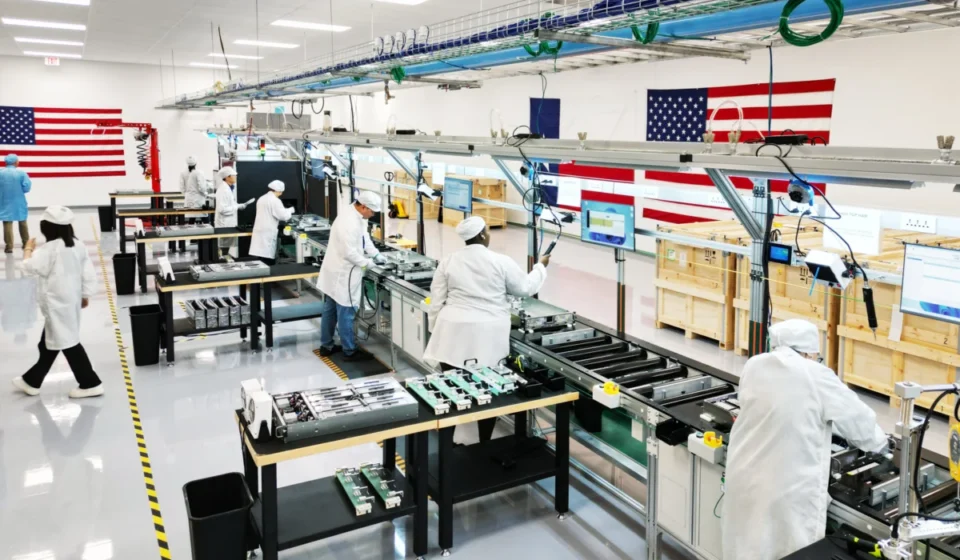
- Advanced Packaging: The complex task of combining processors, memory, and networking nodes into a single SoC is being brought onshore, preventing the need for the "final" product to be shipped overseas just to be put together.
- Critical Connectivity: Wireless technologies, including cellular, Wi-Fi, and specialized RF chips, are increasingly moving to domestic production to ensure security and reliability.
What is staying globalized:
- Final Assembly: The act of putting these chips into a chassis, attaching a screen, and boxing the final consumer product remains a global, highly flexible operation. This is likely to remain in various hubs worldwide, depending on cost-efficiency and logistics at any given time.
- Commodity Components: Basic components that do not require high-tech domestic fab environments or high-security, high-speed connectivity are still sourced from the most cost-effective global suppliers.
The Economic Question
The looming question for consumers and shareholders alike is cost. Manufacturing at a 2nm process node in the United States, with American energy and labor costs, is inherently more expensive than doing so in traditional manufacturing hubs.
Apple is currently navigating a delicate balance: they are investing heavily in domestic capability to ensure they have the supply they need for the AI-dominated future, but they must also maintain their premium margins. Whether the cost of these chips will eventually be passed on to the consumer—or absorbed by Apple’s massive operational efficiency—remains the great unknown of the post-2026 tech landscape.
Conclusion
Apple’s $600 billion commitment is not merely a patriotic gesture; it is a calculated hedge against a volatile global landscape. By securing the "brains" of its technology within the United States, Apple is ensuring that no matter how the global winds shift, its most essential hardware components remain under its control and within its reach. While we won’t see "Made in the USA" on the back of every device for final assembly, the technological heart of the next generation of Apple devices will undoubtedly bear that mark.
The era of "anywhere manufacturing" is evolving into an era of "strategic domestic manufacturing," and for the semiconductor industry, there is no turning back.