















































Minnesota’s Cannabis Frontier: Inside the High-Stakes Rollout of a Multi-Billion Dollar Industry

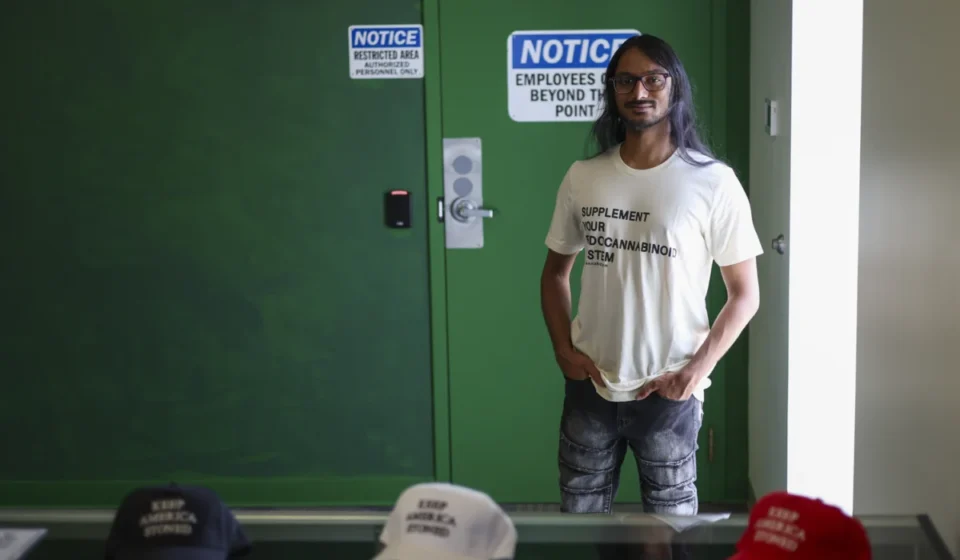
MINNEAPOLIS — At the bustling intersection of West 25th Street and South Lyndale Avenue, the air often carries the faint, sweet scent of flavored vapor and tobacco. Here, the Loon Smoke Shop has long served as a neighborhood anchor, a place where regulars congregate late into the night. But the shop is currently undergoing a metamorphosis that mirrors a statewide shift. A few blocks south, the enterprise is preparing to launch a new dispensary, moving through the final, rigorous stages of the state’s cannabis licensing process.
The "Help Wanted" signs are already up, seeking "budtenders," leads, and managers—individuals the owners describe as "passionate" about an industry that, until recently, existed only in the shadows of the illicit market. This local transition is a microcosm of a much larger, more turbulent narrative: Minnesota’s journey toward a fully realized, non-tribal adult-use cannabis market. After years of legislative debate and administrative hurdles, the "Green Wave" is finally breaking across the North Star State.
Main Facts: The First Non-Tribal Licenses and the 150-Store Goal
For nearly two years, the question on the lips of many Minnesotans has been: "When can I buy legal weed?" While the 2023 legislation technically legalized possession, the retail infrastructure lagged behind. That changed significantly this month.
The Minnesota Office of Cannabis Management (OCM) has officially granted final approval to the state’s first five non-tribal cannabis businesses. This marks a historic pivot from a market exclusively dominated by tribal nations to one that includes private entrepreneurs. The newly licensed entities include:
- Herb-Quest: A cultivation center located in Pine County.
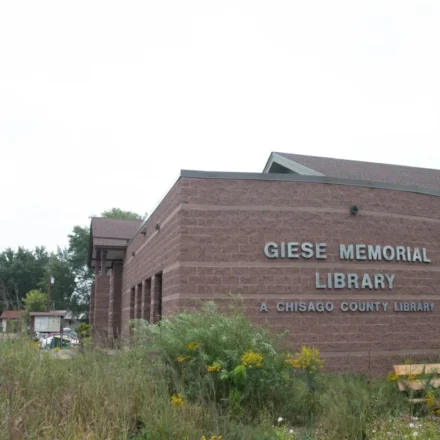
- Concentrate Labs (Roots and Resin Farm): A cultivation site in Chisago County.
- The Smoking Tree: A retail dispensary in Albert Lea.
- Loon Lab Extracts and Research: An Isanti-based operation (distinct from the Loon Smoke Shop).
- Fairwater Farm: A retail outlet in Plainview.
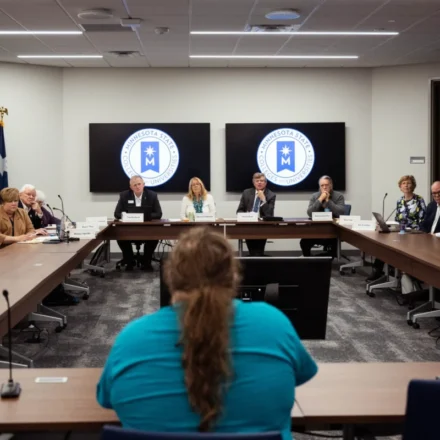
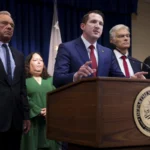
Eric Taubel, the interim director of the OCM, indicates that this is merely the vanguard. By the end of 2025, the state anticipates that up to 150 non-tribal marijuana businesses could be operational. According to Taubel, the bottleneck is no longer the state’s bureaucracy. "We’ve transitioned to the point where the onus is on the applicant and a prospective business owner," Taubel said, suggesting that the "cumbersome" phase of state-level licensing is largely in the rearview mirror.
Chronology: From Legislative Pen to Retail Reality
The path to this moment has been anything but linear. To understand the current landscape, one must look at the sequence of events that brought Minnesota to the brink of a retail explosion.
May 2023: Governor Tim Walz signs the landmark legislation legalizing adult-use cannabis. The bill sets an ambitious target: a fully functional retail market by early 2025.
August 2023: While the state works on its regulatory framework, tribal nations—utilizing their inherent sovereignty—move first. The Red Lake Nation opens the state’s first legal adult-use dispensary, followed closely by the White Earth Nation.
Early 2024: The OCM faces a leadership crisis. A botched initial hire for the director position leads to a scathing review by the Office of the Legislative Auditor. Charlene Briner steps in as interim director, eventually succeeded by Eric Taubel in January 2025.
May 2025: The first "regulatory compact" is finalized between the state and the White Earth Nation. This allows tribal entities to operate dispensaries outside reservation land, leading to new stores in St. Cloud and Moorhead.
June 2024 – July 2025: The state implements a lottery system to manage the deluge of applicants. In June, 249 social equity applicants win the right to move forward. In July, a second lottery sees 75 winners out of a pool of 569 applicants, including those without social equity status.
July 2025: The first five non-tribal licenses are finalized, signaling the start of the "homegrown" retail era.
Supporting Data: Lotteries, Taxes, and the "Checkerboard" of Zoning
The scale of interest in Minnesota’s cannabis market is reflected in the raw data of the application process. The OCM’s lottery system was designed to create a fair playing field, but it also highlighted the immense competition for a foothold in the industry.
The Social Equity Factor
The June lottery was specifically tailored for "social equity" applicants. To qualify, individuals had to meet criteria such as:

- Veteran status.
- Having a prior conviction for a marijuana-related offense (becoming a "victim of the war on drugs").
- Residing in a high-poverty area or a neighborhood disproportionately impacted by previous drug enforcement.
Of the 249 winners in that round, many are now navigating the "checkerboard" of local regulations. While state law prevents cities and counties from banning cannabis businesses entirely, local governments retain significant "zoning" power. They can dictate how far a shop must be from a school, a park, or a daycare, and they control the rhythm of the approval process.
The Fiscal Impact: A 20% Levy
For consumers, the most significant data point may be the price at the register. During a high-pressure special session in June 2025, Minnesota lawmakers increased the cannabis excise tax from 10% to 15%. When combined with standard state and local sales taxes, consumers can expect to pay upwards of 20% in taxes on every purchase.
By comparison, Connecticut maintains a low excise tax of 3%, while Washington state sits at the top of the national bracket at 37%. Minnesota’s 15% excise rate places it in what Taubel calls the "middle of the road," though industry consultants warn it could empower the illicit market if prices become too high.
Official Responses: Shifting the Blame and Defending the Model
The rollout has been a frequent target of criticism, particularly regarding the speed of implementation. Governor Tim Walz, when asked which of his administration’s 2023 laws has been the most difficult to implement, was candid. "Legal weed," he admitted, noting that "there really was not a model of how to do it."
Walz defended the OCM’s current leadership under Taubel, though he has stopped short of naming him the permanent director. He emphasized that Minnesota chose a "deliberately different" path than other states. Most states that legalized cannabis allowed existing medical marijuana dispensaries to transition into recreational sales immediately. Minnesota, however, opted to build a fresh framework from the ground up to ensure a more diverse pool of owners.
Leili Fatehi, a partner at the Minneapolis-based consulting firm Blunt Strategies, agrees that the model is unique. "I don’t think it was anticipated that the tribal program and operations would start so far ahead of non-tribal licenses," Fatehi said. However, she argues that this "slow and steady" approach may ultimately yield a more stable market, even if it frustrated early adopters.
Regarding the tax hike, Taubel remains optimistic. "I’m a little suspect that the 5% increase will have substantial ripple effects," he said, downplaying fears that the legal market will be priced out by street-level dealers.
Implications: The Road Ahead for Entrepreneurs and Consumers
As the first non-tribal shops like The Smoking Tree in Albert Lea prepare to open their doors (pending final city council formalities on July 28), the implications for Minnesota are profound.
1. The Tribal Advantage
Because tribal nations had a two-year head start, they have established robust supply chains and brand recognition. Experts suggest that many of the new non-tribal retailers will likely have to purchase their initial inventory from tribal cultivators, as non-tribal grow operations like Herb-Quest and Roots and Resin Farm are only just beginning their first harvest cycles.
2. Labor and Background Checks
The state has implemented strict social controls on the new industry. Applicants must undergo rigorous criminal background checks. While the state aims to help those with past drug possession charges, it remains vigilant against "white-collar criminals" entering the space. Furthermore, businesses are required to enter into "Labor Peace Agreements." These agreements ensure that employees have the right to organize in exchange for a commitment from unions not to engage in pickets or strikes that would disrupt business operations.
3. Economic Revitalization vs. Local Resistance
In towns like Plainview and Isanti, the arrival of a legal dispensary represents a significant new tax base and job creator. However, the "checkerboard" of local zoning remains a hurdle. Entrepreneurs must often wait months for local planning commissions that only meet once a month to approve signage, parking, and security protocols.
4. The End of the "Wild West"
For years, Minnesota has operated in a gray area of hemp-derived THC drinks and edibles found in liquor stores and bars. The arrival of dedicated cannabis dispensaries signals the end of this transition period. As the OCM ramps up enforcement, the distinction between "hemp-derived" and "cannabis-derived" will become more regulated, providing consumers with more consistent product testing and safety standards.
As the Loon Smoke Shop’s new dispensary prepares to welcome its first customers, it stands as a symbol of Minnesota’s complex, often messy, but ultimately historic shift toward a regulated cannabis economy. The "onus," as Eric Taubel said, is now on the dreamers and the risk-takers to prove that the state’s "middle-of-the-road" model can lead to a multi-billion dollar success story.