
























































A Tale of Two Classics: Minneapolis Reimagines Modernist Masterpieces on Stage and Screen

This week, the cultural heartbeat of Minneapolis pulses with the revival of two 20th-century titans: Igor Stravinsky’s The Firebird at Orchestra Hall and Samuel Beckett’s Waiting for Godot at the Guthrie Theater. While separated by genre and venue, both productions offer a profound reflection on the enduring power of artistic innovation, challenging audiences to reconsider the boundaries between performer, environment, and spectator.
The Digital Transformation of Orchestra Hall
The Minnesota Orchestra is embarking on a bold new chapter with "Sound Unbound," a multi-year series that seeks to redefine the concert experience through high-tech visual collaborations. The centerpiece of this season’s opener is a striking, tech-forward reimagining of Stravinsky’s The Firebird.
The Visual Canvas: Video Mapping the Architecture
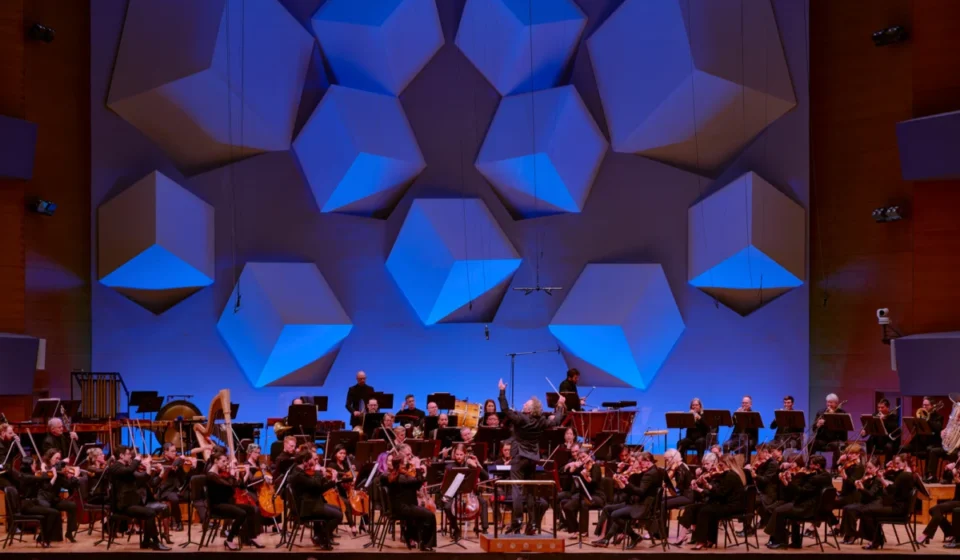
London-based artist Tal Rosner has been tapped to transform the iconic, modular "cubes" that adorn the back wall and ceiling of Orchestra Hall. Using a technique known as video mapping—a process where animations are precisely calibrated to fit the physical contours of an architectural space—Rosner has turned the concert hall’s utilitarian design into a kinetic, glowing landscape.
"Almost every design decision I made is rooted in the fact that the cubes are the projection surface," Rosner explains. Because the cubes are fixed, the mapping must be incredibly precise, creating a symbiotic relationship between the music and the environment. "Having this constraint enabled me to approach it from all these mad and new ways; this is a piece that is going to be impossible to replicate anywhere else."
A Narrative Through Music and Light
The Firebird, originally composed in 1910 for Sergei Diaghilev’s legendary Ballets Russes, is a cornerstone of modernist music. It tells the folklore of Prince Ivan, the malevolent sorcerer Koschei, and the magical Firebird. Rosner’s approach to this narrative is intentionally abstract and metaphorical. Rather than literal animation, he uses color and shape to evoke the story’s beats.
"I don’t show the princesses, but the princesses are represented by golden ribbons," Rosner notes. His design follows the original choreography’s rhythm, yet it exists as a standalone visual structure. By collaborating closely with the orchestra’s in-house lighting crew, Rosner ensures that the visual cues align with the symphonic pacing. "It’s not just about ‘Look at me!’ anymore," he says of his maturation as a designer. "It’s a much more holistic approach."
Chronology and Context: From Paris to Minneapolis
To understand the weight of these performances, one must look at their historical lineage. Stravinsky’s The Firebird served as the herald for the radical modernism that would eventually peak with the riotous premiere of The Rite of Spring three years later. By bringing this piece into a high-tech, 21st-century context, the Minnesota Orchestra is bridging the gap between the revolutionary fervor of early 20th-century Paris and the digital possibilities of the modern era.
Similarly, the Guthrie Theater’s production of Waiting for Godot revisits a text that redefined the theater of the absurd in 1953. Samuel Beckett, a veteran of the French Resistance, wrote Godot in the shadow of World War II. Its themes of existential dread and the desperate search for meaning were forged in the trauma of fighting fascism.
Today, under the direction of Joseph Haj, the play is being positioned against what author Naomi Klein has termed "end times fascism." The juxtaposition of these two works—one a vibrant explosion of Russian folklore and modern light, the other a stark, minimalist interrogation of human existence—highlights the range of the Minneapolis arts scene.
Supporting Data: Production Details
The Minnesota Orchestra: "The Firebird"
- Conductor: Thomas Søndergård
- Featured Work: Stravinsky’s The Firebird, George Walker’s Icarus in Orbit, and Prokofiev’s Concerto No. 2 in G minor.
- Soloist: Vadym Kholodenko (Piano)
- Venue: Orchestra Hall, Minneapolis
- Performance Dates: Friday, Sept. 25 at 8 p.m. and Saturday, Sept. 26 at 7 p.m.
- Ticket Range: $64–$159
The Guthrie Theater: "Waiting for Godot"
- Director: Joseph Haj
- Cast: David Strathairn (Vladimir), Jimmy Kieffer (Estragon), William Sturdivant (Pozzo), Jim Lichtscheidl (Lucky).
- Sound Design: Darron L. West
- Run Dates: Sept. 23–Oct. 11
- Ticket Range: $25–$91
Artistic Perspectives and Official Responses
Tal Rosner’s Evolution
Rosner’s journey to this moment is uniquely suited to his current work. Raised in a musical family, he initially aspired to create television graphics—dreaming of a career at MTV. This background in fast-paced, rhythmic visual media serves him well when collaborating with orchestras. He views the orchestral canvas as a "blank slate" that offers far greater scope than the constraints of traditional television or theater.
The Guthrie’s Interpretation
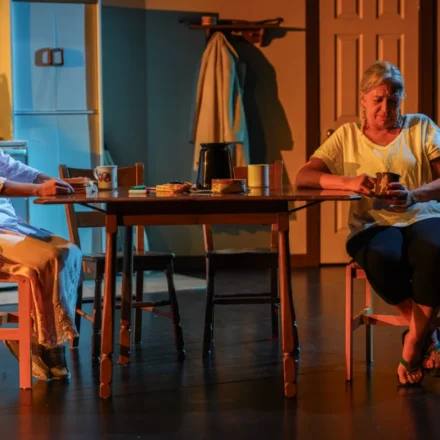
Director Joseph Haj has taken on the challenge of Beckett’s famously rigid stage directions. Beckett was notoriously protective of his scripts, marking every pause and silence as mandatory. However, Haj has managed to breathe new life into the minimalist text. On opening night, the chemistry between David Strathairn and Jimmy Kieffer proved the play’s resilience. Despite a minor line flub, the actors’ mastery of the play’s specific rhythm—a rhythm that defines the existential "waiting"—was evident.
Critics have noted that Strathairn’s performance, in particular, anchors the production with a profound sense of gravitas. In the second act, his portrayal of Vladimir’s existential plight brings an ache that feels strikingly relevant to a hyper-polarized world. Darron L. West’s immersive sound design further elevates the experience, turning the Guthrie stage into a space of terrifying, immediate uncertainty.
Implications: The Future of Cultural Programming
The dual success of these productions suggests a shift in how audiences consume "classic" art. There is a growing appetite for immersive, high-tech enhancements that do not distract from the music, but rather deepen the audience’s engagement with it.
Rosner’s "serendipitous" use of the Orchestra Hall cubes suggests that architectural constraints can become the primary driver of creativity. By mapping the visuals to the specific, physical reality of the hall, the orchestra creates an experience that cannot be replicated via a digital stream or in another venue. This creates a "must-attend" urgency that is vital for the survival of live performance in the digital age.
Conversely, the Guthrie’s Godot proves that there is still a massive audience for minimalist, text-heavy theater, provided the production is willing to confront the contemporary relevance of its themes. By asking, "How do we keep hope alive when the world seems so bleak?" the Guthrie is not just staging a play; it is facilitating a community dialogue.
A Vibrant Arts Ecology
Minneapolis continues to prove that its arts ecosystem is one of the most robust in the country. From the "Sound Unbound" series to the experimental porch performances popping up across the city, there is a commitment to ensuring that the arts are not merely preserved, but actively evolved.
Whether it is the glowing, rhythmic geometry of The Firebird or the desolate, existential stillness of Waiting for Godot, these productions remind us that art is a living, breathing entity. They are not museum pieces to be dusted off; they are mirrors held up to our current moment, inviting us to look, to listen, and—perhaps most importantly—to feel the disquieting stir of the new.
As the city heads into the autumn season, these two pillars of the arts community offer a testament to the power of collaboration. By pairing veteran conductors and directors with visionary designers and world-class actors, Minneapolis is setting a benchmark for how major institutions can remain relevant, provocative, and deeply human in an increasingly automated world.