






















































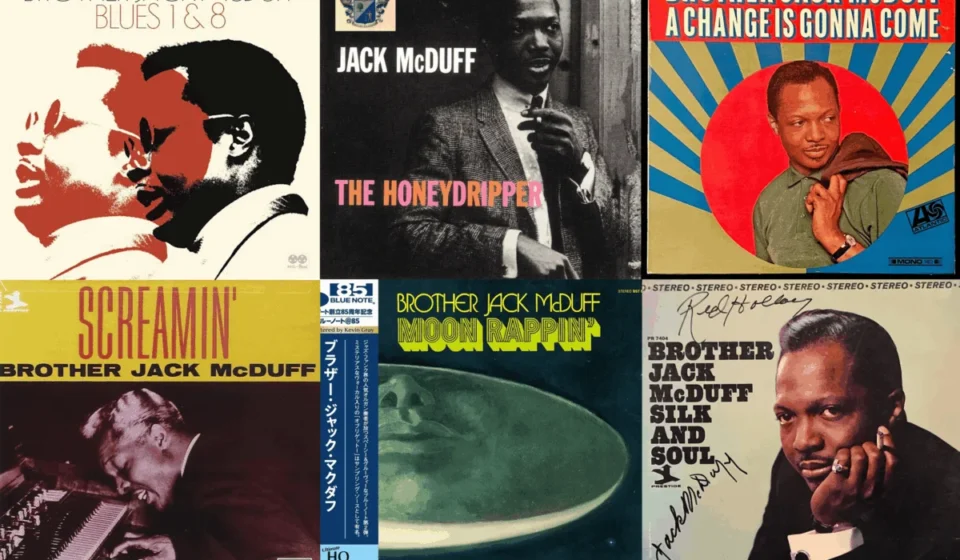

In the annals of jazz history, few figures loom as large—or as enigmatically—as "Brother" Jack McDuff. A titan of the Hammond B-3 organ, McDuff spent the early 1960s tearing through the nightclub circuit like a sonic whirlwind. He was the architect of a sound that married the intellectual bite of hard bop with the gritty, deep-pocket blues of the jump-swing era. Yet, by the late 1980s, the man who had mentored legends like George Benson was facing a twilight defined by industry neglect, personal instability, and the suffocating atmosphere of a New York City gripped by the crack epidemic.
It took a move to the unlikeliest of jazz sanctuaries—Minneapolis, Minnesota—to turn the tide. As we approach what would have been his centennial birthday on September 17, the story of Jack McDuff’s "second act" emerges not merely as a career revival, but as a poignant tale of human redemption, fueled by a transformative partnership and the steadying pulse of the Twin Cities jazz scene.
The Architect of the Groove
To understand McDuff’s resurgence, one must first appreciate the magnitude of his influence. In his prime, he was a spectacle. He was the bandleader who demanded excellence, leading quartets that featured the raw, barrel-chested tenor sax of Red Holloway and the precocious, lightning-fast guitar work of a teenage George Benson.
McDuff was a consummate showman, known for his impeccable style—white-tipped hair in a sharp flip, a pencil-thin mustache, and a sartorial elegance that signaled his "living large" philosophy. Musically, he was the master of the "fatback" groove. He arranged nearly everything in his repertoire, often holding his own solo until the very end, leaving audiences breathless after his sidemen had already laid the foundation for a masterful performance.
A Chance Encounter in the Twin Cities
In the mid-1960s, a local drummer named Kenny Horst witnessed the McDuff whirlwind at a dance hall on Ford Parkway in St. Paul. The impression left on him was indelible. Decades later, when Horst co-founded the legendary Artists’ Quarter (AQ), he knew exactly who he wanted to bring to the stage.

McDuff’s first few stints at the AQ in the late 1980s were successful, but it was his second visit that changed the trajectory of his life. During a show, he locked eyes with Kathy Ann Johnson, a local resident who lived just blocks from the club’s original location at 26th and Nicollet. The encounter was simple, intimate, and life-altering. Following a set, McDuff approached her, shared a glass of wine, and offered her a ride home.
"He asked me to promise him that I would come back the next night," Kathy recalled. "So I did. And that was when he spent the night. That’s how it started."
The Harlem Exit and the Minneapolis Sanctuary
By the late 1980s, New York City was a perilous environment for a working jazz musician. The crack epidemic had turned neighborhoods volatile, and the jazz market had been further marginalized by the shifting cultural tides of punk and hip-hop. For McDuff, the situation was dire. Saxophonist Jerry Weldon, who had played with McDuff since the mid-80s, noted that the organist was effectively "off the grid," lacking a record contract or steady touring prospects.
Between the lines of his professional decline lay a deeper, more personal struggle. Associates speak of "partying" and "distractions"—euphemisms for a battle with substance abuse that had brought the legendary musician to the brink of collapse.
In the summer of 1990, roughly a year after meeting Kathy, McDuff made a radical decision. He called her from his apartment in Harlem, only to reveal he was already downstairs in Minneapolis. He was moving in. It was a leap of faith that caught Kathy off guard but promised a new beginning. When later asked if he missed the frantic energy of New York, McDuff would offer a characteristic dry wit: "Every chance I get."

The "Captain" Reinvents His Artistry
Moving to a more stable, domestic environment in South Minneapolis allowed McDuff to re-center his life. Kathy cleared a room in their apartment, turning it into a dedicated studio where the organist could practice, compose, and arrange without the pressures of the road.
This era marked the transition from "Brother" Jack to "Captain" Jack—a title he adopted, with a wink, as a promotion inspired by his idol, Count Basie. Under this new moniker, his music underwent a formal evolution. The raucous, three-chord jump-blues of his early career were augmented by increasingly sophisticated arrangements. He began writing charts with multiple voicings and complex, modern harmonies that demanded more from his ensemble.
Supporting Data: The Professional Renaissance
The impact of this stability on his professional output was measurable. With the help of his manager, John McCauley, and local club owners like Lowell Pickett of the Dakota, a system was established to keep McDuff working without exhausting him. Pickett, recognizing the need to protect the artist’s health, created a recurring residency: "We made an arrangement to fly in his band, The Heatin’ System, four times a year on weeknights for a two-night stand. We could charge more for tickets and pay him accordingly."
This structure allowed McDuff to play at the highest level without the corrosive effects of constant, aimless touring. His bandmates, including Andrew Beals and Jerry Weldon, noted a palpable change in his temperament. He was demanding—a byproduct of his Navy background—but he was focused.
"He had fresh energy; he could work with more vigor and more thoroughness," Beals said. "He knew thousands of tunes and could reharmonize a standard in such a beautiful, rational way."

Official Perspectives: The Legacy of a Mentor
Pat Bianchi, a contemporary organist and disciple of the late Joey DeFrancesco, has spent significant effort preserving this legacy through the "Centennial Celebration of Jack McDuff." For Bianchi, McDuff’s genius wasn’t just in the keys, but in his role as a mentor.
"He brought up so many guitar players I’ve worked with: Paul Bollenbeck, Dave Stryker, Mark Whitfield, John Hart—and that’s not counting George Benson," Bianchi noted. "He was the Art Blakey of the jazz organ world. He doesn’t get enough credit for bringing people along and educating them on the bandstand."
Implications and Reflections
The latter half of the 1990s saw a resurgence in McDuff’s international profile, with tours in Africa, Europe, and Japan. He and Kathy married in 1993, and their life together became a model of stability. However, the physical toll of his earlier years remained. In 1998, a debilitating stroke left him in a coma for a month. While he recovered enough to play again, his movement was permanently restricted, and his health remained fragile until his eventual passing.
Looking back, the narrative of Jack McDuff in Minneapolis serves as a testament to the importance of community and companionship in the arts. It wasn’t just the music that saved him; it was the "invisible threads" of support from his wife, his manager, and a city that provided him a safe harbor.
As we celebrate his 100th birthday, we are reminded that even the most legendary figures are not immune to the gravity of life’s darker moments. Jack McDuff’s story is a reminder that when the music stops, it is often the love of others that provides the strength to pick up the instrument once more. His compositions, from the raw, bluesy anthems of the 60s to the intricate, harmonically rich arrangements of his Minneapolis years, remain a permanent fixture in the jazz canon—a legacy solidified by a quiet, transformative homecoming in the North.