























































Federal Child Care Funding Stays in Limbo: Minnesota and Four Other States Secure Temporary Reprieve

MINNEAPOLIS — For the thousands of Minnesota families who rely on subsidized child care to balance the demands of the workplace and the home, the last month has been defined by a singular, suffocating anxiety: the fear that the federal government might abruptly pull the rug out from under their providers.
On Friday, a federal judge in New York provided a brief, two-week reprieve from that nightmare. U.S. District Judge Vernon Broderick issued a temporary stay, ensuring that federal child care funds will continue to flow to Minnesota, California, Colorado, Illinois, and New York through February 6. The ruling effectively pauses a standoff between state governments and the Trump administration, offering a sliver of breathing room while the court weighs whether the White House has the legal authority to freeze critical social service payments.
The crisis—which began with a viral social media narrative and escalated into a multi-state legal battle—highlights a growing tension between state autonomy, federal oversight, and the administration’s aggressive push to audit social safety nets for potential fraud or unauthorized use.
The Catalyst: A Viral Claim and a Sudden Freeze
The current instability can be traced back to mid-December 2025, when a video by social media personality Nick Shirley went viral. In the video, Shirley alleged that Minneapolis was a hotbed for fraudulent child care providers, suggesting that taxpayer dollars were being siphoned off by bad actors. While the specific claims regarding the scope of the alleged fraud have been subject to intense scrutiny and debate, the impact of the video was immediate and tangible.
Within one week of the video’s circulation, the Administration for Children and Families (ACF)—a division of the U.S. Department of Health and Human Services (HHS)—took drastic action. Alex Adams, an assistant secretary at the agency, dispatched letters to the departments of human services in Minnesota and four other states. The letters informed officials that federal funding for child care programs was being temporarily restricted.
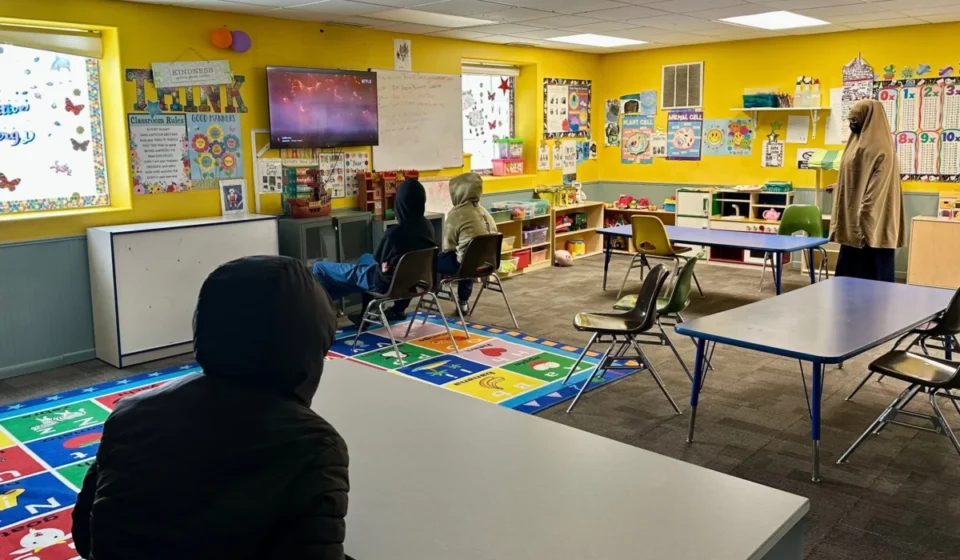
The move sent shockwaves through the early childhood education sector. Operators, many of whom run on razor-thin margins, faced the terrifying prospect of having to turn away children or shut their doors entirely if the federal subsidies they rely on were permanently revoked.
Chronology of a Constitutional Conflict
The timeline of the standoff reveals a rapid escalation from online allegations to federal litigation:
- Mid-December 2025: Nick Shirley releases a viral video claiming widespread fraud in the Minnesota child care sector, triggering a wave of public concern and political pressure.
- Late December 2025: Alex Adams of the ACF sends formal notices to Minnesota, California, Colorado, Illinois, and New York, stating that federal child care funding is being restricted.
- Early January 2026: Minnesota Attorney General Keith Ellison, alongside a coalition of AGs from the affected states, files a lawsuit challenging the legality of the freeze. The states argue that the executive branch lacks the constitutional authority to withhold funds that have already been appropriated by Congress.
- Mid-January 2026: HHS spokesperson Emily Hilliard defends the move, citing the agency’s responsibility to prevent waste, fraud, and abuse of taxpayer dollars.
- January 30, 2026: Judge Vernon Broderick issues a two-week stay, preventing the funding freeze from taking effect and setting a deadline of February 6 for further deliberations.
The Legal and Data Dispute: What is the Administration Seeking?
At the heart of the litigation is a fundamental disagreement over executive power. The plaintiffs—the five states—argue that the Trump administration is overstepping its constitutional bounds. By withholding funds already allocated by Congress, they contend, the administration is effectively legislating through executive fiat.
However, in court filings, the federal government has attempted to reframe the dispute. Lawyers for the administration argue that they are not "freezing" funds in a vacuum; rather, they are conditioning the release of payments on the states’ compliance with information requests.
The administration is demanding extensive data on program recipients from the last several years. The stated goal, according to federal officials, is to determine whether any of the recipients are undocumented immigrants. This requirement has become the primary point of friction.
"HHS has a responsibility to ensure that the federal taxpayer dollars are used for the purposes outlined by Congress," said Emily Hilliard, an HHS spokesperson. The administration maintains that without access to this granular data, they cannot verify the eligibility of those receiving the benefits, and therefore cannot authorize the distribution of federal dollars.
State officials, however, argue that the requested data is overly broad, potentially violates privacy protections, and is being used as a pretext to justify the ideological agenda of the administration.
Official Responses: A War on Minnesota?
Minnesota Attorney General Keith Ellison has been among the most vocal critics of the administration’s tactics. Following the judge’s Friday ruling, Ellison expressed a sense of vindication, though he warned that the battle is far from over.
"The court clearly recognizes how devastating these funding cuts would be for child care services in Minnesota," Ellison said in an emailed statement. "I’m sure that Donald Trump is also aware of the damage these cuts would cause, and is pursuing them as part of his ongoing war on Minnesota."
The administration’s stance remains steadfast. As of Friday, messages left with HHS for further comment on the judge’s stay were not returned. The federal government’s strategy appears designed to force states to choose between providing sensitive information—which may be restricted by state privacy laws—or losing the financial support that sustains their child care infrastructure.
Implications: The High Cost of Uncertainty
The implications of this standoff extend far beyond the courtroom. Minnesota alone receives approximately $467 million annually in federal funds designated for child care and job training programs. These funds are vital for low-income parents who fall below specific annual income thresholds, allowing them to remain in the workforce.
If the funding were to be cut off, the consequences would be immediate:
- Provider Insolvency: Many child care centers operate as small businesses. Without the steady stream of federal reimbursements, these centers would likely be unable to cover payroll or rent, leading to a wave of closures.
- Parental Displacement: If centers close, low-income parents would be left without options, forcing many to choose between leaving the workforce to care for their children or leaving their children in unregulated, potentially unsafe environments.
- Economic Ripple Effects: A sudden reduction in child care capacity would inevitably lead to a decrease in the state’s labor force participation, as parents are unable to secure reliable care for their children.
For now, the providers and families are in a state of "nightmare winter" uncertainty. The February 6 deadline looms large, as the court must decide whether to grant an injunction that would permanently block the administration’s freeze, or allow the federal government to proceed with its plan.
As the legal teams prepare their final arguments, the situation serves as a stark reminder of the volatility of federal funding and the fragility of the social safety net when caught in the gears of national political polarization. Whether the resolution comes through judicial intervention or a sudden shift in federal policy, the lives of thousands of Minnesota children and the stability of their parents’ livelihoods hang in the balance.
The coming two weeks will be a period of intense negotiation and anxious observation, as stakeholders in the child care industry look toward Washington and New York for a sign of relief. Until a permanent ruling is issued, the future of accessible, affordable child care in Minnesota remains as precarious as it has been since the first viral video hit the screen.