
































DFL Convention Unveils Progressive Zeal Amidst Established Power: Klobuchar Dominates, Flanagan Poised for Senate

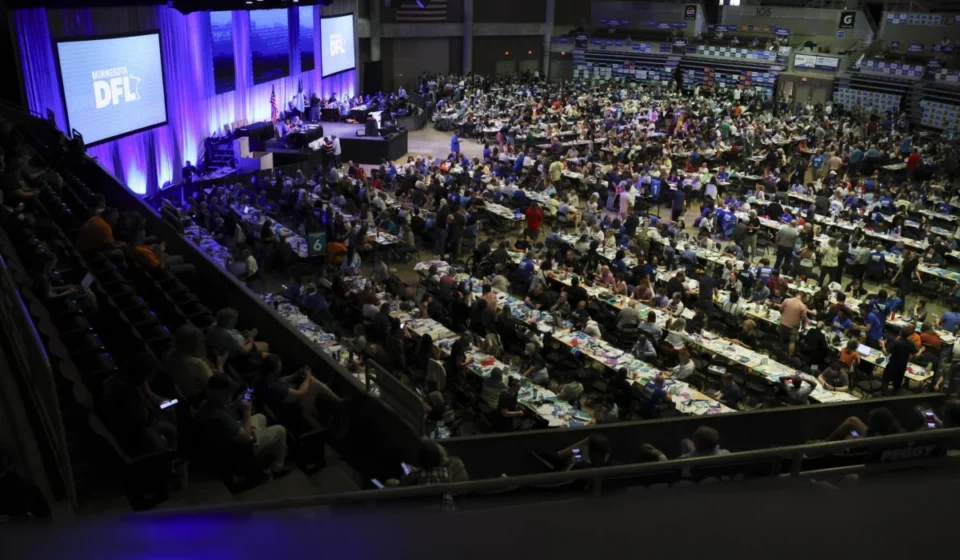
ROCHESTER, MN – May 30, 2026 – The Democratic-Farmer-Labor (DFL) State Convention in Rochester this past weekend, held within the expansive halls of the Mayo Convention Center, was largely a coronation for established figures, yet it was punctuated by a spirited challenge from a progressive newcomer and strategic maneuvers that will shape Minnesota’s political landscape for years to come. Senator Amy Klobuchar secured the party’s endorsement for governor with a commanding 68% of the vote, effectively fending off an impassioned bid from 26-year-old Kobey Layne, whose "quixotic quest" captured the attention of many delegates. Meanwhile, Lt. Governor Peggy Flanagan was endorsed for the U.S. Senate, setting the stage for a potentially historic election as the first Native American woman to serve in that chamber.
The convention, which often serves as a barometer for the party’s prevailing sentiments and future direction, revealed a DFL grappling with its identity: balancing the pragmatic pursuit of electability with the fervent call for bolder, more progressive policies. While Klobuchar’s long-standing appeal and track record resonated deeply with the majority, Layne’s articulate and policy-driven insurgency offered a glimpse into the party’s evolving progressive wing, stirring both admiration and, at times, discomfort.
Main Facts: A Convention of Endorsements and Emerging Voices
The primary outcomes of the DFL State Convention were clear:
- Amy Klobuchar secured the party’s endorsement for Governor, achieving 68% of the delegate vote. This solidifies her position as the DFL’s preferred candidate to succeed outgoing Governor Tim Walz, who recently announced he would not seek a third term.
- Kobey Layne, a relatively unknown but highly energetic 26-year-old, garnered 28% of the vote against Klobuchar. Despite not winning the endorsement, her robust performance and specific policy proposals ignited significant discussion and applause, positioning her as a new voice within the party.
- Peggy Flanagan was unanimously endorsed as the DFL candidate for the U.S. Senate. Her path was cleared after Congresswoman Angie Craig made the strategic decision to withdraw from the endorsement race, avoiding a potentially costly and divisive primary battle within the party.
- The convention also saw its share of unexpected moments, from procedural delays and delegate frustrations over logistics to a minor controversy surrounding campaign giveaways, underscoring the often-unpredictable nature of large political gatherings.
These endorsements, particularly Klobuchar’s and Flanagan’s, represent a powerful alignment behind seasoned leaders who project experience and electability. However, Layne’s performance, described by delegate Laura Turman as "Wonderful, it moved me, I felt it," highlighted a persistent yearning among some within the DFL for more explicit progressive action and a focus on policy over political expediency.
Chronology: A Weekend of Speeches, Strobe Lights, and Strategic Shifts
The DFL State Convention unfolded over a weekend, with the most dramatic moments concentrated on Friday evening and Saturday afternoon.

Friday Evening: The Gubernatorial Showdown
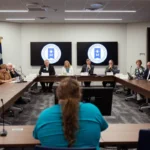
The highly anticipated gubernatorial endorsement process kicked off Friday evening, drawing a mix of excitement and weary anticipation from delegates already feeling the grind of procedural motions and, reportedly, a lack of adequate food options. The air crackled when Kobey Layne, a 26-year-old political newcomer, successfully garnered the necessary delegate support—over 10% of the 1,200 voting delegates plus at least 12 votes from each of Minnesota’s eight Congressional delegations—to earn a 15-minute speaking slot. Chants of "Let her speak!" echoed through the Mayo Convention Center as her candidacy was put forth, signaling a significant appetite for a fresh perspective.
Layne approached the podium with a "jittery energy" that belied her political inexperience but underscored her passion. She delivered a speech rich in "concrete goals," advocating for a bonding bill to integrate Minnesota’s clean energy objectives and proposing a bold "capping rent increases across the state to 3%." Her core message, "Politics is about policy, not personalities, not platitudes," resonated deeply, drawing "raucous applause" as she bobbed from left to right, using her fingers to emphasize her points. Layne also called for a more substantive diversity, equity, and inclusion statement for the DFL, asserting that "Just because we are not the Republican Party does not mean that our anti-racism work is done."
However, Layne’s speech and that of her seasoned opponent, Senator Amy Klobuchar, were unexpectedly delayed. The cause? Klobuchar’s campaign, in a seemingly innocuous attempt to energize the crowd, had distributed strobe lights to delegates. This decision led to a visibly weary State Senator Scott Dibble of Minneapolis sternly warning, "The strobe lights need to be turned off. No strobe lights." His plea was followed by delegates taking to the mic to blast the "milquetoast" stance, demanding the glow wands be confiscated. While a minor disruption, the incident highlighted the diverse needs and sensitivities within a large delegate body, with some delegates citing concerns for individuals with photosensitive epilepsy.
When Senator Klobuchar finally took the stage, she exuded the confidence and gravitas of a politician who has represented Minnesota in the U.S. Senate for two decades. Her address pivoted from Layne’s policy-heavy approach to a focus on her proven electoral success. "When you look at my track record, when I lead the ticket, we win," Klobuchar declared, a statement that garnered a "much louder ovation" than Layne’s policy pronouncements. This stark contrast in rhetorical strategy underscored the fundamental difference between the challenger’s progressive idealism and the incumbent’s pragmatic emphasis on electability.
The evening concluded with the voting process, which itself proved to be a minor logistical challenge. Delegates, many unaccustomed to the digital voting system, reportedly struggled with QR codes and the crucial "submit" button. After 1 a.m., the results were finally announced: Klobuchar had sailed to the endorsement with 68% of the vote, Layne secured 28%, and 4% voted for "no endorsement." Layne’s earlier declaration that she would continue campaigning to the August primary, even without the party’s endorsement, had drawn boos, while Klobuchar affirmed her commitment to abide by the convention’s decision.

Saturday Afternoon: Flanagan’s Coronation
The following day, Saturday afternoon, shifted focus to the U.S. Senate race. With Angie Craig’s strategic withdrawal from the endorsement contest, the path was clear for Lt. Governor Peggy Flanagan. The event became a "coronation party" for Flanagan, whose candidacy represents a significant milestone: she stands to be the first Native American woman elected to the U.S. Senate. Flanagan emphasized the democratic legitimacy of the endorsement, stating that "The delegates who are here today, they represent the nearly 40,000 Minnesotans who went to the caucus on Feb. 3," during the height of "Operation Metro Surge," calling the delegates "the heart of our party." Her confident address solidified her standing as the party’s choice, setting the stage for her general election campaign.
Supporting Data and Delegate Perspectives: A Deep Dive into DFL Dynamics
The DFL Convention offered a rich tapestry of perspectives, revealing the party’s internal debates and the motivations behind delegate decisions.
Kobey Layne’s Progressive Vision:
Layne’s background offers insight into her policy-driven approach. Holding a master’s in public policy from the University of Minnesota, she previously worked as a legislative assistant for moderate Republican Jim Abeler of Anoka. Her political journey, as she described it in an interview, took a leftward turn after being laid off from the Legislature in 2022. This period also marked a personal transition, as Layne, who previously identified as a gay man, transitioned to female. Currently an assistant manager at the cosmetics company Aveda, Layne’s proposals for integrating clean energy goals into a bonding bill and capping rent increases at 3% highlighted a desire for tangible, progressive reforms. Her insistence on "policy, not personalities" resonated with delegates like Andrew Ulasich from South Minneapolis, who remarked, "I really appreciated how specific she was at the things that she wanted to do." This sentiment underscores a segment of the DFL electorate that prioritizes detailed solutions over broad political rhetoric.
Amy Klobuchar’s Electability and Competence:
Despite the enthusiasm for Layne’s ideas, Klobuchar’s endorsement was ultimately decisive. Delegates consistently cited not just her "electability" but also her "competence" as deciding factors. Her ability to appeal across the state, even in traditionally conservative areas—a point she emphasized by asserting, "I think there are some counties where I have met nearly literally every person"—is a significant asset in a purple state like Minnesota. Two delegates specifically mentioned that Klobuchar would "run a tighter ship" than outgoing Governor Tim Walz, who has "presided over fraud committed by social service providers," suggesting a desire for strong, accountable leadership. Klobuchar’s campaign, while currently still "at the drawing board with her policy platform," promised to release "a lot more ideas" on housing, childcare, and healthcare, indicating a strategy of rolling out detailed plans closer to the general election.
Angie Craig’s Strategic Retreat and its Ramifications:
Congresswoman Angie Craig’s decision to forgo the DFL endorsement for the U.S. Senate seat, which was being vacated by the retiring Tina Smith, introduced an unexpected twist to the convention. Don Slaten, a long-time DFL delegate from Hastings who has known Craig for 15 years, expressed "consternation" about her move. "I wanted her to stay in the House, because that will be a hard seat to keep," Slaten stated, reflecting a broader concern among delegates about the strategic implications. While some delegates were willing to door-knock for Craig if she were to challenge Flanagan in a primary, there was an overall sense that her decision complicated matters for the DFL. The party has already endorsed Matt Little, a former state senator, to replace Craig in the U.S. House, indicating a swift move to consolidate support for her successor. This highlights the delicate balance between individual political ambition and party unity, especially in competitive districts.

The Enduring Power of the "F" in DFL: Rural Concerns:
The DFL’s full name, the Democratic-Farmer-Labor Party, often leads to the reflexive mantra, "Remember, the F in DFL stands for farmer." While sometimes perceived as pandering, the convention underscored the very real and pressing concerns of Minnesota’s rural communities, even as the state’s population increasingly shifts to metropolitan areas. Mary Sullivan, who has presided over a livestock farm with her husband near Redwood Falls since 1980 and is a member of the DFL’s rural caucus, painted a stark picture of the current economic climate. She reported "skyrocketing costs for fertilizer and fuel for tractors" due to tariffs and the war in Iran. Sullivan drew a parallel to the "infamous farm crisis of the mid-1980s," indicating the severity of the financial hardship. This economic distress, as Slaten observed, could potentially sway conservative rural voters. "If what Trump has done to farmers doesn’t get them voting DFL, I don’t know what can," he mused, highlighting a potential opportunity for the DFL to bridge the urban-rural divide by addressing tangible economic grievances.
Official Responses and Party Dynamics: Navigating the Ideological Spectrum
The convention provided a platform for both established and emerging voices to articulate their visions, revealing the DFL’s internal dynamics and the delicate balance between its progressive and pragmatic wings.
Senator Klobuchar’s response to Layne’s policy-specific challenge was notably measured. When asked if she might incorporate some of Layne’s prescriptions into her platform, Klobuchar stated, "I have so many ideas," mentioning housing, childcare, and healthcare, before adding, "So, stay tuned. We’re going to release a lot more ideas." This response, while non-committal, signaled Klobuchar’s intent to present a comprehensive, yet likely more broadly palatable, policy agenda. It demonstrates a strategic approach to campaigning, emphasizing her own detailed plans rather than directly adopting a challenger’s specific proposals, which might be perceived as too far left for the general electorate.
Lt. Governor Flanagan, in her acceptance of the Senate endorsement, skillfully connected the convention’s proceedings to the broader grassroots movement of the DFL. By emphasizing that the delegates "represent the nearly 40,000 Minnesotans who went to the caucus on Feb. 3," she reinforced the democratic legitimacy of the endorsement process and sought to unify the party ahead of the primary. Her remarks underscored the DFL’s commitment to its caucus system as a foundational element of its political organizing.
The brief but telling moment involving State Senator Scott Dibble and the strobe lights also revealed a practical challenge in managing a large, diverse political gathering. Dibble’s weary demeanor and the subsequent delegate complaints highlighted the need for careful logistical planning and sensitivity to attendee needs, even for seemingly minor campaign tactics. This micro-event served as a microcosm of the broader challenges parties face in ensuring all voices and needs are considered within a large-scale convention.

Implications: Shaping Minnesota’s Political Future
The DFL State Convention in Rochester has set the stage for a compelling election cycle in Minnesota, with significant implications for both the gubernatorial and U.S. Senate races, as well as the broader direction of the party.
For the Gubernatorial Race: Amy Klobuchar’s decisive endorsement positions her as the clear frontrunner for the DFL nomination. Her emphasis on electability and a proven track record will be central to her general election campaign. However, Kobey Layne’s surprisingly strong showing and her commitment to continue campaigning to the August primary, despite the boos, suggest that Klobuchar will face continued pressure from the party’s progressive flank. While Layne’s primary challenge is unlikely to overturn Klobuchar’s established support, it could serve to push Klobuchar to articulate more progressive policy details earlier in her campaign. This internal dynamic could ultimately strengthen the DFL platform by ensuring a robust debate of ideas before the general election.
For the U.S. Senate Race: Peggy Flanagan’s unanimous endorsement creates a unified front for the DFL in the Senate race. Her historic candidacy as a Native American woman carries significant weight and could energize voter turnout, particularly among diverse communities. Angie Craig’s strategic withdrawal, while potentially complicating the retention of her U.S. House seat, prevents a potentially divisive and resource-draining primary against Flanagan. This allows the DFL to consolidate its resources and focus on supporting Flanagan against the eventual Republican challenger, aiming to maintain the seat previously held by Tina Smith. The party’s swift endorsement of Matt Little for Craig’s House seat indicates a concerted effort to mitigate potential fallout and ensure continuity in that district.
DFL Party Unity and Direction: The convention highlighted the ongoing internal dialogue within the DFL between its progressive and pragmatic wings. Layne’s "policy, not personalities" mantra resonated with many, signaling a desire for bolder action on issues like climate change and economic inequality. Klobuchar’s focus on electability, while effective, underscores the party’s perennial challenge of appealing to both its activist base and the broader, often more moderate, electorate necessary for statewide victory. The concerns raised by the rural caucus about tariffs and rising farm costs will also require the DFL to craft policies that genuinely address economic hardship in Greater Minnesota, bridging the urban-rural divide that often characterizes state politics. The success of Flanagan’s historic candidacy could serve as a powerful symbol of the DFL’s inclusive values and its commitment to diverse representation.
Future of Minnesota Politics: The DFL’s strategic choices at this convention will undoubtedly influence the political landscape of Minnesota for the coming years. The party’s ability to maintain unity, leverage its endorsements effectively, and articulate a compelling vision that addresses both progressive aspirations and practical concerns will be critical. The outcomes of the upcoming primary and general elections will determine whether the DFL can successfully navigate its internal ideological spectrum while effectively countering its Republican opposition, whose own convention in Duluth was also setting its slate. The political lessons learned from Kobey Layne’s passionate challenge, Amy Klobuchar’s unwavering electability, and Peggy Flanagan’s historic ascent will shape campaigns and policies, defining Minnesota’s trajectory in the years to come.