















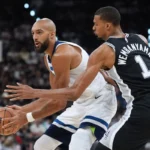





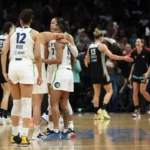


























During his four-year tenure as president of basketball operations for the Minnesota Timberwolves, Tim Connelly has earned a reputation for being an aggressive, if sometimes reactive, architect. His tenure has been defined by bold swings—some that reshaped the franchise’s identity and others that quickly soured. Recently, however, Connelly has been forced into a prolonged period of "rectification," spending significant capital and organizational bandwidth to undo maneuvers that failed to pay dividends.
The most recent move in this series of corrections arrived on the morning of the NBA draft, as the Timberwolves executed a salary dump of veteran forward Julius Randle to the Brooklyn Nets. This decision serves as the latest chapter in a turbulent cycle of roster construction that has seen the front office oscillate between win-now desperation and the cold, hard math of the NBA’s new collective bargaining agreement.
The Anatomy of the Salary Dump
The trade, which sent Julius Randle to the Brooklyn Nets, was a financial necessity born from the restrictive realities of the NBA’s second apron. The Nets, possessing rare cap space, were among the few teams capable of absorbing Randle’s $33 million salary for the upcoming season, as well as his $36 million player option for 2027-28.
To facilitate the move, the Timberwolves were forced to attach the 28th overall pick in the draft, receiving the 33rd pick in return—a "sweetener" that underscores just how much of an albatross Randle’s contract had become in the eyes of the front office. A three-team structure involving the Chicago Bulls also saw Minnesota acquire power forward Mo Gueye. With only 165 minutes of NBA experience to his name, Gueye is widely expected to be waived, rendering him a placeholder in a deal primarily designed to clear the books.
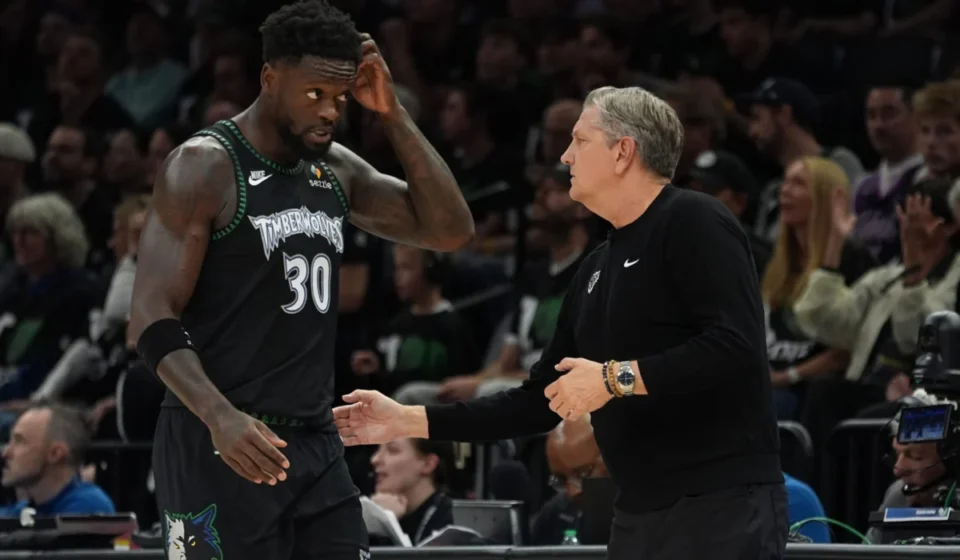
The irony of the situation is palpable. Head coach Chris Finch, who has been a vocal supporter of Randle, once famously labeled him "maybe our most important player" during a campaign where Randle led the team in assists and ranked second only to Anthony Edwards in scoring. Yet, the rapid shift from indispensable star to salary-cap burden highlights the volatility of modern NBA roster building.
A Chronology of Missteps and Rectification
Connelly’s recent history is littered with transactions that suggest a lack of long-term alignment. The movement of mid-tier bench players like Bryn Forbes, Shake Milton, and Troy Brown, Jr. was relatively painless, but the February departure of Rob Dillingham—less than two years after the team surrendered significant draft capital to acquire him—represented a much deeper wound.
This string of "erasures" has only intensified the scrutiny surrounding the front office. Critics point to the Karl-Anthony Towns (KAT) trade as the primary point of failure. Watching Towns play a pivotal role in the New York Knicks’ championship run this season has created a narrative of regret among the fanbase. While the return for Towns included Donte DiVincenzo and the draft pick that became center Joan Beringer, the optics of a former franchise cornerstone winning a ring immediately after his exit have overwhelmed the analytical argument that moving off his $53 million salary was necessary for the long-term sustainability of the core—namely Anthony Edwards, Jaden McDaniels, and Naz Reid.
Furthermore, the shadow of the Rudy Gobert acquisition looms large. By committing such an immense haul of future draft assets for the veteran center, Connelly inadvertently made KAT’s massive contract and his natural position at the five less tenable, forcing the team into a series of reactionary trades to balance the ledger.
Supporting Data: Why the Pivot Was Necessary
Despite the cynicism surrounding the turnover, there is a clear strategic logic to the team’s current direction. The departure of Randle was a classic case of "addition by subtraction."
Randle’s statistical profile during his time in Minnesota often clashed with the team’s offensive requirements. His struggles from beyond the arc created spacing issues that hampered Anthony Edwards’ ability to penetrate, and his defensive intensity was frequently questioned. The team’s disappointing second-round exit against the San Antonio Spurs, coupled with Randle’s decision to leave the arena without speaking to the media, signaled that his time in the Twin Cities had reached its natural conclusion.
By offloading his contract, the Timberwolves achieved several critical objectives:
- Financial Flexibility: The move allowed Minnesota to drop below the first apron of the salary cap.
- Access to the Non-Taxpayer Midlevel Exception: This "gift card" of approximately $15 million allows the team to sign impact free agents they otherwise would have been barred from pursuing.
- The Trade Exception: The Wolves created a $33.3 million trade exception, providing massive flexibility for mid-season moves or future acquisitions over the next 12 months.
Perhaps most importantly, this move facilitated the signing of Ayo Dosunmu to a five-year, $112 million deal. Dosunmu represents the type of high-tempo, two-way player that the team desperately lacked. His arrival, paired with the internal development of Naz Reid and Jaden McDaniels, creates a more balanced, cohesive rotation.
Official Responses and Internal Dynamics
There is a subtle, yet observable, tension between the front office and the coaching staff regarding roster philosophy. While Connelly and Finch generally project a united front, the handling of Dillingham and Randle revealed a divergence in preference. Dillingham was widely viewed as a Connelly "project," while Randle was a favorite of the coaching staff.
The lack of alignment during the decision-making process for these two players suggests that the "correction era" is not just about fixing cap space, but about reconciling the differing visions between the executive suite and the bench. While there has been no public friction, the shift toward a younger, more versatile core suggests that the organization is leaning into a new template—one that prioritizes pace, defensive activity, and positional fluidity over the traditional, high-usage star model.
Implications for the Future
The Timberwolves now enter the 2026-27 season with a roster that feels more intentional than it has in years. With Anthony Edwards as the undisputed centerpiece, the team has locked in a young, athletic nucleus—McDaniels, Reid, Dosunmu, Beringer, and TJ Shannon—for the next three seasons.
The loss of the 2031 first-round pick in the Dillingham deal remains a bitter pill to swallow, particularly given the strength of the San Antonio Spurs, who currently hold the rights to that asset. However, the organization is banking on the idea that the "championship template" is found in depth and synergy rather than top-heavy contracts.
The NBA’s landscape is evolving, and the three most successful teams this year were defined by their wing depth and selflessness—qualities the Timberwolves lacked during their disjointed 2025-26 campaign. By clearing the deck, shedding the contracts that hindered their flexibility, and committing to a core of peers that fit the timeline of Anthony Edwards, Tim Connelly is attempting to write a new, more sustainable story.
Whether this period of rectification will be remembered as the saving grace of the Connelly era or merely a desperate attempt to cover for past mistakes remains to be seen. What is clear, however, is that the Timberwolves have burned their bridges to the recent past, choosing the uncertainty of a new, leaner identity over the diminishing returns of a roster that had clearly run its course. For a team with championship aspirations, the path forward is now clear—even if it was paved with the frustration of the last two years.