























































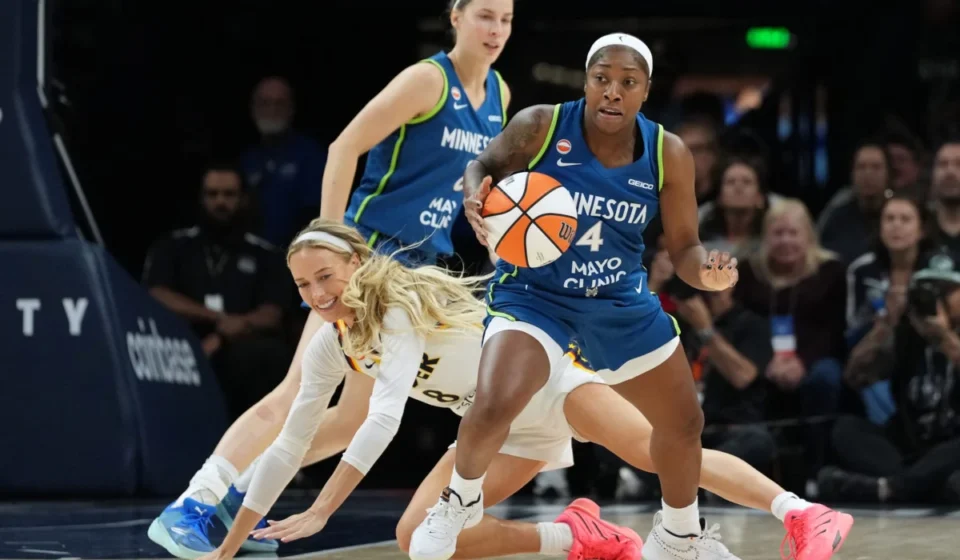

As the WNBA playoffs loom on the horizon, the air inside the Minnesota Lynx organization is thick with a mixture of tempered confidence and urgent introspection. For a team that has built its identity on the bedrock of defensive discipline and championship pedigree, the final weeks of the 2026 regular season have been anything but linear.
Just days before the playoffs were set to begin, a concerned fan approached a local sports writer at a neighborhood pub with the question currently haunting the Minnesota faithful: "How worried should we actually be about the Lynx?"
That inquiry captured the collective anxiety of a fanbase that watched their team navigate an erratic final stretch. After a seven-week period of absolute dominance—a stretch where the team looked like a runaway freight train destined for a fifth WNBA title—the Lynx hit a wall, losing four of their final five games. Now, as they prepare to host the New York Liberty in a best-of-three series, the Lynx find themselves at a crossroads: they are the No. 1 seed, yet they enter the postseason with more questions than answers.
A Season of Peaks and Valleys: A Chronological Look
The narrative of the 2026 Minnesota Lynx season is one of two extremes. For much of the summer, the team appeared untouchable. Between early July and the final weeks of the season, the Lynx ripped through the league, winning 16 of 17 games. During this window, their offense was lethal, efficient, and fluid. However, the internal metrics suggested that their defensive consistency—the hallmark of Coach Cheryl Reeve’s tenure—was beginning to fray.
The transition from "unstoppable" to "vulnerable" became apparent immediately following the two-week FIBA World Cup break. On September 18, the New York Liberty arrived at the Target Center and dismantled the Lynx, hounding standout rookie Olivia Miles baseline to baseline. The loss exposed a lack of rhythm and a defensive fragility that would characterize the remainder of the regular season.
The crisis reached a boiling point on Tuesday night in Indianapolis. In a performance that captain Napheesa Collier described as "embarrassing," the Lynx were decimated by the Indiana Fever, 96-77. The game was so disjointed that Coach Reeve pulled her starters—Collier, Kayla McBride, Natasha Howard, and Courtney Williams—midway through the second quarter, leaving them on the bench for the duration of the contest. It was a blunt, non-verbal message from the coaching staff to a team that seemed to have lost its way.
"We should be disappointed and embarrassed about the product that we put on the floor tonight," Collier stated plainly to reporters in Indianapolis. "Not proud of what we did. These things cannot happen. We had just met about the things we want to get done in the postseason, and we didn’t do any of these things."
The Rally: A Return to Form
Just when the panic reached its peak, the Lynx provided a masterful response. On Thursday night, during Fan Appreciation Night at the Target Center, the team exacted revenge on the same Fever squad that had humiliated them 48 hours prior.

The recovery was instantaneous and overwhelming. Led by a blistering shooting performance from Kayla McBride, the Lynx jumped out to a 25-4 lead in the first eight minutes. The crowd of 15,221 was electric, witnessing a 36-point lead at the height of the rout. The final score, 86-66, was more than just a win; it was a psychological reset.
"It felt good to play cohesively for the first time in a while," McBride said post-game. Her six three-pointers and 22 points, combined with Natasha Howard’s 21-point, 8-rebound performance, restored the sense of hierarchy in the locker room. Crucially, the defense held Indiana to 34.2% shooting—a statistical benchmark that coach Cheryl Reeve has used as a barometer for success since 2010.
Defensive Metrics: The Key to the Kingdom
Coach Reeve’s philosophy has long been simple: if the Lynx hold their opponent under 40% shooting, they almost always win. Since her arrival in 2010, the team holds an astonishing 185-9 record when meeting that defensive threshold.
However, the late-season funk saw this defensive capability vanish. Between June 28 and the final game of the regular season, the Lynx only held an opponent under 40% shooting once—an August 19 win against Golden State. For 24 games, the defensive standard slipped, causing the team to plummet from first to fourth in the league’s defensive ratings.
"I’ve really spent a lot of time trying to figure that out," Reeve noted. She pointed to a league-wide explosion in offensive efficiency, combined with a thin bench, as the primary culprits. As the season wore on, the heavy reliance on the starters led to fatigue, which in turn sapped the intensity required to sustain elite defensive pressure for 40 minutes.
The Home Court Paradox
Perhaps the most puzzling aspect of the 2026 season has been the team’s performance at the Target Center. Historically, the Lynx have been dynastic at home, building their championship runs on an impenetrable fortress in Minneapolis. In their previous four championship seasons (2011, 2013, 2015, and 2017), the Lynx were nearly unbeatable on their home floor.
This year, however, the team finished 15-7 at home—a respectable record by general standards, but one that falls short of the "dominance" expected by the organization. Even more concerning were the four home losses where the Lynx held leads in the fourth quarter.
Contrast this with their 18-4 road record, which set a new WNBA record for road victories, and the season takes on an even more paradoxical shape. "It sucks to have the record we do at home," Reeve admitted. "We’re not satisfied with that remotely."

A New Era of Visibility
Despite the home-court struggles, the environment at the Target Center has never been more vibrant. The 2026 season saw a record 19 crowds of 10,000 or more, nearly doubling the previous records. The decision to open the upper level for every game—not just for marquee matchups against stars like Caitlin Clark or Paige Bueckers—signifies a structural shift in the popularity of the sport.
Coach Reeve likens the current WNBA atmosphere to the arrival of Magic Johnson and Larry Bird in the NBA in 1979—a moment that redefined the league’s cultural footprint and competitive intensity. Even though the Lynx averaged a club-record 12,351 fans per game, it is a testament to the league’s growth that this figure ranked only sixth in a 15-team league.
Implications for the Postseason
As the Lynx (33-11) prepare to face the New York Liberty (26-18) in the first round, the weight of history hangs heavy. This series is a direct rematch of the 2024 finals, a series defined by bitter, hard-fought battles.
The depth of the 2026 field is unprecedented. With eight teams capable of making a deep run, the traditional barriers of "favorite" and "underdog" have blurred. The Liberty, with superstar talents like Breanna Stewart and Sabrina Ionescu, present a tactical nightmare for the Lynx, who struggled to contain the duo in their regular-season meetings.
Coach Reeve remains pragmatic about the road ahead. "I don’t think anybody should be surprised by any outcomes," she said. "I wouldn’t be surprised by anything, because I think all the teams are that good."
The Lynx have reclaimed their top seed, and with it, the pressure to prove that their late-season slump was merely a blip in an otherwise championship-caliber campaign. Whether they can replicate the defensive tenacity of their Thursday night resurgence against a high-octane Liberty offense will determine whether they advance to the next round or face a premature end to their title aspirations. For a team that has defined the modern era of the WNBA, the coming days will be a true test of their mettle, leadership, and, ultimately, their legacy.