



















































The Childcare Revolution: How a Decade of Political Shifts Transformed a "Private Matter" into a National Priority

For generations, childcare in the United States was relegated to the periphery of political discourse. It was widely treated as a private, domestic concern—a logistical hurdle for individual families to navigate behind closed doors. Lawmakers rarely mentioned it on the campaign trail, and policy proposals were often relegated to the back pages of legislative agendas.
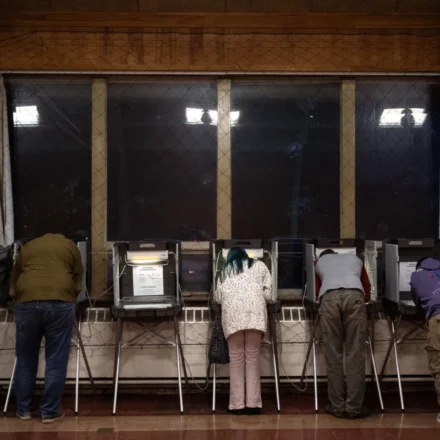
However, the 2026 midterm elections have marked a definitive end to that era. The results suggest a tectonic shift in the American electorate’s priorities: childcare is no longer a fringe issue; it is a central pillar of the modern political platform. As a new class of policymakers prepares to take office, the prospect of universal, federally supported childcare has moved from a distant aspiration to a tangible, high-stakes legislative objective.
The Turning of the Tide: A New Political Reality
The recent midterm election cycle served as a litmus test for the electoral power of family-focused policies. According to an analysis by the Straus Institute for Thriving Children & Families at the Bank Street College of Education—which utilized artificial intelligence to scan campaign websites and media mentions—three-quarters of all gubernatorial candidates in the 2026 cycle featured a specific childcare proposal in their platforms.
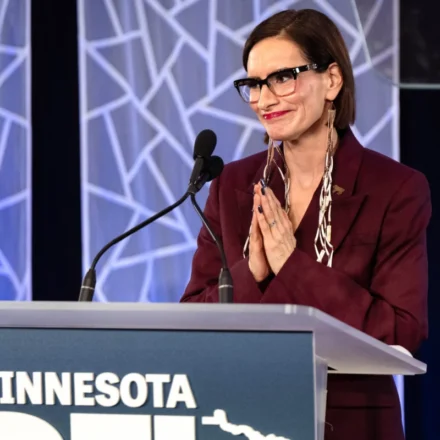
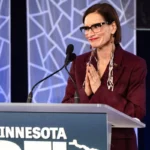
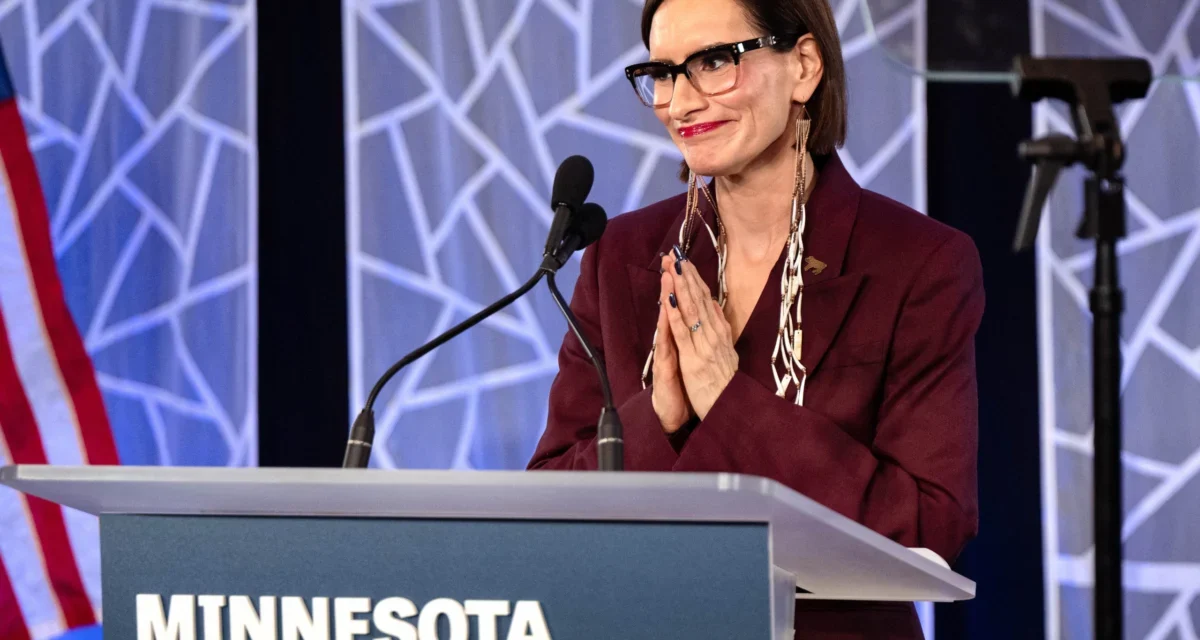
The electoral success of these candidates was striking. All six gubernatorial candidates who ran on platforms explicitly advocating for universal childcare or strict cost caps—including high-profile figures such as Keisha Lance Bottoms in Georgia and Deb Haaland in New Mexico—secured victories. This pattern was mirrored in the U.S. Senate races, where at least nine victors, including Peggy Flanagan (Minnesota), James Talarico (Texas), and Annie Andrews (South Carolina), identified childcare as a top-tier voter priority.
Sondra Goldschein, executive director of the Campaign for a Family Friendly Economy, described the results as a "watershed moment." Her organization, which invested over $40 million in competitive races and engaged with more than 16 million voters, believes the data is clear: voters are demanding relief from the crushing costs of caregiving, and candidates who ignore this demand do so at their own peril.
Chronology of a Policy Shift
To understand how we arrived at this pivotal moment, one must look at the evolution of childcare advocacy over the last decade.
- 2016–2019: The "Private Matter" Era. Childcare remained a secondary issue, often discussed only in the context of tax credits for the wealthy or limited subsidies for the lowest-income households.
- 2020–2023: The Pandemic Catalyst. The COVID-19 pandemic exposed the fragility of the U.S. childcare infrastructure. With schools and centers shuttering, the economic necessity of childcare became impossible to ignore. Organizations began shifting their messaging from "affordable care" to the necessity of "universal, scaled systems."
- 2024–2025: Building the Movement. Nonprofits like the Child Care for Every Family Network launched aggressive, federally focused initiatives. During this time, state-level successes in New Mexico and New York City served as "proof of concept," demonstrating that government-backed childcare could be implemented successfully at scale.
- 2026: The Ballot Box Mandate. The midterm elections solidified the issue. By placing childcare at the center of their campaigns, successful candidates demonstrated that the public appetite for reform is broad, deep, and cross-partisan.
Supporting Data: The Case for Scaled Investment
The momentum behind childcare reform is supported by a growing body of research suggesting that the current system—or lack thereof—is a primary driver of economic stagnation for working families.
Data from the Bank Street College of Education highlights that while childcare demand continues to skyrocket, the supply remains hampered by a workforce crisis and a lack of facilities. Current federal efforts, such as the Child Care and Development Block Grant (CCDBG), are widely regarded by policy experts as inadequate. Despite providing vital subsidies, the program currently reaches only a fraction of the families eligible for assistance.

Policy analysts have argued that the 120th Congress has a mandate to intervene. Suggestions range from doubling the current funding for the CCDBG to tripling it, arguing that the economic return on investment—by allowing more parents to return to the workforce and providing early education for children—far outweighs the budgetary cost.
The "Vote Mama" Effect: New Voices in the Halls of Power
Perhaps the most significant development in the 2026 midterms is the influx of parents—specifically mothers—into elected office. According to Vote Mama, an organization dedicated to electing Democratic mothers, at least 180 moms secured victories on November 3rd.
This cohort includes 10 new Democratic mothers headed to the U.S. House, three to the U.S. Senate, and 41 serving in state legislatures. Liuba Grechen Shirley, founder and CEO of Vote Mama, notes that these candidates did not just mention childcare as a talking point; they campaigned on it as a lived experience.
Historically, leadership in Washington has been dominated by older, wealthier men whose personal experiences with childcare were either nonexistent or decades removed. As Julie Kashen, founder of Women’s Economic Futures, notes, the presence of these new lawmakers will fundamentally change the tenor of debate. When policymakers have recent, personal experience with the exorbitant costs and logistical nightmares of finding quality care, the issue is far less likely to be dismissed as a "soft" or "secondary" topic.
Official Responses and Strategic Implications
While the shift in political willpower is undeniable, advocates acknowledge the legislative hurdles ahead. Democrats hold majorities in both chambers of Congress, but they lack veto-proof margins. With President Donald Trump occupying the White House for two more years, the path to a comprehensive universal childcare bill is fraught with potential for executive obstruction.
The Legislative Path Forward
Policy experts suggest a three-pronged strategy for the incoming class of lawmakers:
- Budgetary Accountability: Democrats must leverage their control of the purse strings to hold the current administration accountable and force funding increases for existing programs, even if an omnibus "universal" bill is blocked.
- The "Bush-Clinton" Strategy: Several analysts have pointed to the history of the Family and Medical Leave Act (FMLA). President George H.W. Bush twice vetoed the measure, only for it to be one of the first bills signed into law by President Bill Clinton in 1993. By passing popular, high-quality childcare legislation and putting it on the President’s desk, Democrats can force a public choice that may set the stage for a 2028 electoral mandate.
- Building the "Big Vision": As Andrea Paluso of the Child Care for Every Family Network argues, "half-measures" will no longer satisfy a public that has seen the potential for systemic change. The goal is to build an expansive, popular vision for a universal system that is "ready to go" should the political landscape shift in 2029.
Conclusion: The Door is Wide Open
The optimism following the 2026 elections is palpable. For years, advocates worked in the trenches, hoping for a "political wind change" that would allow them to scale their initiatives. That wind has arrived.
"The door is wide open," says Natalie Renew, executive director of Home Grown. While no single election cycle will provide a panacea for the complex, deep-rooted issues of the American care economy, the 2026 midterms have fundamentally altered the landscape. Childcare is no longer a hidden domestic burden; it is a central pillar of the American political project, and for the first time in a decade, the path toward a universal, high-quality, and affordable system appears not just possible, but increasingly inevitable.