

































Beyond the Flyover: How Midwestern Culture and Resistance Are Redefining the Heartland

For decades, the American Midwest has been unfairly relegated to the status of "flyover country"—a vast, monochromatic expanse perceived as culturally stagnant. However, a new wave of literary and artistic works is systematically dismantling this narrative. From the vibrant, gritty pulse of urban music scenes to the harrowing, poignant documentation of civil resistance, these new publications argue that the heartland is not just a participant in American culture; it is an engine of it.
The Heartland’s Rhythmic Pulse: Midwest Calling
On December 8, Belt Publishing will release Midwest Calling: From First Avenue to the American Football House, an ambitious anthology edited by Jeff Leven that serves as a love letter to the region’s sonic landscape.
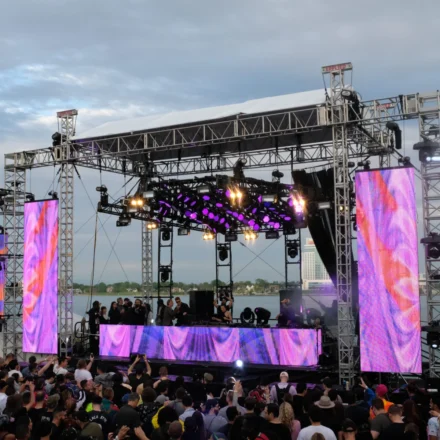
The collection is a sprawling, kaleidoscopic tour of the Midwest’s musical contributions, moving seamlessly from the pioneering electronic rhythms of Chicago house music to the raw, unvarnished punk ethos of the Replacements and Hüsker Dü. The book features a stellar lineup of contributors, including Bon Iver’s Justin Vernon and the National’s Bryan Devendorf, alongside insightful interviews with modern stalwarts like Jason Singer of Michigander and new-wave pioneer Gerald Casale of Devo.
A Masterclass in Anecdotal History
What elevates Midwest Calling beyond a simple history lesson is its reliance on intimate, "you-are-there" storytelling. Leven employs a time-jumping structure that connects disparate scenes, allowing the reader to trace the lineage of American sound.
Perhaps the most gripping contribution is Vernon’s essay, "The Last Prom on Earth." With a blend of self-deprecation and vivid candor, Vernon recounts a May 2010 performance by his short-lived supergroup, Gayngs, at the iconic Minneapolis venue First Avenue. The tension in the narrative peaks with the unexpected appearance of Prince, a moment Vernon describes with a level of intimacy that makes the reader feel as though they are standing right beside him in the wings.
Other highlights include:
- Marguerite L. Harrold’s "The Spirit of Chicago House Music": A coming-of-age memoir that treats the disco floor as a sacred space, perfectly capturing the teenage rebellion of the 1980s.
- Alexei Moon Casselle’s "Must Warn Others": A harrowing, visceral account of a tour with Atmosphere in the Southwest, where heatstroke and physical exhaustion turn a routine job into a psychological survival story.
- Ronald House’s "My First Record Store Job": A charming, nostalgic look at the ecosystem of independent music shops in Ohio, detailing the serendipitous moments when legendary bands like the Replacements were just neighborhood fixtures.
While the anthology is not a comprehensive encyclopedia—and could have benefited from a deeper exploration of marginalized voices and recent social reckonings in scenes like Minneapolis—it succeeds as an essential entry point for anyone seeking to understand why the Midwest remains the true beating heart of American independent music.

The Literary Landscape of the Twin Cities
Beyond music journalism, the regional literary scene is grappling with both the creative spirit of the Twin Cities and the harsh political realities of the present day. Steven Lawrence Lang’s The Art of Falling Apart offers a fictionalized, deeply atmospheric immersion into the local creative community.
Lang’s novel captures the "sense of place" with remarkable precision. From the specific geography of outdoor concerts at the Walker Art Center to the lived-in reality of local boarding houses, the book feels like a map of the city’s soul. His depiction of the chaotic, guitar-wielding housemate "Pigeonhole" serves as a microcosm of the eccentric, high-stakes life of a struggling artist in the North.
Chronology of Crisis: American Occupation
As the cultural sector shifts its gaze toward social justice, the upcoming release of American Occupation: Dispatches from Minnesota’s Resistance to ICE (January 26, 2027) marks a significant departure from artistic nostalgia. This collection, edited by Jonny Diamond and Su Hwang, documents the traumatic events of "Operation Metro Surge," a federal initiative that began in late 2025 and escalated through 2026.
A Timeline of Escalation
- Late 2025: Federal authorities initiate "Operation Metro Surge," a concentrated enforcement campaign targeting Minnesota.
- Early 2026: The operation escalates, resulting in the deployment of thousands of federal agents.
- Spring/Summer 2026: Local resistance efforts intensify, characterized by neighborhood patrols, community whistle-blowing, and logistical support for vulnerable families.
- September 2026: Reports from MPR indicate that roughly 2,300 individuals were either deported or forced to flee the country as a result of the surge, with nearly 4,000 total arrests made.
- January 28, 2027: The official book launch for American Occupation at the Hope Arts Center in St. Paul.
Supporting Data and Human Costs
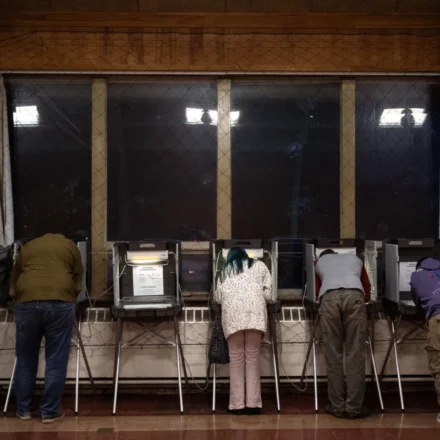
The impact of the 2026 federal surge was not merely statistical; it was a profound rupture in the fabric of Minnesota communities. Data from MPR highlights that a significant portion of those arrested during the surge had no prior criminal records, challenging the official federal justification for the operation.
The resistance to this occupation became a cultural touchstone. The tragic deaths of two volunteers, Renee Good and Alex Pretti, while they were documenting federal activities, galvanized the literary community. What began as individual acts of survival transformed into a collective outpouring of poetry and prose, captured in the American Occupation anthology.
Official Responses and Civic Implications
The federal government maintained throughout 2026 that Operation Metro Surge was a necessary component of national border enforcement. However, local leaders, educators, and artists have consistently pushed back, framing the operation as a violation of civil liberties and a dismantling of community trust.
In American Occupation, contributor Victoria Blanco reflects on the difficult conversations parents were forced to have with their children, noting that for many, the border was no longer an abstract line in the south, but a physical presence in their own neighborhoods.

"This isn’t new," Blanco writes, emphasizing the historical context of systemic inequality that the surge exacerbated.
Implications for the Future of the Heartland
The emergence of these works suggests a maturing of Midwestern identity. We are moving away from a region defined by its silence and toward a region defined by its articulation. Whether through the celebratory lens of Midwest Calling or the urgent, resistant prose of American Occupation, the message is consistent: The Midwest is a space of "fantastic transformation."
As Heid E. Erdrich notes in her contribution to the resistance anthology, Minneapolis—and by extension, the greater Midwest—is no stranger to being a site of struggle and rebirth. The region’s creative class, particularly BIPOC writers and artists, have assumed the role of documentarians, ensuring that the history of these social reckonings is not buried by official narratives.
Ultimately, these books prove that the Midwest is far from a "flyover." It is a place where culture is born, where music is lived, and where, when faced with the machinery of a state that seeks to divide it, the community responds with the most powerful tool it has: the truth, told in its own voice.
The book launch for "American Occupation: Dispatches from Minnesota’s Resistance to ICE" is scheduled for January 28, 2027, at 6:30 p.m. at the Hope Arts Center, located at the House of Hope Presbyterian Church in St. Paul. Attendance is free, though registration is required.