


















































Beyond Resilience: Why Indigenous Governance is the World’s Most Undervalued Climate Strategy

From the thawing permafrost of the Canadian Arctic to the drought-stricken highlands of Nepal and the flooding riverbanks of the Ecuadorian Amazon, Indigenous communities are on the front lines of a rapidly destabilizing planet. While the global narrative often frames these populations solely as passive victims of climate change, a groundbreaking new report from the nonprofit Land Is Life shifts that paradigm: Indigenous peoples are not just victims—they are the most effective architects of climate adaptation currently operating on Earth.
The report argues that the key to surviving the next century of climate volatility lies not in developing new, top-down bureaucratic systems, but in empowering the ancestral governance structures that have sustained these communities for millennia.
The Reality of Overlapping Crises
The contemporary climate crisis is rarely a singular event. Indigenous territories are increasingly subjected to "compounding disasters"—a term used to describe the convergence of multiple climate-related threats. For instance, a community might experience a severe wildfire, followed immediately by heavy rainfall that triggers landslides on soil stripped of vegetation.
Data from the Land Is Life report, which synthesizes more than 200 surveys from 46 countries, reveals a grim reality: over 80% of Indigenous respondents report facing two or more climate disasters simultaneously, while 90% note that the frequency of these events is accelerating at an alarming rate.
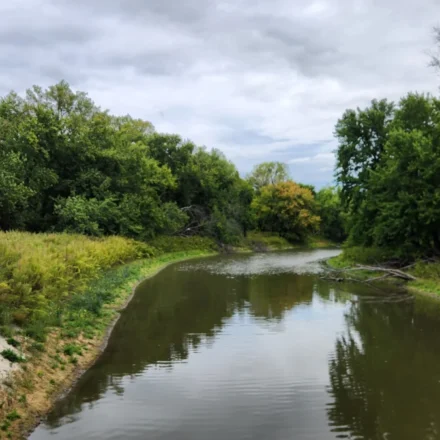
These are not isolated incidents; they are systemic shocks. In 2019, the Kichwa people of Sarayaku in the Ecuadorian Amazon faced catastrophic flooding along the Bobonaza River. The disaster wiped out essential crops and destroyed homes. However, the community did not collapse. According to Daniel Santi, president of the Sarayaku, their ability to navigate the disaster was predicated entirely on existing internal governance structures. Through the practice of minga—a Kichwa principle of collective responsibility and solidarity—the community mobilized to secure housing and food for the most vulnerable, demonstrating that social infrastructure is just as critical as physical infrastructure during a crisis.
The Science of Indigenous Stewardship
For decades, Western scientific institutions have sought to document "Indigenous knowledge," often treating it as a resource to be mined rather than a system to be respected. The Land Is Life report suggests that this approach misses the point. The efficacy of Indigenous climate adaptation is rooted in the inseparable link between traditional ecological knowledge (TEK) and political self-determination.

Case Studies in Adaptation
- Kenya: Indigenous Endorois and Tugen women have successfully revived and cultivated drought-resistant varieties of indigenous sorghum and millet. These crops have served as the only reliable food source during consecutive years of extreme drought, providing a buffer that industrial, high-water-demand agriculture failed to provide.
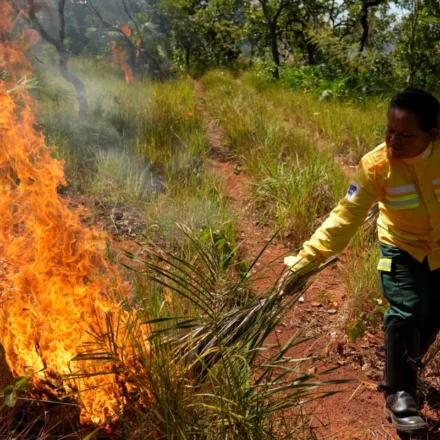
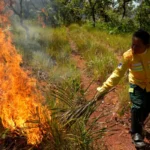
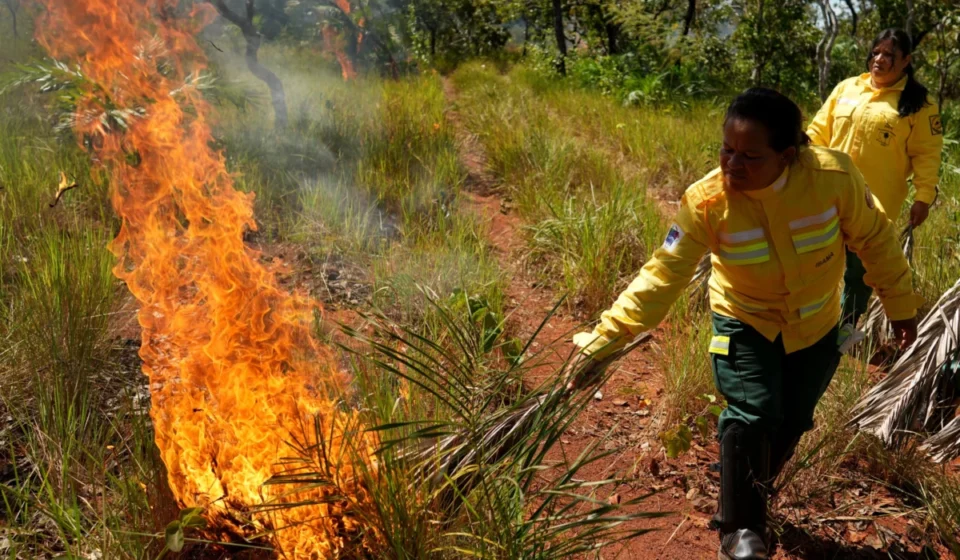
- Brazil: The Coordination of Indigenous Organizations of the Brazilian Amazon (COIAB) has institutionalized fire management and response teams. By combining traditional knowledge of seasonal burns with modern logistical support, they have successfully mitigated the risk of out-of-control forest fires that threaten the biodiversity of the Amazon basin.
- Peru: In the Ausangate Regional Conservation Area, Quechua communities have partnered with conservationists to create hybrid monitoring systems. By blending their long-term observations of glacier retreat and rainfall patterns with Western research methodologies, they have created a data-rich, actionable strategy for water management.
These examples highlight a critical takeaway: when Indigenous communities have the legal authority to manage their lands, they protect them more effectively than state-run conservation initiatives.
The Governance Gap: Legal and Financial Barriers
Despite the empirical success of these strategies, the report highlights a significant "governance gap." Many national governments continue to ignore, criminalize, or suppress Indigenous governance. In many cases, emergency alerts are not issued in local languages, and land tenure remains insecure, leaving communities vulnerable to encroachment by extractive industries even as they struggle to adapt to a changing climate.
The Funding Paradox
Perhaps the most egregious failure of the global climate movement is the disconnect between rhetoric and finance. While international climate summits regularly feature pledges of billions of dollars for climate adaptation, very little of this capital reaches the local level.
Luisa Castañeda Quintana, executive director of Land Is Life, points to a structural bias in the current funding model. "It’s not that they are only the most impacted, but they are already implementing effective solutions," she explains. "We don’t really need to create new structures or systems. We just need to see what is working."
The reality, however, is that funding is often siphoned off by large international NGOs or government agencies that lack the cultural context to implement effective solutions. Anisha Buda, a program officer at the National Indigenous Women Forum in Nepal, notes the deep frustration this causes: "There are so many projects that are supposed to be for Indigenous peoples, but they are implemented by non-Indigenous organizations and non-Indigenous peoples."
Implications: A Call to Action
The report, released during New York Climate Week, is a direct challenge to policymakers, philanthropists, and international development banks. As global geopolitical instability—including conflicts in Ukraine and the Middle East—strains international resources, there is a dangerous trend of states pulling back from climate commitments.

Gisela Hurtado, the report’s lead author, argues that this is precisely the wrong time to retract support. "We are in a moment where resources are scarce," she says. "Where can we put the little money that we have? Where can we put it to make it much more effective? The idea is to put it into what already is working."
The Path Forward: Three Pillars of Change
The report suggests that for global powers to mitigate the coming climate disasters, they must adopt three fundamental changes in their approach to Indigenous communities:
- Direct Financing: Removing the "middleman" organizations. Funding must go directly to Indigenous-led organizations that have proven track records in local disaster management and environmental stewardship.
- Legal Recognition: Establishing clear, enforceable land rights. Without legal authority over their territory, Indigenous governments cannot effectively plan for long-term climate resilience.
- Respect for Sovereignty: Moving away from extractive partnerships where Indigenous knowledge is treated as a data point. Instead, policy must embrace Indigenous decision-making as a co-equal governance model.
Conclusion: Lessons for a Warming Future
The climate crisis is essentially an exercise in forced adaptation. As extreme weather events become the new global baseline, urban centers and industrial nations are finding themselves unprepared for the speed of change. In contrast, Indigenous communities—who have lived in tight relationship with their ecosystems for centuries—are effectively "early adopters" of a sustainable future.
The wisdom contained within these communities is not a relic of the past; it is the blueprint for the future. As the Land Is Life report concludes, what Indigenous peoples are experiencing in their territories today—the floods, the fires, the changing seasons—is a preview of what the rest of the world will face tomorrow.
The question remains whether global powers will continue to ignore the experts in their own backyard, or whether they will finally provide the resources and legal autonomy necessary for Indigenous nations to lead the way through the storm. For the planet’s future, that choice may be the most critical one we make this century.