























































By Sean O’Kane
July 24, 2026
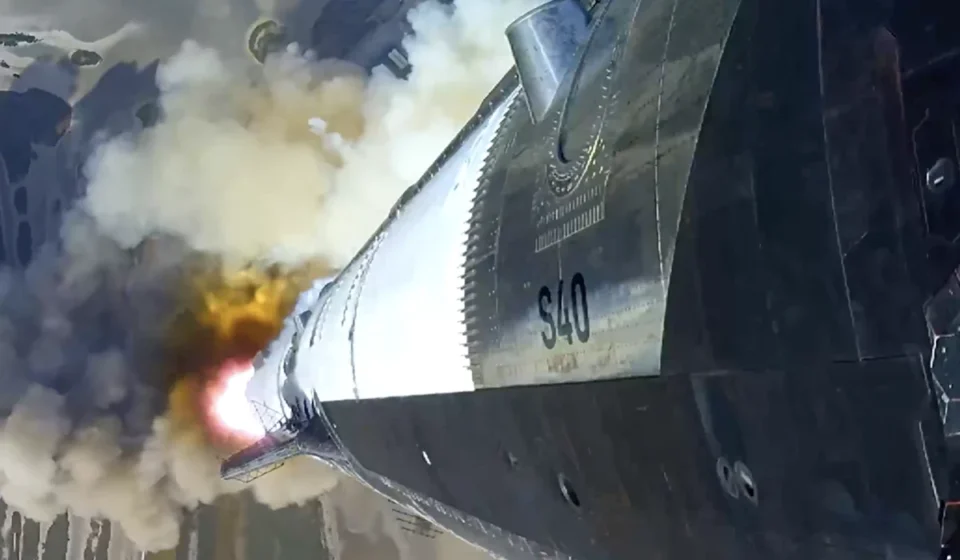
SpaceX successfully achieved a significant operational milestone on Friday, deploying its first generation of third-generation (V3) Starlink satellites during the 13th test flight of its colossal Starship launch vehicle. While the mission demonstrated the maturing capabilities of the Starship upper stage, the event was once again punctuated by a failure of the Super Heavy booster during a simulated landing maneuver in the Gulf of Mexico.
This latest flight, occurring just over a week after an abort triggered by engine irregularities, serves as a stark reminder of the volatility inherent in SpaceX’s “fly, fail, fix” development philosophy. As the company navigates its new reality as a publicly traded entity, the technical successes and setbacks of the Starship program are now inextricably linked to investor sentiment, fueling intense scrutiny from both the aerospace community and Wall Street.
Main Facts: A Mixed Bag of Results
The 13th test flight was widely viewed as a critical proving ground for the Starship V3 architecture. Following a mid-July scrub—necessitated by the failure of several Raptor engines during the initial ignition sequence—SpaceX engineers moved with characteristic speed to replace six of the engines.
On Friday, the rocket cleared the launchpad at Starbase, Texas, with no immediate anomalies. The mission objective was twofold: prove the reliability of the V3 upper stage’s orbital insertion capabilities and test the recovery parameters of the massive Super Heavy booster.
The upper stage performed flawlessly, navigating its flight trajectory and successfully deploying the latest iteration of Starlink satellites. However, the mission’s "landing" phase did not go to plan. As the Super Heavy booster descended toward the Gulf of Mexico for a controlled splashdown simulation, it failed to ignite the necessary engines for the terminal deceleration burn. The resulting high-velocity impact with the water surface led to the catastrophic destruction of the booster.
Chronology: From Engine Swaps to Water Impact
The path to Friday’s flight was anything but linear. The timeline of this mission encapsulates the aggressive cadence SpaceX maintains despite the risks:
- July 16, 2026: SpaceX initiates a launch attempt for the 13th Starship test. The sequence is aborted seconds after ignition due to data indicating inconsistent performance across multiple Raptor engines.
- July 17–23, 2026: Engineering teams work around the clock at the Texas facility. Six individual engines are swapped out, and the entire ignition control software is recalibrated to ensure better synchronization.
- July 24, 2026 (4:25 PM PDT): Starship lifts off successfully. The flight proceeds through staging, and the upper stage reaches its intended trajectory, successfully releasing the V3 Starlink satellites.
- Post-Deployment: The Super Heavy booster begins its return leg. Telemetry indicates a loss of control as the booster attempts to restart its engines for the landing burn. It impacts the Gulf of Mexico at speeds exceeding the design limits, resulting in a total loss of the hardware.
Supporting Data: The V3 Evolution
The transition to the V3 Starship platform represents the most significant design overhaul in the vehicle’s history. The primary goal of V3 is to increase payload capacity and enhance the reusability of the booster.
In May, during the maiden flight of the V3 configuration, the booster suffered a failure during the separation phase—the critical moment where the upper stage detaches from the booster. Friday’s flight showed clear progress in this specific area; the separation occurred cleanly, and the upper stage maintained engine integrity throughout the flight, a stark improvement over the May flight where an engine was lost mid-ascent.
However, the failure to execute the landing burn highlights a recurring bottleneck. While the upper stage is proving its utility as a delivery vehicle, the “return-to-launch-site” capability remains the elusive “Holy Grail” for the Super Heavy. Data from the telemetry recorders will now be analyzed to determine if the failure was a result of propellant sloshing, sensor latency, or a hard-coded error in the flight computer’s landing logic.
The Market Perspective: SpaceX Under Public Scrutiny
The landscape for SpaceX has shifted dramatically since June 2026, when the company completed the largest initial public offering (IPO) in history. For years, SpaceX operated with the luxury of private capital, allowing it to absorb the cost of exploding prototypes without public accountability.
Today, the narrative is different. Following the IPO, the stock saw an initial surge, but the subsequent months have been marked by a slow, steady decline. Trading at a peak of $200 per share, the stock plummeted to $115 by the close of markets on Friday. The impact of the booster failure was immediate; in after-hours trading, shares dipped an additional 2%, reflecting the growing anxiety among retail and institutional investors regarding the company’s ability to normalize flight operations.
The “fly, fail, fix” methodology, once celebrated as a radical innovation in rapid iteration, is now being scrutinized as a liability for shareholder value. Investors are beginning to ask when the “fix” phase will result in a sustainable, repeatable, and cost-effective flight cycle.
Implications: What Lies Ahead?
The successful deployment of the V3 Starlink satellites is a proof-of-concept for the commercial viability of Starship, even in its prototype stage. By utilizing the upper stage for satellite delivery—even if the cargo is destined to burn up shortly after deployment—SpaceX is validating the vehicle’s capacity to handle the heavy lift requirements of its next-generation constellation.
1. Operational Hurdles
The repeated failures of the Super Heavy booster suggest that the physics of landing a 230-foot-tall rocket in the ocean are vastly more complex than the company’s previous successes with the Falcon 9. If SpaceX cannot solve the landing burn, the promise of “full and rapid reusability” remains a theoretical aspiration rather than a commercial reality.
2. Strategic Pivot
The company is expected to pause for a comprehensive review of the landing software and the Raptor engine ignition sequences. The next flight will likely focus exclusively on the stability of the booster during the terminal phase of the flight.
3. Financial Reassessment
For the investor class, the coming quarter will be decisive. SpaceX must demonstrate that the cost of these “developmental losses” does not cannibalize the revenue generated by its more stable business units, such as Falcon 9 launches and the existing Starlink network. If the market continues to perceive the Starship program as a bottomless money pit, the pressure on leadership to shift toward a more conservative, risk-averse testing model will mount.
4. Regulatory and Safety Oversight
With each failure, the Federal Aviation Administration (FAA) and other regulatory bodies are likely to increase their oversight. While SpaceX’s rapid iteration has been supported by the need for American space dominance, the public safety implications of failing hardware—even in the Gulf of Mexico—will require the company to provide increasingly granular data to ensure that the “fail” part of their mantra does not result in unintended debris or environmental impact.
As the smoke clears over the Gulf, the engineering team at Starbase is already back in the hangar. They have proven they can reach the sky; now, they must prove they can return to the earth without losing the vessel. In the world of aerospace, that is the difference between a project and a business.
Disclaimer: This report is based on preliminary data and is subject to updates as more telemetry from the 13th flight is released. The author maintains no financial position in the companies mentioned.