



















































Beyond the Textbook: How a Growing "Climate Literacy" Movement is Transforming High School Diplomas

Across the United States, a quiet revolution is taking root in the hallways of high schools—not in the form of protest, but in the form of a credential. As climate change evolves from a distant, theoretical concept into an immediate reality affecting local ecosystems, economies, and infrastructure, a growing number of states are implementing a "Seal of Climate Literacy." This initiative, which functions similarly to the well-established "Seal of Biliteracy," is designed to certify that graduating students possess not only the scientific knowledge to understand the climate crisis but also the practical experience to address it in their own communities.
The Genesis of the Climate Seal
The movement originated with Lyra Colorado, a Denver-based nonprofit dedicated to community-based education. According to Mary Seawell, the organization’s CEO, the impetus for the program came from rural educators and students who were frustrated by the limitations of traditional, textbook-heavy curriculum. These students wanted to move beyond the abstract "doom and gloom" of global climate models and instead engage with the environment as a living, breathing reality in their own backyards.
The resulting framework is a two-pronged approach: academic rigor combined with civic engagement. To earn the seal, students must complete at least two advanced courses covering Earth’s climate systems—typically a science course like biology or environmental studies, paired with a second course from another discipline, such as civics or the humanities. Crucially, the program requires a capstone project that forces students to apply their classroom knowledge to a local environmental issue.
A Chronology of Adoption
The pilot for the program in Colorado launched in 2024, and the response was swift. Since its inception, 26 of the state’s 179 school districts have opted into the program, with approximately 1,200 students receiving the endorsement to date.
The model’s success in Colorado sparked a regional wildfire of interest. Maine, looking for a way to formalize environmental education without waiting for protracted legislative battles, adopted its own version of the seal earlier this year. Shortly thereafter, California—the world’s fifth-largest economy—passed legislation to establish the seal for its graduates. Similar efforts are currently gaining momentum in Hawaii and Minnesota, driven largely by youth coalitions who argue that the urgency of the climate crisis warrants a formal place in the high school curriculum.
From Theory to Practice: Anthony Muñoz’s Ozone Garden
The human impact of this policy is best exemplified by Anthony Muñoz, a student at Vista Academy near Denver. Concerned about the potential health and environmental impacts of jet fuel from the nearby international airport, Muñoz sought a way to monitor air quality.
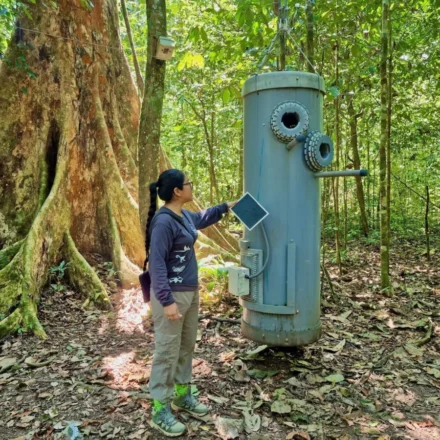
Partnering with climate scientists from the National Center for Atmospheric Research (NCAR), Muñoz designed an "ozone garden" on his campus. By planting specific native species capable of detecting ground-level ozone, he created a biological data-collection site. Under the guidance of NCAR researchers, he learned to interpret leaf discoloration as a diagnostic tool for air quality and documented the role of milkweed in monarch butterfly migration.
"One garden is a very good data source," Muñoz reflects. "Colorado is so beautiful, and I would hate to see it wilt away." His project, which required securing a $1 million municipal grant, transformed him from a curious student into a climate leader. Today, as a mechanical engineering student at the Colorado School of Mines, he continues to advocate for environmental action, mentoring younger students at his former high school to maintain the garden.
Supporting Data and Workforce Readiness
Proponents of the seal argue that it serves as more than just a badge on a diploma; it is a bridge to the "green economy." As the world transitions toward renewable energy and sustainable infrastructure, there is an exploding demand for workers skilled in solar grid management, climate-resilient agriculture, water resource management, and urban heat mitigation.
In Maine, K-12 climate education specialist Teddy Lyman notes that many students are already performing this work but lack the formal recognition to leverage it for career advancement. "They’re often doing the work already but don’t have the recognition," Lyman says. "They didn’t see a pathway to continue that work and embark on that as a career."
In a pilot program across nine high schools in Maine, Lyman expected twelve applicants for the seal. He received 57. The curriculum is tailored to the state’s specific geography; at Freeport High School, students are studying the impact of warming waters on the Gulf of Maine—a body of water heating faster than almost any other in the world. Their projects range from developing new methods for composting to exploring the commercial viability of invasive crab species, grounding their scientific learning in the realities of their local aquaculture-based economy.
Official Responses and Political Hurdles
Despite the enthusiasm from educators and students, the seal faces significant opposition. Critics, such as Lance Izumi of the Pacific Research Institute, argue that the seal is a distraction from foundational science education.
"Diverting focus away from foundational science learning could worsen California’s already abysmal performance levels," Izumi wrote in an email, citing low state-wide science proficiency scores. He argues that schools should focus on core academic fundamentals rather than what he terms "activist community projects."
Beyond philosophical disagreements, the program faces material constraints. Funding is a perennial challenge; in Colorado, state lawmakers provided less than $20,000 for the rollout. Many students, like Muñoz, must rely on personal initiative, grants, or non-profit support to fund their capstone projects. Furthermore, the political landscape is shifting. The current federal administration’s skepticism toward climate science, coupled with efforts to target the tax-exempt status of environmental non-profits, has created a "chilling effect" on the philanthropic organizations that often fund these initiatives.
The Implications for Future Generations
The debate over the climate seal reflects a broader tension in American education: Should schools prioritize standardized test scores in core subjects, or should they prepare students for the specific, existential challenges of the 21st century?
Proponents of the seal suggest that the two goals are not mutually exclusive. They argue that applying scientific methods to real-world, community-based problems—such as beaver dam restoration, snow science, or forestry management—is an effective way to teach the very scientific principles critics claim to champion.
For students like Rylan Neumann, a graduate of the Boulder Valley School District who now studies environmental economics at UC Berkeley, the seal represents a necessary shift in agency. After earning her seal, Neumann traveled to the state capitol to lobby for climate legislation, illustrating the "civic ripple effect" the program intends to foster.
"Students are the future," Neumann says. "We’re the ones growing up in this world."
As the program continues to expand, its long-term success will likely depend on its ability to withstand political scrutiny and secure sustainable funding. However, for the students involved, the seal already serves its primary purpose: it transforms the overwhelming anxiety of a warming world into a series of manageable, local, and scientific actions. By the time they receive their diplomas, these students are no longer just graduates; they are informed stakeholders in the future of their communities.
The initiative is moving toward deeper integration with higher education as well. Organizations like Lyra Colorado are working with institutions such as Colorado Mountain College to ensure that the seal correlates with college credit or certification in skilled trades like heat pump installation and sustainable agriculture. This shift suggests that the "Climate Seal" may eventually become a standard credential, much like an AP credit or an industry certification, signaling to employers and universities that a student is ready to tackle the defining challenge of their generation.