























































The Midnight Race: How Flipkart and Global Giants are Reshaping India’s Quick-Commerce Landscape

The Indian retail sector is currently undergoing its most significant transformation in a decade. Once defined by the weekly trip to the local kirana store or the scheduled e-commerce delivery, the consumer habit has shifted toward the "instant gratification" model. Leading this charge is Flipkart, the Walmart-owned e-commerce titan, which is aggressively narrowing the gap with established quick-commerce pioneers. As the sector matures, the battle for the Indian consumer’s wallet has evolved into a high-stakes race where delivery speed is the ultimate currency.
The Rapid Ascent of Flipkart Minutes
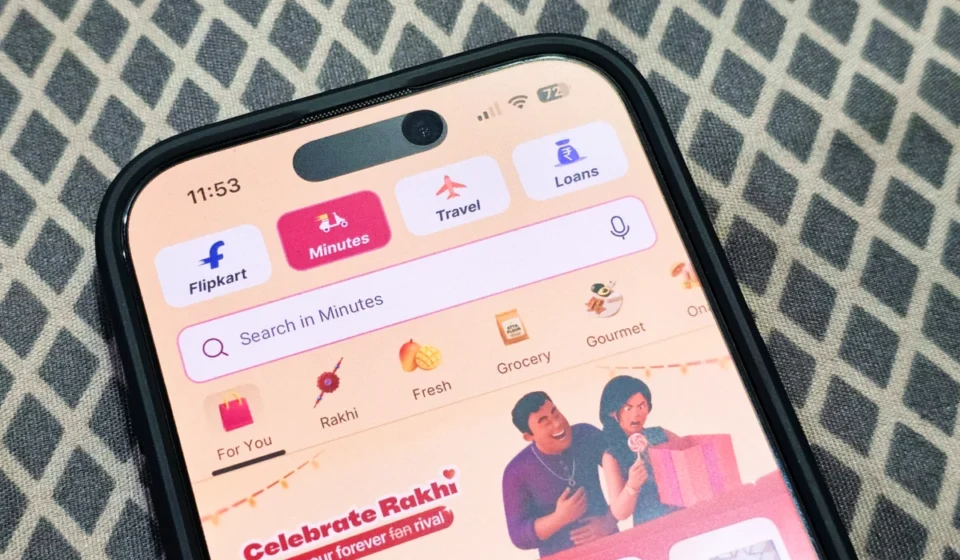
Flipkart’s foray into the 10-minute delivery segment, branded as "Flipkart Minutes," has evolved from a defensive experiment into a central pillar of its growth strategy. Since its official debut in August 2024, the service has demonstrated explosive growth. Data shared by insiders indicates that the platform is now processing between 1.1 million and 1.2 million orders per day. This marks a staggering increase from the 390,000 to 400,000 daily orders recorded as recently as November 2023.
This trajectory has brought Flipkart within striking distance of Swiggy’s Instamart, a veteran in the space, which currently handles approximately 1.4 million daily orders. While Flipkart was a late entrant to a market defined by first-mover advantages, its ability to scale infrastructure at an unprecedented rate has disrupted the existing hierarchy.
A Chronology of the Instant Delivery Revolution
To understand the intensity of the current market, one must look at the timeline of the "10-minute" phenomenon in India.
- 2013: The seeds were sown with the birth of Grofers, an online grocery platform that would eventually pivot and rebrand as Blinkit, setting the stage for the current quick-commerce wave.
- 2020: The COVID-19 pandemic served as a catalyst for behavioral change. Swiggy launched Instamart, pioneering the concept of sub-45-minute grocery deliveries to homebound consumers.
- 2021: Zepto entered the fray, aggressively marketing the 10-minute delivery promise, forcing a market-wide shift in consumer expectations. By the end of this year, Blinkit had fully pivoted to its current quick-commerce model.
- 2023–2024: The market reached a saturation point of competition, with giants like Zomato (Blinkit’s parent) and Swiggy dominating the top ranks.
- August 2024: Flipkart officially launched "Minutes," signaling that the largest e-commerce players were no longer willing to cede the lucrative instant-delivery market to specialized startups.
Supporting Data: Scaling the Infrastructure
The backbone of this growth is an extensive network of "dark stores"—micro-fulfillment centers strategically positioned in urban neighborhoods. Flipkart’s expansion of this infrastructure has been nothing short of relentless. As of early 2024, the company operated approximately 340 such facilities. By January, that number had grown to 600. Today, Flipkart boasts between 1,020 and 1,050 micro-fulfillment centers, with a stated goal of reaching 1,500 facilities by the end of 2026.
This growth is fueled by a rate of addition of roughly 100 new facilities every month. The efficiency gains are measurable: the average delivery time for Flipkart Minutes has dropped from 13 minutes a year ago to approximately 11 minutes today.
The market landscape remains highly concentrated at the top, according to data from Datum Intelligence:
- Blinkit: Continues to lead with 3.4 million to 3.6 million daily orders.
- Zepto: Maintains the second position with 2.4 million to 2.6 million daily orders.
- Swiggy Instamart: Holds steady at 1.4 million daily orders, with over 1,200 dark stores across 130 cities.
- Flipkart Minutes: Rapidly closing the gap, currently challenging Instamart for the third spot.
The economic metrics are also shifting. Swiggy recently reported that more than 45% of its dark-store network is already contribution-margin positive, a crucial milestone for a sector that has historically been plagued by high cash burn. Meanwhile, Flipkart is seeing impressive customer retention; 65% to 70% of its monthly users are repeat buyers, and transactions per customer have surged by 50% to 60% year-over-year. Customers are spending an average of ₹400 to ₹500 per order, primarily on high-frequency categories like fruits, vegetables, dairy, and meat.
The Strategic Advantage: The Ecosystem Play
Why is Flipkart succeeding so quickly? According to Satish Meena, an adviser at Datum Intelligence, the answer lies in the "existing audience." Unlike startups that had to acquire customers from scratch, Flipkart leverages its massive, pre-existing base of e-commerce users. Having spent years and billions of dollars building trust, the company simply "switched on" the quick-commerce option for an audience already accustomed to the Flipkart interface.
"Flipkart is already a serious player," says Meena. "Once you open 1,000 dark stores and are doing a million orders per day, you have achieved the critical mass necessary to dictate terms in the market."
Beyond simple grocery staples, Flipkart is now diversifying its catalog. By integrating premium gourmet products, organic items, and artisanal goods, the platform is attempting to increase the "basket size" of its urban customers, effectively turning a quick-delivery service into a comprehensive lifestyle utility.
The Global Rivalry: Amazon Enters the Fray
The competition is not limited to domestic players. Amazon, the Seattle-based e-commerce behemoth, is mounting its own significant push into the Indian quick-commerce space. During his visit to India in June, Amazon CEO Andy Jassy highlighted that "Amazon Now" has become the company’s fastest-growing business in the region.
Amazon’s strategy mirrors that of Flipkart: utilizing its existing logistical network to offer instant delivery across 300 cities. With plans to establish over 1,000 micro-fulfillment centers, Amazon is looking to bridge the gap between its traditional long-haul delivery model and the demands of the modern, impatient consumer.
Official Responses and Industry Silence
Despite the public nature of these expansions, the major players have maintained a guarded posture. When reached for comment, spokespersons for Flipkart, Amazon, Swiggy, Zepto, and Eternal (the parent company of Blinkit) declined to provide specific operational details, choosing instead to focus on their respective growth milestones previously disclosed in investor reports and press releases. This silence reflects the intense, "wartime" atmosphere characterizing the current market, where operational data is considered a competitive secret.
Implications: The Irreversibility of Speed
The implications of this shift are profound for the Indian economy and consumer behavior. Analysts at Bernstein have noted that even as broader consumer demand in India shows signs of softening due to economic headwinds, the quick-commerce sector remains a resilient outlier. The shift toward instant gratification is not a passing trend; it is a fundamental alteration in the shopping psyche.
"Can you go back to scheduled delivery now in grocery? No," says Meena. "Once the consumer gets used to the convenience of having milk or medicine delivered in ten minutes, you will not go back. It becomes a baseline expectation."
For Flipkart and Amazon, this is both an offensive and defensive necessity. If they fail to provide quick commerce, they risk losing the high-frequency grocery and personal care transactions that keep customers engaged on their platforms. Consequently, the "10-minute" race has evolved from a niche service into an essential defensive moat.
As the battle intensifies, the losers will likely be the traditional retail formats that cannot adapt to the infrastructure requirements of the dark-store model. For the consumer, however, the race has ushered in an era of unprecedented convenience, effectively turning the entire urban landscape into an on-demand warehouse. The question remains: how much further can the delivery times be compressed before the logistical costs become unsustainable? For now, the answer seems to be "as fast as possible."