




















































WASHINGTON, D.C. – As Representative Angie Craig prepares to vacate her hard-won seat in Minnesota’s 2nd Congressional District to pursue a bid for the U.S. Senate, a fiercely contested Democratic primary is unfolding, with three distinct candidates vying to inherit her mantle. Craig has publicly committed to not endorsing a successor in the August 11 primary, yet her formidable legacy and recent political challenges cast a long and complex shadow over the race, shaping the strategies and appeals of the contenders: former state senator Matt Little, state Senator Matt Klein, and state Representative Kaela Berg.
Craig’s decision to remain neutral is a calculated move, aimed at allowing district voters to chart their own course. However, for a district renowned for its “purple” political hue – a delicate balance of southern Twin Cities suburbs and rural farm communities – the absence of an incumbent’s endorsement, especially one who successfully flipped and held the seat for four terms, creates a vacuum ripe for strategic maneuvering and ideological debate. The primary has quickly become a microcosm of the broader ideological struggles within the Democratic-Farmer-Labor (DFL) Party, pitting moderate electability against progressive fervor in a district where every vote, and every nuance of political positioning, profoundly matters.
A Shifting Political Landscape: Craig’s Tenure in CD-2
Angie Craig’s political journey in the 2nd Congressional District is a testament to her unique brand of moderate Democratic politics. First elected in 2018, Craig successfully wrested control of the district from Republican hands, a feat she repeated in subsequent cycles, notably against figures like Jason Lewis and Tyler Kistner. Her consistent victories in what was once considered a Republican stronghold underscored her ability to appeal to a broad coalition of voters, bridging the partisan divide with a pragmatic, center-left approach. This moderate stance, often emphasizing local issues and economic stability, became her hallmark and the foundation of her electoral success.
The 2nd District, encompassing a diverse demographic and economic landscape from the suburban sprawl of Dakota and Scott counties to the agricultural heartland, has long been a bellwether for Minnesota politics. Its "purple" designation reflects its propensity to swing between parties, making it a perennial battleground where nuanced messaging and broad appeal are crucial for victory. Craig’s consistent ability to hold this district for the DFL made her a national figure and a symbol of how Democrats could win in challenging territories.
However, the political climate has shifted, even for a seasoned incumbent like Craig. Her decision to run for retiring Senator Tina Smith’s seat has opened the door for this competitive primary, but it also highlights the evolving pressures within the DFL. In recent years, Craig’s moderate voting record has increasingly clashed with the burgeoning activism of progressive Democrats, a movement particularly energized in Minnesota following events like "Operation Metro Surge," which, despite its unclear specifics in this context, broadly refers to a period of heightened social and political tension that galvanized progressive bases.
A critical point of contention for Craig was her vote in favor of the Laken Riley Act. This Republican-sponsored legislation, which allows the Department of Homeland Security to detain and deport non-citizens charged with—rather than convicted of—offenses like burglary, shoplifting, or assault, drew significant criticism from progressive factions. Craig has since publicly expressed regret for her vote, acknowledging the backlash and its potential impact. This incident, in particular, has become a focal point in the primary, subtly influencing how candidates position themselves relative to Craig’s legacy and how they seek to win over the district’s diverse Democratic electorate.
The Battle for the Democratic Nomination
The August 11 primary presents a fascinating ideological spectrum within the DFL, with each candidate attempting to carve out a distinct path to victory while navigating Craig’s enduring influence.

Matt Little: The Progressive Standard-Bearer
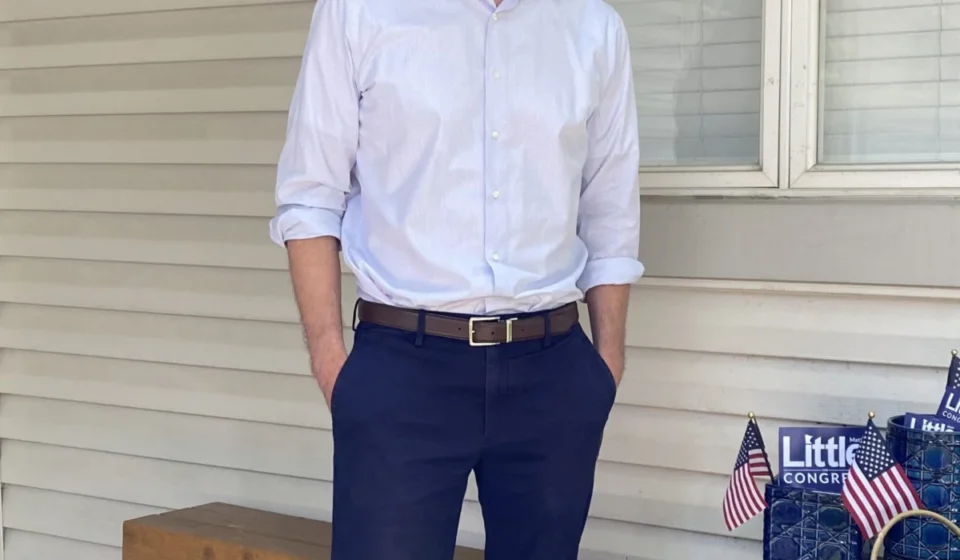
Matt Little, a former state senator and one-time mayor of Lakeville, has emerged as the most outwardly progressive candidate in the race. His campaign is built on a platform designed to energize the district’s left-leaning base. Crucially, Little has explicitly stated he is not seeking Craig’s endorsement, a position he maintains is consistent with her declared neutrality. However, political observers like Hamline University political science professor David Schultz suggest a deeper motivation: "Little is trying to run as the candidate furthest to the left," Schultz noted. "And he’s concerned that because of (Craig’s) support for the Laken Riley Act, progressives may not support him if he has her endorsement." This indicates a strategic distancing, positioning Little as a purer progressive alternative.
Little’s progressive appeal has been bolstered by securing the DFL Party endorsement in the district, a significant organizational advantage that provides access to party resources and a dedicated volunteer base. His campaign’s ability to mobilize this base will be critical, especially in a primary where turnout among committed party activists can be decisive. Financially, Little has demonstrated a respectable fundraising capacity, reporting nearly $900,000 as of June 30, which includes a personal loan of $155,000 to his campaign, signaling his personal investment in the race.
Matt Klein: The Moderate Successor?
In stark contrast to Little, state Senator Matt Klein, a physician at the Mayo Clinic in Rochester, is actively campaigning as a moderate Democrat, explicitly positioning himself in "Craig’s mold." Klein has openly sought Craig’s endorsement, stating, "I would be honored to have it." His strategy centers on appealing to the same broad coalition that propelled Craig to victory: moderate Democrats, unaffiliated voters, and even some disaffected Republicans.
Klein’s core argument for his candidacy revolves around electability in the general election. He frequently reminds voters that the 2nd District remains a swing district, emphasizing the necessity for a Democratic nominee capable of bridging partisan divides. "This is the last swing district in Minnesota," Klein asserts. "To hold it, you have to bridge a (partisan) divide." He cautions against nominating a candidate too far to the left, fearing it could jeopardize the seat in the general election against Republican challenger state Sen. Eric Pratt. University of Minnesota political science professor Larry Jacobs acknowledges the validity of this concern, noting that Klein, representing a suburban district in the state Senate, has a proven track record of appealing to a diverse electorate. Klein’s fundraising efforts reflect his viability, having raised over $1 million by the end of June, positioning him as a strong financial contender.
Kaela Berg: Progressive Voice with a Gendered Appeal
State Representative Kaela Berg, who represents Burnsville in the Legislature and works as a flight attendant, offers another progressive voice in the primary, but with a distinct emphasis on gender and labor. Berg, like Klein, has sought Craig’s endorsement, highlighting her "close relationship" with the congresswoman and their collaborative work on local issues, such as securing funding for a dangerous intersection.
Berg’s campaign prominently features her identity as a woman and a working-class advocate. She is a member of the "Blue Collar Brigade," a coalition of five House candidates with ties to organized labor who have launched a joint fundraising effort. "I’m the only woman in the Blue Collar Brigade, and the only woman in the race," Berg proudly states. "That matters right now. I love an ally and a great dude, but women’s voices are needed right now." David Schultz supports this sentiment, noting that "because of Craig, many voters in the 2nd District ‘view it now as a female seat.’" This perception could significantly benefit Berg, allowing her to tap into a desire for continuity in female representation.
Berg’s gender has also garnered her the backing of Emily’s List, a prominent organization that supports pro-choice female candidates. This endorsement provides not only financial support but also strategic advice and, crucially, access to political action committees that have already produced ads promoting her candidacy. While Berg’s fundraising, at $355,000, lags behind Little and Klein, the institutional support from groups like Emily’s List and the Blue Collar Brigade can help amplify her message and compensate for a smaller war chest.

Electoral Dynamics and Strategic Calculations
The interplay of ideologies and personalities in this primary creates a complex electoral dynamic. Klein openly hopes that the presence of two progressive candidates, Little and Berg, will "split the vote among those leaning left," thereby creating "a path for Klein to win the nomination," as corroborated by Larry Jacobs. This scenario is a classic primary strategy, where a moderate candidate can emerge victorious if the progressive vote is fractured.
The 2nd District’s "purple" nature presents an inherent challenge that all Democratic candidates must address. While analysts currently suggest the district "leans Democratic," the extent of that lean is "not clear." This ambiguity means that whoever wins the primary will face the daunting task of uniting the DFL base while simultaneously pivoting to the center to appeal to independent and moderate Republican voters in the general election. Klein is particularly vocal about this necessity, asserting, "We need a Democrat who can win every cycle." He poses a critical question: "Can a progressive candidate win in parts of the district that are not progressive?" This question underpins much of the strategic thinking in the primary.
Another significant factor is fundraising, where Craig set a high bar. In her last reelection bid in 2024, she raised a staggering $8.3 million, winning by nearly 14 percentage points over Republican Joe Teirab. The current primary candidates, while raising substantial sums, are far from matching Craig’s financial prowess. Little’s $900,000, Klein’s over $1 million, and Berg’s $355,000 reflect a more traditional primary funding landscape. This financial disparity means the eventual Democratic nominee will likely need to redouble fundraising efforts quickly to compete effectively against the Republican candidate, state Senator Eric Pratt, who has already raised approximately $462,000. The general election will undoubtedly be one of the most expensive and closely watched races in the state.
Candidates Articulate Their Visions
The candidates’ public statements reveal their distinct approaches to the primary and the general election challenges. Craig’s consistent message that the choice "belongs to 2nd District voters" underscores her commitment to neutrality, even as her policy decisions, like the Laken Riley Act vote, inadvertently influence the narrative.
Little’s pragmatic acceptance of Craig’s non-endorsement is framed as a matter of respecting her wishes, yet it also allows him to fully embrace his progressive identity without being tethered to her more centrist image. His campaign’s focus will be on mobilizing the DFL’s energized progressive wing, arguing that the district is ready for bolder leadership.
Klein, on the other hand, actively champions a message of broad appeal and electability. His emphasis on bridging divides and securing victory "every cycle" is a direct appeal to voters concerned about holding the seat against Republican challenges. He implicitly suggests that a moderate approach is the safest bet for the DFL in a swing district.
Berg skillfully intertwines her progressive platform with an appeal to representation. Her close working relationship with Craig provides a sense of continuity, while her identity as a woman and a member of the "Blue Collar Brigade" offers a fresh, yet relatable, progressive voice. She leverages the sentiment that the district, having been represented by a woman for four terms, might prefer to continue that trend.

Looking Ahead: The Future of CD-2
The outcome of the August 11 primary will profoundly shape the future political trajectory of Minnesota’s 2nd Congressional District. Should a progressive candidate like Matt Little or Kaela Berg win, the challenge will be to unify the party and convince moderate and independent voters that their platform, while left-leaning, is still broadly appealing and practical for the district. The DFL Party endorsement for Little could prove invaluable in this effort, providing a framework for party unity. For Berg, leveraging her "woman’s seat" narrative and labor ties could expand her appeal beyond the core progressive base.
Conversely, a victory for Matt Klein would likely see a more direct continuation of Craig’s moderate strategy. His emphasis on electability and bridging partisan divides would be immediately put to the test in the general election, where he would aim to replicate Craig’s success in attracting cross-party support. The risk, however, is whether he can sufficiently energize the progressive wing of the party, which has shown increasing impatience with centrist politics.
Regardless of who emerges victorious from the Democratic primary, they will face a formidable opponent in state Senator Eric Pratt. Pratt’s campaign will undoubtedly seek to capitalize on any perceived ideological extremism from the Democratic nominee, aiming to paint them as out of step with the district’s balanced electorate.
The next representative will also inherit the defining characteristics of Angie Craig’s legacy: her reputation as a "hard worker" and her "extensive relationships with people in the district," as noted by Larry Jacobs. Building and maintaining such deep community ties and demonstrating tireless dedication will be crucial for any successor hoping to replicate her four terms of success.
The 2nd Congressional District remains a pivotal battleground, a microcosm of the national political landscape where ideological purity often contends with electoral pragmatism. The ongoing surge of progressive activism, sparked by events like "Operation Metro Surge," ensures that the internal dynamics of the DFL will continue to be closely watched. As voters head to the polls, their choice will not only determine who represents them in Washington but also send a powerful signal about the direction of the Democratic Party in Minnesota and the enduring "purple" identity of one of the nation’s most competitive districts.