

























































This report was produced in partnership with The Hechinger Report, a nonprofit, independent news organization focused on inequality and innovation in education.
MINNEAPOLIS — On a frigid February afternoon, the daily ritual at a Spanish-immersion child care center in Minneapolis felt less like a standard dismissal and more like a tactical operation. As toddlers bundled into puffy coats and mittens, their parents moved with hurried, anxious precision. In an office down the hall, Michael, the husband of the center’s director, kept his eyes fixed on a bank of monitors streaming live security footage. He wasn’t looking for disruptive children; he was scanning for vehicles associated with U.S. Immigration and Customs Enforcement (ICE).
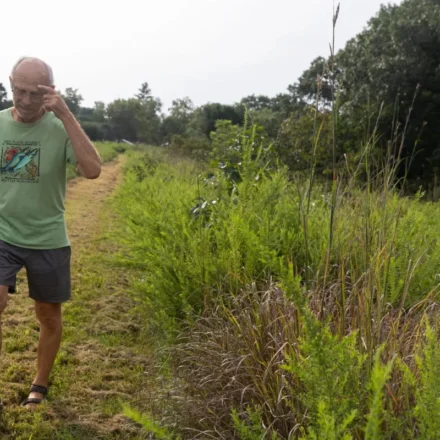
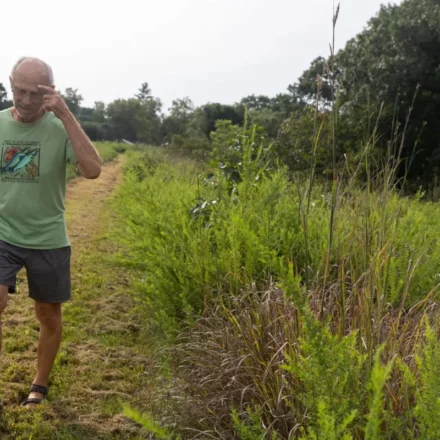
Since January, when federal agents descended on the Twin Cities as part of the aggressive "Operation Metro Surge," the atmosphere in this quiet center has been defined by a singular, gnawing fear. To ensure their staff—all of whom are authorized to work in the country—could reach their jobs without the constant threat of detention, a group of community volunteers began a daily transport operation. They are mostly in their 70s, and the staff has affectionately dubbed them the abuelitas.
The Anatomy of a Grassroots Defense
The initiative is a marvel of local organization. Nearly 60 volunteers, many commuting from the suburbs, work in rotating shifts to drive the center’s staff to and from their homes. Their mandate is simple: provide safe transit and act as neutral observers—and translators—should federal agents attempt to pull over the staff.
"I’m just doing what I can do," said Sarah, a 71-year-old volunteer who has become a fixture at the center. "I obviously feel less vulnerable than they would be. I’m white, I’m 71. I think I would not be treated like they might be treated."
The volunteers, who requested anonymity due to the high-stakes nature of the environment, have been coached on protocol: keep windows cracked, do not offer consent for searches, and demand to see a warrant signed by a judge. It is a daily grind fueled by the realization that, in the current climate, they are the only shield available for their immigrant neighbors.
A Chronology of Escalation
The crisis facing Minneapolis child care providers did not erupt overnight. It began as a whisper in late 2024, when rumors circulated that federal agents were detaining individuals regardless of their legal status. By November, the fear had become palpable.
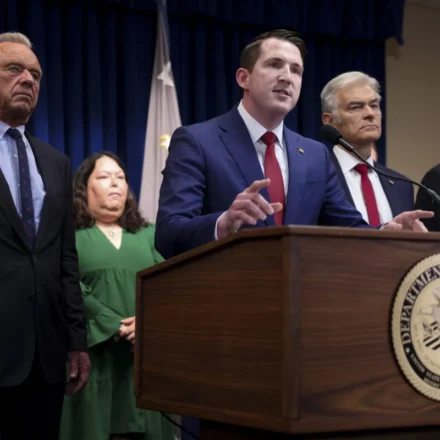
The turning point occurred on December 26, when Nick Shirley, a right-wing influencer, uploaded a viral video alleging widespread fraud in Somali-run day care centers in Minneapolis. While the claims were later debunked by local journalists who found the centers operating in full compliance with the law, the damage was immediate. The video was amplified by high-ranking political figures, including Vice President JD Vance and Attorney General Pam Bondi.
By New Year’s Eve, the situation had deteriorated into open intimidation. Diana, the director of the center, received a threatening, anonymous phone call: "You guys are not safe. You guys have to leave."
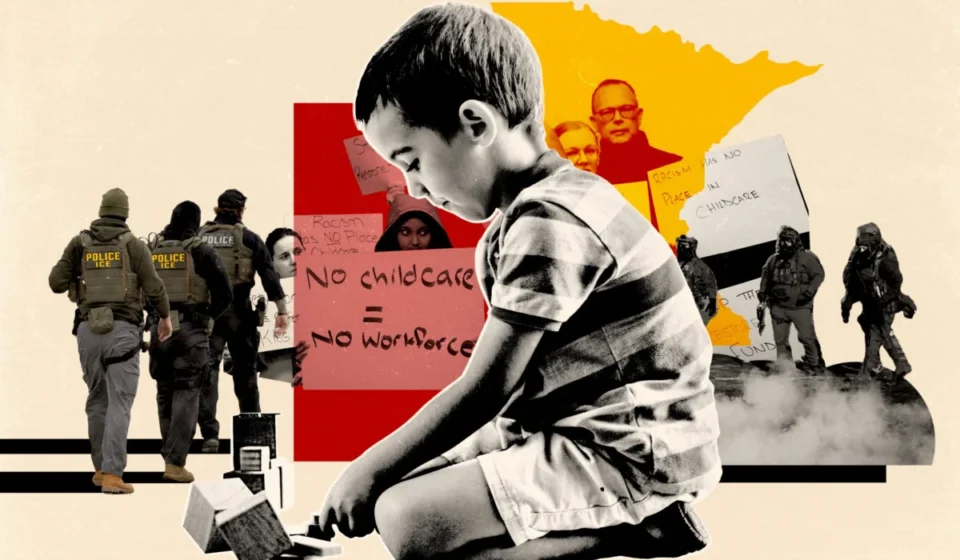
On January 5, citing the discredited fraud allegations, the Trump administration authorized the deployment of 2,000 additional ICE and Border Patrol agents to Minnesota. The total force in the region reached 3,000—a number roughly triple the size of the combined police forces of Minneapolis and St. Paul. Two days later, the violence hit home: an ICE agent shot and killed a volunteer observer, Renee Macklin Good. The tragedy paralyzed the child care sector, forcing many, including Diana’s center, to shutter for nearly a week as staff went into hiding.
Supporting Data: The Fragility of the Sector
The impact of this enforcement surge extends far beyond the emotional toll. According to data from the American Immigration Council, roughly 1 in 5 workers in the American child care field are immigrants. When ICE targets these individuals, they effectively dismantle the infrastructure that allows the U.S. workforce to function.

The financial fallout was swift. Following the administration’s freeze on federal child care payments—based on the aforementioned fraudulent claims—thousands of families in Minnesota faced a loss of services. While a federal judge ordered the funds released in February, the "chilling effect" remains. At Diana’s center alone, 12 families withdrew their children, forcing a reduction in staff. For a sector that operates on razor-thin margins, the threat of bankruptcy is now as acute as the threat of deportation.
Official Responses and The "Saving Entity" Vacuum
The federal government has maintained that Operation Metro Surge is a necessary measure to combat fraud and enforce border policy. However, providers argue that the government has abandoned its duty to protect the children and the essential workers who care for them.
"You literally have to have a good network to survive, because it’s not as though there is a government organization coming to help," said Lily Crooks, a St. Paul child care director. Crooks has been instrumental in organizing mutual aid, including a fundraiser that provided $5,000 in Lyft gift cards for employees who are too afraid to use public transit—a known hunting ground for federal agents.
The lack of official intervention has forced local nonprofits and neighborhood groups to fill the void. "It’s both really amazing to see the way that people are sticking up for their neighbors," Crooks noted, "and it also kind of feels bleak realizing that there isn’t going to be some saving entity coming."
Implications: The Long Road to "Resistir"
As the surge begins to recede from public view, the long-term implications for the child care industry are profound. Agents have reportedly become "stealthier," shifting their focus from urban centers to the suburbs to avoid detection by crowdsourced monitoring apps like IceOut.
For the abuelitas, the work is far from finished. Sarah, who has formed a protective bond with the staffer she drives, views this as a historical imperative. "I was a teenager during the Civil Rights Movement," she reflected. "This feels like a similar moment for our generation to stand up against oppression."
For the staff members, the gratitude is tempered by the indignity of their circumstances. "It’s not OK that someone feels unsafe in a ‘safe’ country," said P., a staffer at the center, speaking with the help of an interpreter. "I’m free, but I can’t do anything. It’s very hard."
As of early March, most employees at the center have begun to drive themselves to work again, a sign that the acute phase of the panic is slowly giving way to a new, cautious normal. Yet, the word that defines their experience remains resistir—a Spanish term that embodies both the act of resistance and the quiet strength of endurance.
"In Spanish, we use that word a lot," Diana said, wiping away tears. "It means that you don’t give up, you keep fighting. We are going to get through it. This is going to pass."
Until it does, the abuelitas remain in their cars, engines idling, waiting to ensure that their neighbors can finish their shifts, pick up their children, and return home in peace. Whether this volunteer model can sustain itself over months or years of continued pressure remains the defining question for the future of child care in a fractured, polarized Minnesota.