

























































By AI Technology Desk
August 23, 2026
The rapid evolution of artificial intelligence has long been defined by high-profile launches from tech titans like OpenAI, Google, and Anthropic. However, on Thursday, August 20, 2026, the industry was blindsided by the silent arrival of "Ox Alpha"—a powerful, high-performance reasoning model that appeared on the OpenRouter platform with no fanfare, no press release, and, most curiously, no parent company.
The emergence of Ox Alpha has triggered a frenzy of investigation across social media platforms, technical forums, and geopolitical analysis circles. As the model continues to demonstrate capabilities in coding, agentic workflows, and complex reasoning, the question of its origin has transformed from a mere curiosity into a significant geopolitical and technical mystery.
The Main Facts: What We Know About Ox Alpha
Ox Alpha is currently being distributed for free via OpenRouter, a platform that aggregates various AI models for developers. Its listing is sparse, characterized by a "stealth" designation that provides little in the way of corporate pedigree. According to the platform’s metadata, Ox Alpha is billed as a "reasoning model designed for coding, sustained agentic work, and production workload."
Unlike traditional releases where marketing departments tout benchmark scores and parameter counts, Ox Alpha was dropped into the ecosystem with almost no supporting documentation. The model’s performance, however, has spoken louder than any marketing copy could. Users testing the model have reported high levels of proficiency in complex software engineering tasks and multi-step reasoning, suggesting that the underlying architecture is not the work of a hobbyist, but rather the result of massive capital investment and high-end engineering talent.
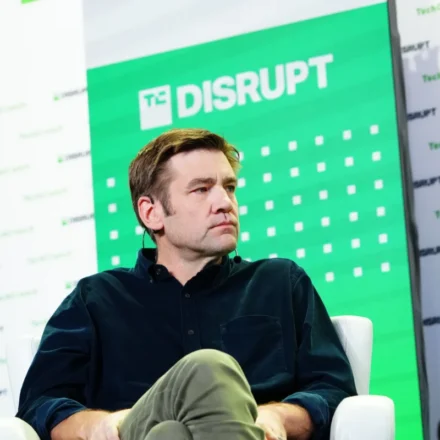
The most prominent endorsement arrived on Friday when Stripe CEO Patrick Collison, whose firm is in the process of acquiring OpenRouter, described the model as "very impressive." Coming from a leader in the infrastructure space, this brief validation served to elevate Ox Alpha from a niche experiment to a must-watch development for the global AI community.
Chronology: A Timeline of the Stealth Launch
The timeline of Ox Alpha’s arrival reflects a calculated, perhaps intentionally obscured, strategy:
- August 20, 2026: Ox Alpha appears on OpenRouter without an official announcement. It is immediately available for use as a "stealth model," with the provider listed as anonymous.
- August 21, 2026: Initial benchmarks by power users begin circulating on X (formerly Twitter). The model shows exceptional capability in logic and coding, sparking immediate interest from the developer community.
- August 22, 2026: The conversation turns toward the identity of the creators. Early speculation centers on Chinese research labs, specifically Z.ai and their GLM (General Language Model) series.
- August 23, 2026: The mystery deepens as conflicting reports emerge. Some industry analysts pivot away from the "Chinese origin" hypothesis, pointing toward potential secret projects from Western hyperscalers like Microsoft. Meanwhile, Stripe’s Patrick Collison adds his weight to the discussion, intensifying the scrutiny on the model’s provenance.
The Great Debate: Who is Behind the Curtain?
The ambiguity surrounding Ox Alpha has created a vacuum that is being filled by intense, often contradictory speculation. The debate essentially splits into two camps: the "Geopolitical Theory" and the "Corporate Stealth Theory."
The Case for Chinese Origins
Given the rapid maturation of AI development in Beijing, many observers immediately suspected that Ox Alpha might be a Chinese product. Initial threads on platforms like Wccftech pointed toward Z.ai’s GLM series, suggesting that the model could be a "preview" of advanced capabilities from a Chinese lab attempting to test international market reactions without the baggage of national branding.
Proponents of this theory argue that the release style—a "stealth" drop—is a tactical way to bypass potential trade restrictions or regulatory scrutiny. By remaining anonymous, the developers avoid the immediate political backlash that often accompanies the release of high-end Chinese AI models in Western markets.

The Case for Western Hyperscalers
Conversely, others argue that the technical sophistication of Ox Alpha suggests a Western origin. Some have suggested that the model is an unreleased iteration of Microsoft’s MAI (Microsoft Artificial Intelligence) project. This theory posits that a major player is using OpenRouter as a "shadow laboratory" to gauge real-world performance on complex, agentic tasks without tipping off competitors to their specific research trajectory.
On Reddit’s r/singularity forum, users are deeply divided. One thread argues with high confidence that the model bears the architectural hallmarks of a Chinese model, while another thread insists that the training data and coding patterns are distinctly Western, suggesting an internal "skunkworks" project from a major U.S. cloud provider.
Implications for the AI Ecosystem
The arrival of Ox Alpha is more than just a "who done it"—it highlights fundamental shifts in how AI is being deployed and distributed in 2026.
The End of Traditional Launches
The "stealth model" strategy represents a departure from the high-stakes, press-heavy launches of 2023 and 2024. If Ox Alpha continues to set a trend, we may see a future where the most powerful models are released anonymously to avoid the regulatory and reputational pressures that currently constrain the giants of the industry. This could lead to a fragmented AI landscape where the most capable tools are effectively untraceable.
The Challenge of Attribution and Trust
The mystery also raises significant questions regarding trust. In an era where AI safety and alignment are paramount, how can developers trust a model that refuses to identify its creators? If Ox Alpha contains hidden biases, data poisoning, or "backdoors" designed for surveillance, the lack of transparency becomes a critical security risk. Enterprises that rely on such a model for "production workloads" are essentially flying blind, trusting the code’s performance over the accountability of its originators.
Geopolitical Tension in Code
The speculation regarding China versus the U.S. underscores the underlying anxiety of the global AI arms race. Every advancement is viewed through the lens of national security. When an anonymous, powerful model hits the market, the default assumption is that it is a strategic maneuver by a state actor. This climate of suspicion threatens to stifle international collaboration, as even benign research projects might be forced to hide their origins to avoid being caught in the crossfire of geopolitical rivalry.
What Lies Ahead?
As of this writing, the entity behind Ox Alpha has remained silent. The model continues to process requests, provide high-quality code, and demonstrate reasoning that is, by all accounts, "very impressive."
For researchers and analysts, the next few days will be critical. Forensic analysis of the model’s responses, latent space architecture, and training data artifacts will likely provide the clues necessary to unmask the developers. Whether the reveal confirms a state-backed project from East Asia or a clandestine experiment from a Silicon Valley titan, one thing is clear: the rules of the AI release game have changed.
The Ox Alpha mystery serves as a stark reminder that in the age of generative intelligence, the most powerful entities are often those that choose to remain unseen. As the industry waits for an official word—or a slip-up that reveals the source—the developer community will continue to use the model, testing the limits of what a "stealth" AI can accomplish in a world that is anything but quiet.
Ultimately, the mystery of Ox Alpha is a microcosm of the current state of artificial intelligence: a powerful, transformative force that is rapidly becoming an essential part of the digital infrastructure, even as we remain deeply uncertain about who is holding the reins.