





















































By [Your Name/Journalistic Desk]
Originally reported by Kate Sosin for The 19th
In the summer of 2012, as Juniper Simonis pedaled her bicycle through the streets of Ithaca, New York, the hum of the city felt different. Through her headphones, the folk melodies of Mariee Siou provided a soundtrack to a moment of profound personal liberation. Earlier that day, an email had pinged into her inbox, carrying a message that would alter the trajectory of her life: the Ithaca League of Women Rollers had voted to accept her onto the team.
For Simonis, a transgender woman who had long navigated the compartmentalized worlds of queer identity and athletic competition, the news was a revelation. "As somebody who played sports and was queer, but those were two very separate parts of my life, the promise and the opportunity to integrate those was very hopeful for me," she reflects. "Getting a message that was like, ‘You are welcome,’ was very, obviously, very uplifting."
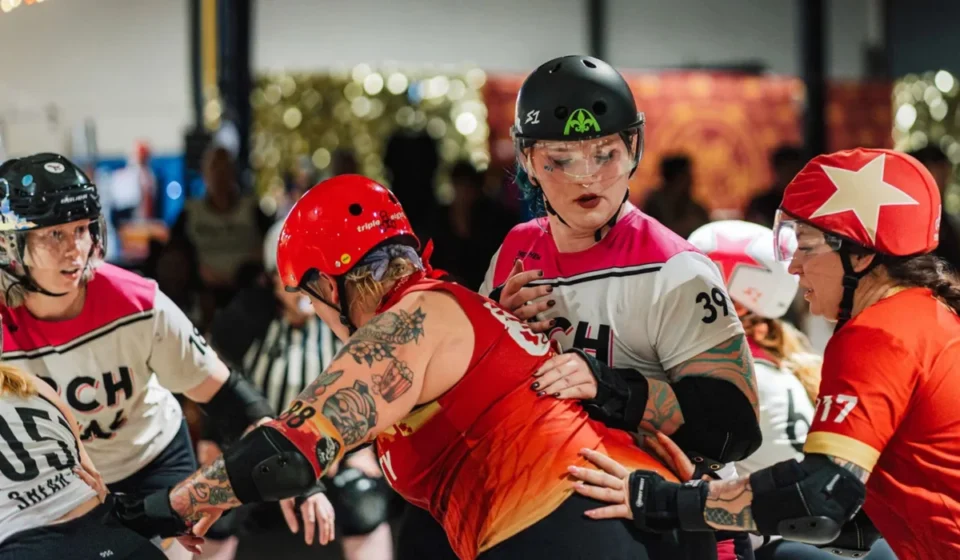
Years before the inclusion of transgender athletes became a flashpoint in national political discourse, the world of roller derby—a high-contact, punk-rock-infused sport defined by aggressive play and colorful personas—was already deep in the trenches of navigating gender, identity, and the meaning of "fairness." While the sport remains a work in progress, often grappling with its own internal biases and instances of discrimination, it has consistently chosen a path of radical inclusivity, offering a blueprint for how sports can evolve alongside society.
The Evolution of a Counter-Culture Sport
To understand the current state of inclusion in roller derby, one must look back to its origins. The sport traces its lineage to the 1930s, when promoter Leo Seltzer organized endurance roller-skating races. According to the Smithsonian, even these early iterations were co-ed, though the financial structures of the time heavily favored men.
As the sport transitioned from endurance spectacles to the modern, five-player, full-contact discipline, it underwent a seismic cultural shift in the early 2000s. Led by a surge of women in Austin, Texas, who were eager to reclaim the track, roller derby morphed into a "freaky feminist" counter-culture. It was a space where the traditional rules of femininity were not just ignored; they were dismantled.
"There was definitely something really cool about a tough punk rock chick of that era," says Rachel "Rotten" Johnston, a derby veteran and Director at the Angel City League. "Roller derby was as much about the bar fights and the black eyes as it was about the skating. It was a direct rebuttal of the pop culture that was happening."
This ethos—replacing the polished, corporate aesthetics of early 2000s pop stars with a gritty, DIY spirit—created a unique environment. Because the sport was "dreamed into existence" by women rather than adapted from existing male-dominated structures, it possessed a natural elasticity. It was queer-friendly, body-positive, and intensely protective of its autonomy.
Chronology of Inclusion: From Vague Policies to Structural Reform
The Women’s Flat Track Derby Association (WFTDA), which eventually grew to encompass over 400 leagues across six continents, serves as the primary governing body for the sport. For years, the association’s approach to trans participation was reflective of the broader, often inconsistent, norms of the early 21st century.
The Early Aughts: A "Safe Space" Paradox
In the early 2000s, the priority for many leagues was establishing a space free from the influence of cisgender men. As Nicole Williams—widely regarded as the "LeBron James" of the sport—recalls, the term "cisgender" wasn’t even in common parlance. The focus was on creating a sanctuary for women.
Early WFTDA policy mirrored the Olympic standards of the time: transgender women were generally permitted to compete, provided they had undergone hormone replacement therapy (HRT) for at least two years. However, this policy was notoriously difficult to enforce and was applied with varying degrees of rigor. In many cases, it functioned as a "don’t ask, don’t tell" policy, where the community’s collective acceptance often superseded the bureaucratic requirements.

The Turning Point: 2010–2015
The 2010s marked a period of intense self-reflection. Skaters like Penelope "Fifi Nomenon" Nederlander found that the process of joining a league was often a matter of interpersonal trust rather than strict medical verification. When Nederlander joined the LA Derby Dolls in 2010, her acceptance was based on her lived experience and identity rather than medical records.
"It was the first group of friends who I met who only knew me as Penny, and that was huge," she notes.
This groundswell of support culminated in 2015, when the WFTDA officially updated its policy to be explicitly inclusive. The new mandate stated that anyone of a marginalized gender—regardless of transition status or appearance—was welcome to participate. This was a watershed moment, creating a pathway for nonbinary athletes and those at various stages of transition to compete without the looming threat of administrative disqualification.
Supporting Data: The Lived Reality of Trans Athletes
Despite the progressive shift in policy, the reality on the track remains complex. The sport’s inclusivity is not a panacea for the broader societal issues of transphobia and racism.
- Systemic Bias: Donita "Blaxyl Rose" Green, an Angel City skater, highlights the intersectional challenges faced by Black trans athletes. She notes that referees often apply penalties more harshly to gender-diverse skaters, a trend that is significantly exacerbated when the skater is a woman of color. "We talk often about ‘skating while Black.’ It just happens," Green explains.
- Safety and Assault: The physical nature of the sport does not exempt it from hate. Athletes like Juniper Simonis have reported being physically assaulted by other players specifically due to their transgender identity, proving that a policy of inclusion on paper does not automatically guarantee safety in practice.
- The "Fairness" Debate: When questioned about the arguments regarding competitive fairness, veterans like Rachel Johnston remain steadfast. "People who are concerned about people getting hurt are missing the fact that we’re playing a full-contact sport," she argues. "You’re going to get hurt no matter what. Life isn’t fair, and sports most certainly are not fair."
Official Responses and Philosophical Shifts
The derby community’s rejection of the "protect women’s spaces" rhetoric, which has been used to justify the exclusion of trans athletes in other sports, is rooted in their unique origin story.
Nicole Williams, who has been skating for two decades, believes the movement to exclude trans women is "repressive." She acknowledges that while women’s spaces are vital, the definition of what constitutes a "woman’s space" has evolved through the lived experience of skating alongside trans teammates. "I don’t really identify with that [exclusionary] way that I used to," she says.
This sentiment is echoed by many in the community who believe that the perceived "advantage" of trans athletes is a distraction from the fundamental nature of the sport. The WFTDA’s decision to move away from Olympic-style gender enforcement was not merely a political statement; it was a pragmatic choice based on the observation that, in the high-contact environment of roller derby, the presence of trans athletes has not undermined the integrity of the game.
Implications: A Model for Other Sports?
Roller derby’s journey offers a roadmap for other sports organizations currently struggling to find a balance between inclusion and tradition.
- Honesty over Restriction: Penelope Nederlander advocates for a more transparent conversation. She suggests that sports can acknowledge the biological differences between individuals without using those differences as a weapon to exclude entire groups. "I want to arrive at the same conclusion, but with honesty about it," she says, noting that the fear-based rhetoric surrounding trans athletes is often disconnected from the actual reality of competition.
- Prioritizing People over Optics: Roller derby has consistently chosen to prioritize its community culture over the potential for mainstream legitimacy. By opting out of international competition structures that demanded rigid, exclusionary gender policies, the sport chose to maintain its integrity as an inclusive space rather than chasing the prestige of an Olympic stage that would have forced it to compromise its values.
- The Persistence of Growth: The sport’s willingness to address the lingering issues of racism and transphobia within its own ranks suggests that true inclusion is a continuous process. It is not enough to pass a policy; leagues must actively work to dismantle the microaggressions and biases that permeate the refereeing and interpersonal dynamics of the game.
Conclusion
Roller derby occupies a singular space in the American sports landscape. It is a sport built on the foundation of rebellion, designed to be a sanctuary for those who have been marginalized by mainstream athletics. While it is far from a utopia—as evidenced by the experiences of skaters like Simonis and Green—it remains a testament to the fact that sports can change.
By centering the experiences of the athletes themselves, rather than bowing to external political pressures, roller derby has maintained its status as a vital, evolving community. As the national conversation on gender and sports continues to intensify, the lessons from the banked and flat tracks suggest that the path forward may not be found in rigid regulation, but in the radical, messy, and ultimately human act of inclusion.