


























































On August 7, 2026, a beef importer based in Aventura, Florida, initiated a recall of 29,628 pounds of raw, boneless Argentine beef from markets and distribution channels across Florida and Texas. The U.S. Department of Agriculture (USDA) designated the action as a Class I recall—the highest risk classification, reserved for products that present a reasonable probability of causing serious health consequences or death.
Yet, as of mid-August, no illnesses have been reported, and no pathogens have been detected in the meat. In fact, the beef was never tested at all.
According to the official notice released by the USDA’s Food Safety and Inspection Service (FSIS), the importer, Corte Argentino USA LLC, distributed the product "without the benefit of import reinspection." This phrase represents a critical administrative failure that has triggered a wider debate over U.S. food safety infrastructure, workforce shortages, and the integrity of international agricultural supply chains.
1. Main Facts and Scope of the Recall
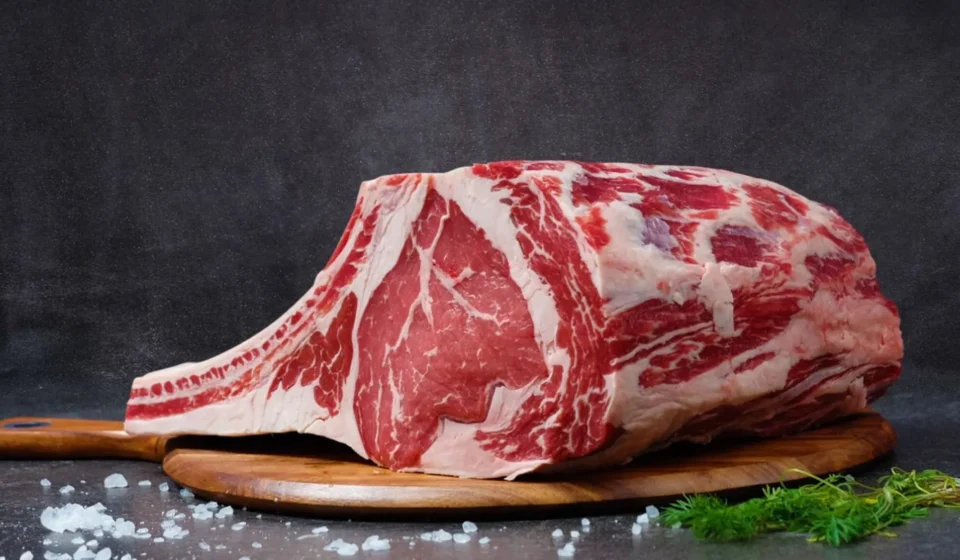
The recall encompasses premium, boneless, whole-muscle beef cuts produced at a single Argentine establishment: Frigorífico Gorina SAIC in La Plata, Argentina (operating under establishment number EST. Nº OF. 2025). The affected products were shipped in cardboard boxes of varying weights, marked with the shipping designation 26644-AA.
All recalled items were produced between May 15 and May 20, 2026, and carry "use-or-freeze-by" dates ranging from September 15 to September 20, 2026.
The Recalled Cuts
Because the products are labeled primarily in Spanish, identifying them in commercial freezers requires translating the specific cuts. The recalled inventory consists of the following whole-muscle primals:
| Label on Box (Spanish) | English Cut Name | Culinary Characteristics & Common Uses |
|---|---|---|
| Cuadril Sin Tapa | Top Sirloin Butt | Rump primal with the cap removed; a staple of traditional Argentine steakhouses (parrillas). |
| Peceto | Eye Round | A lean, cylindrical cut from the hind leg, typically roasted or sliced thin for matambre. |
| Nalga AD S/Tapa | Topside Cap Off | Inside round with the cap removed; commonly sliced thin for milanesas. |
| Carnaza Cuadrada | Flat | Derived from the shoulder clod; used primarily for braising, pot roasts, and stews. |
| Bola de Lomo | Knuckle | Sirloin tip from the leg; frequently cubed, ground, or sliced for quick-cooking dishes. |
Commercial vs. Consumer Exposure
The composition of this recall indicates that the primary exposure is commercial rather than retail. The list contains no pre-packaged steaks, ground beef, or trimmings. Instead, these are heavy, bulk-packaged whole-muscle primals.
Corte Argentino USA LLC operates primarily as a wholesale supplier to hotels, restaurants, and catering companies, alongside select boutique retail distributors. Consequently, a substantial portion of the 29,628 pounds likely entered commercial walk-in freezers and restaurant kitchens, where inventory turns over at a different rate than in domestic households.
2. Chronology of a Systemic Delay
The timeline of this shipment reveals a significant vulnerability in the enforcement of import controls.
[May 15–20, 2026]  -->  [Late May 2026]     -->  [August 7, 2026]    -->  [Sept 15–20, 2026]
  Beef produced &         Shipment enters US       FSIS announces          Original "use-or-freeze"
packed in Argentina without reinspection Class I recall expiration dates- May 15–20, 2026: The beef is slaughtered, packed, and boxed at Frigorífico Gorina SAIC in La Plata, Argentina.
- Late May 2026: The shipment arrives at a U.S. port of entry, clearing Customs and border health checks, but bypasses the final FSIS reinspection station. It is moved directly into commercial distribution channels in Florida and Texas.
- August 7, 2026: During routine administrative audits, FSIS discovers the lack of reinspection documentation and issues a Class I recall notice.
- August 11, 2026: Four days post-announcement, FSIS has yet to publish a retail distribution list detailing which specific restaurants, butchers, or distributors received the uninspected product.
- September 15–20, 2026: The original "use-or-freeze-by" dates on the boxes are reached.
The 79-Day Inspection Gap
The most critical aspect of this timeline is the 79-day gap between the packing of the meat and the issuance of the recall. During this eleven-week window, the unverified beef remained in active commercial circulation.
In the foodservice industry, fresh and vacuum-packed beef primals typically move through the supply chain and are consumed within 14 to 30 days of arrival. By the time the federal government flagged the shipment on August 7, a significant portion of the nearly 30,000 pounds of beef had likely already been portioned, cooked, and consumed.
The Challenge of Recall Recovery
Historically, recovering recalled meat once it has entered commerce is highly inefficient. According to a landmark study by the Government Accountability Office (GAO) analyzing USDA-monitored recalls:
- Only 38 percent of recalled food products are successfully recovered or destroyed.
- USDA district offices took an average of 38 days simply to verify that downstream customers had been notified of a recall—a period longer than the shelf life of the fresh meat itself.
Because the federal government lacks a centralized, real-time tracking system for commercial food shipments once they leave primary distributors, the effectiveness of the Corte Argentino recall remains uncertain.
3. Supporting Data and Industry Context
To understand whether this incident represents an isolated clerical error or a broader regulatory issue, it is useful to look at the mechanics of import inspections and recent regulatory precedents.
The "Three Gates" of Meat Importation
Imported meat must successfully pass through three distinct regulatory checkpoints before it can legally be sold to American consumers:
+------------------------------------+
|  GATE 1: Customs & Border Patrol   |  --> Verifies entry paperwork & tariffs
+------------------------------------+
                 |
                 v
+------------------------------------+
|  GATE 2: USDA APHIS                |  --> Evaluates animal disease risks (e.g., Foot-and-Mouth)
+------------------------------------+
                 |
                 v
+------------------------------------+
|  GATE 3: USDA FSIS Reinspection    |  --> Performs physical checks, labeling audits, & pathogen tests
+------------------------------------+
Because Corte Argentino’s shipment bypassed Gate 3, it is classified as legally "adulterated." Under U.S. law, any meat product that enters commerce without final FSIS reinspection is deemed adulterated by default, regardless of its biological or chemical purity.
Recurrent Import Reinspection Failures
This incident is part of an ongoing pattern of import inspection bypasses. Over the past three years, several major importers have faced similar Class I recalls due to failure at the final inspection desk:
| Recall Date | Importer | Product Category | Volume (lbs) | Country of Origin |
|---|---|---|---|---|
| Aug 7, 2026 | Corte Argentino USA LLC | Raw boneless beef | 29,628 | Argentina |
| Jul 23, 2026 | BCI Foods, Inc. | Chicken noodle soup | 4,300 | Canada |
| Oct 30, 2023 | Olymel | Ready-to-eat ham | 11,016 | Canada |
| Sep 7, 2023 | Empacadora Frape USA LLC | Pork chicharron & carnitas | 20,455 | Mexico |
Distinguishing the Import Channels
Following the recall, several agricultural commentators attempted to link the incident to the bilateral trade agreements between the administrations of U.S. President Donald Trump and Argentine President Javier Milei. On February 6, 2026, a presidential proclamation expanded Argentina’s export access by adding 80,000 metric tons to the U.S. tariff-rate quota specifically for lean beef trimmings (classified under HTSUS codes 0201.30.5085 and 0202.30.5085).
However, trade data and tariff schedules indicate that this recall is entirely unrelated to the 2026 quota expansion:
- Product Type: The recalled items are premium whole-muscle cuts (sirloin, eye round, knuckle), not lean trimmings destined for ground beef blending.
- Quota Channel: These cuts were imported under Argentina’s pre-existing, long-standing 20,000-metric-ton quota, which has been active for years and was not modified by the February 2026 agreement.
- Scale: The recalled volume of 29,628 pounds (approximately 13.4 metric tons) represents less than 0.013% of Argentina’s total annual export allocation to the United States.
4. Official Responses and the Staffing Debate
The 79-day delay in detecting the uninspected shipment has reignited a debate regarding the staffing levels and operational capacity of the USDA’s food safety workforce.
The Regulatory Staffing Crisis
Between January and March 2025, FSIS experienced a sharp contraction in its active personnel. Following federal workforce reduction initiatives, approximately 8 percent of the FSIS workforce (555 full-time employees) accepted deferred resignation packages.
Of these departures, 63 occurred within the Investigations group—the division responsible for conducting field audits, verifying import compliance, and identifying uninspected products in commerce.
Industry groups representing domestic producers have argued that these personnel cuts have compromised the agency’s oversight capabilities. Justin Tupper, president of the U.S. Cattlemen’s Association, expressed concern over the rising volume of imports relative to regulatory capacity:
"A safe, secure, and resilient beef supply starts with a strong domestic industry. When we have record-low cattle herds in the U.S. and rising beef prices, we rely more heavily on imports. But if our regulatory agencies do not have the boots on the ground to inspect these imports, we are introducing unacceptable risks into the food supply."
At the time of the recall, U.S. cattle herd inventories had fallen to 86.2 million head, a historic low, while domestic retail ground beef prices averaged $6.83 per pound in June 2026, representing a significant year-over-year increase.
U.S. Cattle Herd Inventory (Jan 2026): 86.2M head (Record Low)
U.S. Ground Beef Retail Price (June 2026): $6.83/lb (Up 12.9% YoY)
FSIS Workforce Reduction (Jan–Mar 2025): -8% (555 staff lost, 63 from Investigations)
USDA Counter-Response
The USDA has strongly rejected any connection between the recent workforce reductions and the failure to inspect the Corte Argentino shipment. In an official statement addressing vacancy rates, the USDA Public Affairs office stated:
"There is no connection between recent recalls and FSIS vacancy rates. Import reinspection is a mandatory statutory requirement. The responsibility to present product for reinspection lies entirely with the importer of record. FSIS continues to maintain appropriate inspection coverage at all approved import establishments across the country."
The agency maintains that the failure was an operational omission by the importer rather than an oversight failure by federal inspectors, noting that the error was caught and corrected during routine administrative reconciliation.
5. Systemic Implications and Actionable Guidance
While the Class I designation implies a high level of danger, a closer examination of the plant of origin suggests the biological risk may be low. Establishment 2025 (Frigorífico Gorina SAIC) has been certified to export beef to the United States since January 1, 2002. The facility maintains Hazard Analysis Critical Control Point (HACCP) plans and British Retail Consortium (BRC) global food safety certifications.
Nonetheless, because the shipment bypassed port-of-entry reinspection, it missed critical screenings for transport damage, temperature abuse during transit, and random testing for chemical and drug residues—none of which are resolved by cooking.
Guidance for Commercial and Retail Buyers
Because FSIS has not yet published a retail distribution list, commercial operators and consumers in Florida and Texas must manually audit their inventories.
STEPS TO VERIFY INVENTORY:
1. Locate the original cardboard shipping boxes.
2. Scan the packaging for the establishment stamp: "EST. Nº OF. 2025".
3. Verify the shipping mark: "26644-AA".
4. If BOTH marks are present, quarantine the product immediately. Do not serve or consume.- Disposal and Refunds: FSIS advises consumers and commercial kitchens to either discard the product or return it to the point of purchase. While refund policies are determined by individual retailers, Class I recalls typically merit full refunds without a receipt.
- Inquiries:
- Commercial buyers can contact Corte Argentino USA LLC’s general manager, Eial Kaplun, at 786-350-5805.
- Consumers with general food safety questions can contact the toll-free USDA Meat and Poultry Hotline at 1-888-674-6854.
Ultimately, this incident highlights a key vulnerability in the global food supply chain: a highly certified product from an established international facility can still be rendered illegal and potentially hazardous due to a simple breakdown in administrative transit procedures. For regulators, the 79 days it took to identify this administrative lapse remains the most critical issue to address.