























































The Brush of Resilience: Reclaiming the Native Narrative through the Life and Art of Patrick DesJarlait

In the annals of 20th-century American art, few figures possess a legacy as paradoxically famous yet critically under-examined as Patrick DesJarlait. A Red Lake Ojibwe modernist, DesJarlait did more than paint; he recalibrated the visual vocabulary through which non-Native audiences perceived Indigenous life. While millions of Americans grew up identifying his commercial work—most notably the iconic Land O’Lakes butter maiden and the beloved Hamm’s Beer bear—the artist behind these images remained largely obscured by the very commercial success he achieved.
Today, as art historians and tribal scholars re-examine the mid-century era, DesJarlait stands as a pivotal figure who bridged the gap between traditional Ojibwe lifeways and the evolving landscape of modern American graphic design, all while challenging the pervasive, dehumanizing stereotypes of his time.
The Core Legacy: A Vision of Dignity
Patrick DesJarlait (1921–1972) was a transformative force in Native American art. Emerging during an era when Hollywood westerns relegated Indigenous people to the roles of antagonists or primitive sidekicks, DesJarlait offered a radical alternative. His paintings depicted the Red Lake Ojibwe not as figures of the past, but as a living, breathing, and heroic community.

His work was characterized by a distinct "heroic style"—clean lines, bold palettes, and a modernist sensibility that emphasized the dignity of daily labor. Whether painting the rhythmic process of wild rice harvesting or the quiet contemplation of maple sugaring, DesJarlait infused his subjects with a sense of historical continuity and contemporary relevance. He believed that to see a Native person in a painting was to understand their humanity, a belief that guided him from the reservation to the advertising agencies of the Twin Cities.
Chronology: A Life of Artistic Evolution
The arc of DesJarlait’s life is a testament to resilience, marked by personal hardship, military service, and a relentless commitment to his craft.
- 1921: Born on the Red Lake Reservation, Minnesota, on March 2. Named Nagawbo (Boy in the Woods), he showed an early affinity for sketching the natural world and his community.
- 1926: At age five, he contracted trachoma. Despite a period of temporary blindness, he regained his sight and his passion for observation, earning the name Gwiwizens Odayn Ozhibii’ignaak (Boy with a Pencil).
- 1928–1935: Following the death of his mother, DesJarlait was funneled through the federal boarding school system, including the Pipestone Indian School. These institutions were designed to suppress Indigenous culture, yet DesJarlait held onto his artistic identity.
- 1939–1942: Graduating from Red Lake High School, he pursued formal art education at Arizona State College, supported by a Bureau of Indian Affairs scholarship.
- 1942–1945: Following the outbreak of WWII, he served briefly as an art supervisor at a Japanese concentration camp in Poston, Arizona, before joining the U.S. Navy. In the Navy, he utilized his skills to produce instructional and propaganda materials.
- 1945: His first solo exhibition at the Fine Arts Gallery in San Diego was a total success, with every painting sold within a week.
- 1947–1972: Moving to St. Paul, he transitioned into a highly successful commercial art career, spanning 26 years. He created his most iconic commercial designs during this time while continuing to produce fine art that honored his Ojibwe roots.
- 1972: DesJarlait passed away at age 51 due to cancer-related complications, leaving behind a profound body of work that challenged the status quo.
Supporting Data: The Commercial and Cultural Intersection
DesJarlait’s career was a dual existence. In the professional world of advertising, he was a pioneer. His 1954 revision of the Land O’Lakes butter maiden is arguably his most widely recognized contribution to American culture. By incorporating authentic Ojibwe floral beadwork designs into her dress and reimagining the "O" in the brand’s logo as a halo-like icon, he injected a piece of his heritage into the mainstream American kitchen.

His work with Reid Ray Films and Campbell-Mithun further solidified his influence, as he integrated Northern Woodland motifs into commercial animation, including the iconic Hamm’s Beer bear. These contributions were not merely "jobs"; they were deliberate attempts to weave Indigenous aesthetics into the fabric of American consumerism.
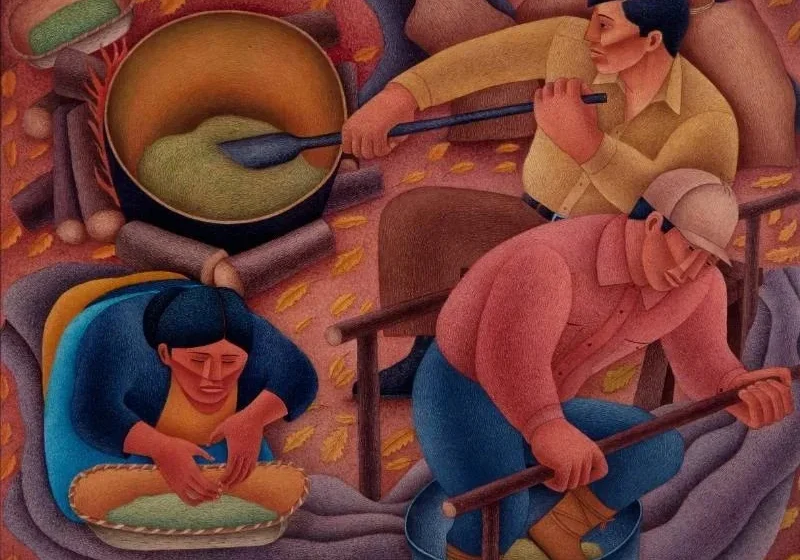
Simultaneously, his fine art garnered critical acclaim. Winning first prize at the 1947 Philbrook Indian Annual—a major venue for Native artists at the time—validated his fine art approach. Pieces like Maple Sugar Time and Red Lake Fishermen remain essential documents of mid-20th-century Ojibwe life, celebrated for their technical precision and emotional depth.
Official Responses and Contemporary Perspectives
Contemporary scholars and curators view DesJarlait as a bridge between the traditional arts of the woodland tribes and the burgeoning contemporary Native art movement. The MNopedia entry on his life highlights the "heroic" nature of his depictions, noting that he was a precursor to the spirit of the American Indian Movement (AIM).

While DesJarlait was not an activist in the formal political sense, his later work, such as the 1970 painting Indian Education, aligned perfectly with the cultural pride advocated by AIM. In this piece, he depicted loving, supportive Native families—a direct response to the negative portrayals of Indigenous fathers in contemporary media. Educators and historians argue that DesJarlait’s primary form of activism was visibility. By showing the world that Native people were modern, loving, and industrious, he fought a psychological battle against the systemic erasure of his culture.
Implications: Why DesJarlait Matters Today
The implications of DesJarlait’s work reach far beyond the art gallery. His legacy forces a necessary conversation about the "hidden" contributions of Native artists to American corporate identity.
1. Representation as Empowerment
DesJarlait understood that imagery has power. By consistently painting Ojibwe people in moments of pride and dignity, he created a counter-narrative to the "vanishing Indian" trope prevalent in the 1940s and 50s. His work serves as a reminder that representation is not just about being seen; it is about being seen accurately.

2. Navigating Cultural Suppression
His journey through the federal boarding school system provides a harrowing context for his success. That he managed to maintain his cultural identity and artistic voice despite an environment intended to strip him of both is a testament to his strength. Modern Indigenous artists often cite his ability to navigate two worlds—the corporate advertising world and the tribal community—as a blueprint for surviving and thriving in modern professional spaces.
3. The Future of Indigenous Art History
The resurgence of interest in DesJarlait reflects a broader trend in art history: the reclamation of Native narratives from white-dominated archives. As institutions re-evaluate the provenance of commercial iconography, DesJarlait’s name is increasingly being placed at the center of the story. His life proves that the "modernist" movement was not a purely European or Euro-American phenomenon; it was a global evolution that Native artists were actively shaping.
Conclusion
Patrick DesJarlait was a man who lived "a short but full life," as his peers described. He was a survivor of a brutal school system, a veteran of a global war, and a master of the commercial craft. Yet, his true genius lay in his ability to look at his own people and see heroes, and then have the technical brilliance to make the rest of the world see them too. Whether through a butter carton or a canvas at the Philbrook, DesJarlait’s brush strokes continue to tell a story of resilience, identity, and the enduring power of the Ojibwe spirit. As we continue to examine his works, we find not just a historical figure, but a visionary who understood that in order to change the world, you must first change how it sees you.