











































The echoes of the 2020 pandemic lockdowns—a time of forced isolation, technological scrambling, and a desperate yearning for human connection—have returned to Minnesota classrooms. However, the cause is no longer a microscopic virus, but a geopolitical and legal emergency. As thousands of federal agents target Twin Cities schools, bus stops, and community centers, local districts are finding themselves on the front lines of an immigration crackdown that is effectively segregating students by fear.
For thousands of families, the simple act of sending a child to school has become a high-stakes gamble. With federal enforcement operations now entering their ninth week, the uniformity of public education has shattered. In its place is a fractured system where remote learning has been hastily revived, not as a public health measure, but as a protective sanctuary for those too terrified to step into the public sphere.
The Geography of Absence: A Tale of Two Classrooms
The impact of this federal surge is not distributed equally. It is a crisis that highlights deep, pre-existing fissures in the educational landscape, disproportionately affecting immigrant communities and students of color.
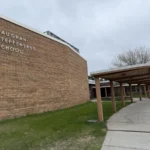
John Horton, an 18-year veteran teacher at Barack and Michelle Obama Montessori in St. Paul, has managed to maintain a sense of normalcy. His classroom of 28 first-to-third graders remains fully intact. Through rigorous community building and the mobilization of volunteer "watch groups" who monitor school perimeters, Horton has created a bubble of safety that allows his students to focus on their lessons rather than the external climate of fear.
"Children thrive on structure, routine, and predictability," Horton notes. "During COVID, even though things were upended, there were still some structures. But with the way things are heading right now, those routines are being eroded by constant anxiety."
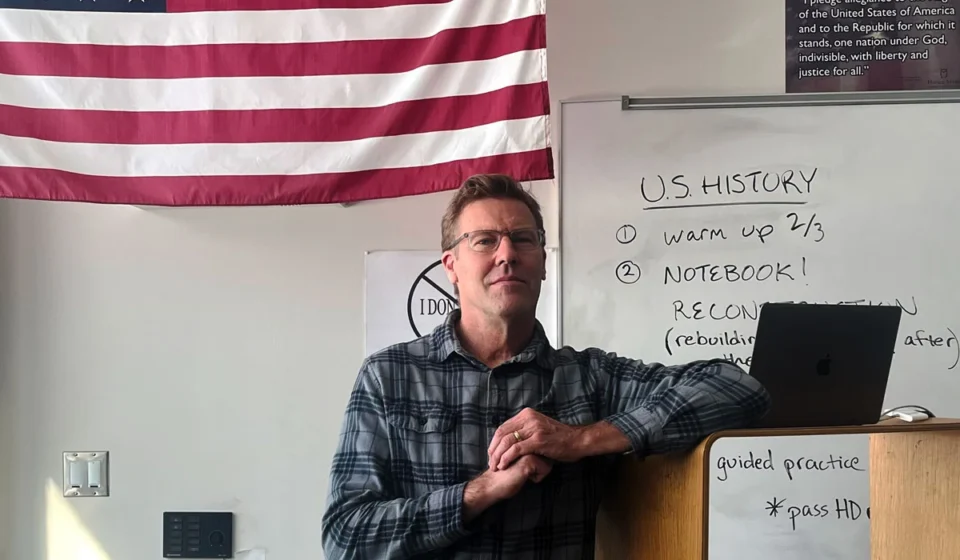
Across the city at Como High School, the reality is starkly different. Eric Erickson, a 31-year veteran educator, describes a school environment defined by empty desks and a widening chasm of opportunity. While his advanced, college-level government courses remain largely full, his co-taught U.S. history classes and English-learner cohorts are seeing attendance rates drop below 50%.
"The students who are not here tend to be students with brown and black skin," Erickson observes. "This division makes this version of virtual learning feel like a battle we thought we had overcome in the Civil Rights Movement. When students are not able to listen to their peers and process the world together, they are living in isolation."
A Chronology of Escalation
The current crisis did not emerge in a vacuum; it is the culmination of an increasingly aggressive federal posture toward the Twin Cities.
- Early Winter 2026: Federal enforcement activity began to intensify across the Twin Cities, specifically targeting areas known to have high concentrations of immigrant families.
- January 7, 2026: A fatal shooting and subsequent clashes involving ICE in Minneapolis forced several school districts to close for two days, marking a turning point in the community’s relationship with law enforcement.
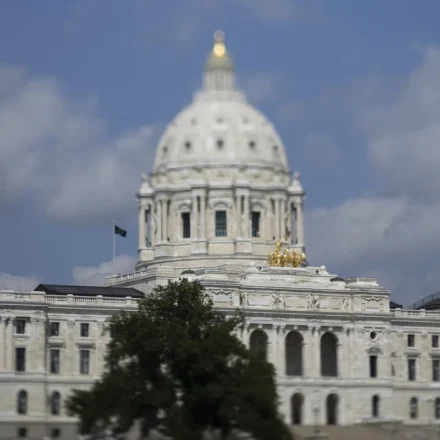
- January 14, 2026: In a show of democratic engagement, students from across St. Paul—representing public, private, and charter institutions—staged a peaceful walkout to the state Capitol. They protested the overreach of federal power and the disruption of their educational environment.
- February 2026: As the ninth week of the operation began, school districts and the local teachers union filed a formal lawsuit against the federal government, arguing that the targeting of schools and transit stops is a fundamental violation of student rights and a disruption of the state’s educational mandate.
The Data of Disruption: Quantifying the Loss
The statistics emerging from the districts are grim. While some schools have managed to maintain attendance, others are reporting a systematic withdrawal of students who are most at risk of falling behind.
Data from the Twin Cities indicates that virtual learning is no longer a supplemental tool, but a necessary survival mechanism. Districts have been forced to reassign staff to virtual programs, pulling teachers from their in-person duties to support students who have not set foot on campus in weeks.
However, educators warn that the "quality of education" argument is secondary to the "equity of access" reality. For students without stable internet, quiet home environments, or the ability to engage with peers in real-time, the virtual pivot is a poor substitute. The long-term academic consequences—widening achievement gaps, increased mental health crises, and the erosion of social-emotional development—are expected to linger for years.

Official Responses and the Legal Battle
The tension has moved beyond the classroom and into the courtroom. The decision by Minnesota school districts and the teachers union to sue the federal government represents a rare and aggressive pushback against executive branch overreach.
School leaders, parents, and union representatives have been vocal in their condemnation, noting that "none of this is normal." They argue that by encroaching on the physical spaces of education, the federal government is effectively denying thousands of children their right to a safe and equitable learning environment.
The lawsuit highlights the "chilling effect" that federal agents have had on the community. When parents are afraid to send their children to school, the school district’s role shifts from a provider of knowledge to a negotiator of safety.
The Psychological Toll: Teaching in the Crosshairs
The burden on teachers is perhaps the most hidden aspect of this crisis. Educators like Horton and Erickson, who have both been finalists for the Minnesota Teacher of the Year award, describe the exhausting emotional labor of holding space for traumatized children.
"My job is to make sure the children are safe," Horton says. "Sometimes that means co-regulating with them, showing them what calm and compassion look like even when I am feeling the same anxiety they are. It’s teaching while feeling."
Horton describes incidents where families have called him in the early hours of the morning, terrified after agents appeared at their doors. These are not merely administrative challenges; they are human tragedies that force teachers to act as counselors, advocates, and protectors.
Erickson, who prides himself on maintaining an objective, non-partisan approach in his government and history classes, admits that the situation has become impossible to ignore. "I have choked up more than once," he confesses. "Seeing 30% of my students unable to reach school—students who belong in my classroom—is a cruel and sad injustice."
Implications for the Future of Public Education
As the ninth week of this crisis passes, the implications for the future are profound. If the sanctity of the schoolhouse can be breached by federal enforcement, the foundational promise of public education—that it is a universal, safe space for all children regardless of status—is fundamentally altered.
The students themselves are not silent. They are analyzing the situation through the lenses they learn in class: constitutional law, the separation of powers, and the nature of federalism. At Como High, students have held in-class debates about the legitimacy of the government’s actions. At the Montessori school, younger students are expressing their fears and hopes through art, creating posters that demand the protection of their classmates.
The resilience of these students is a testament to their spirit, but it is a burden they should not have to carry. As Erickson noted while watching his students participate in the Capitol walkout, "We observed democracy in action." But for those students who stayed home—who were unable to participate because their families feared the consequences of leaving their houses—the lesson of the day was one of exclusion and systemic vulnerability.
The crisis in Minnesota is a microcosm of a broader national debate about the role of federal authority versus the rights of the community. Until the tension between enforcement and education is resolved, the shadow of the federal agent will continue to loom over the school bus stop, the playground, and the classroom, fundamentally changing what it means to go to school in America.