
























































The Sunset of a Civic Giant: Inside the Decision to Dissolve the Itasca Project

MINNEAPOLIS — In a move that has sent ripples through the Upper Midwest’s business and civic corridors, the Itasca Project—a blue-ribbon alliance of CEOs and community leaders that has shaped Minnesota’s public policy for more than two decades—announced on Friday that it will cease operations as a standalone entity.
The decision marks the end of an era for a "virtual" organization that became a national gold standard for cross-sector collaboration. While the move is being framed by leadership as a "graduation" of its initiatives to other regional bodies, the timing and suddenness of the dissolution have sparked a broader debate about the evolving nature of corporate responsibility and the future of civic engagement in the Twin Cities.
Main Facts: The End of an Institution
The dissolution was made official via a 10-paragraph memorandum emailed on Friday, February 14, 2025, to the organization’s working teams and financial backers. The memo, signed by the Itasca Project’s executive leadership council and outgoing managing director Jake Blumberg, stated that the council had reached a "unanimous decision" to retire the initiative.
The news comes as a stark reversal of the trajectory established just one year ago. In October 2023, Steve Grove—the publisher of the Minnesota Star Tribune and former commissioner of the Minnesota Department of Employment and Economic Development (DEED)—was appointed as the project’s chair. At the time, Grove lauded the organization as a "national model" and expressed excitement about growing its impact.
However, according to the leadership council, a "period of careful deliberation" over the last seven months led to the conclusion that the Itasca Project’s mission is now better served by a decentralized network of organizations rather than a single, CEO-led alliance. The work will be transitioned to several partner entities, most notably Greater MSP, the regional economic development agency that Itasca itself helped create in 2011.
Chronology: From Virtual Alliance to Institutionalization and Dissolution
To understand the weight of this closure, one must look at the two-decade arc of the Itasca Project’s influence.
The Formative Years (2003–2010)
Founded in the early 2000s, the Itasca Project was born from a desire among the Twin Cities’ most powerful corporate executives to solve regional problems that government alone could not tackle. For most of its history, it operated as a "virtual organization." It had no dedicated office space, no permanent staff, and no formal legal structure. Instead, it relied on the volunteer time of CEOs from companies like Target, Medtronic, and Best Buy, with administrative and research support provided pro bono by the Minneapolis office of McKinsey & Co.
The "Mind the Gap" Era (2011–2020)
During this period, the group moved beyond business-centric issues to tackle systemic social challenges. It launched the "Mind the Gap" campaign to address racial and socio-economic disparities and founded Greater MSP to professionalize regional economic recruitment. The Itasca model—using data-driven task forces led by executives—became a template for "civic DNA" that other metropolitan areas attempted to replicate.
The Shift Toward Structure (2021–2023)
By 2021, under the leadership of then-chair Lynn Casey (former chair of Padilla), the organization began to move away from its virtual roots. In a 2022 interview, Casey noted that "more is expected of Itasca" and argued for increased oversight and accountability. This led to the hiring of Jake Blumberg as managing director, the establishment of a formal executive leadership council, and the acquisition of physical office space. This "institutionalization" was meant to catalyze faster action in a post-2020 landscape defined by civil unrest and economic volatility.
The Final Deliberation (2024–2025)
The momentum of the 20th-anniversary celebration in late 2023, which drew 300 leaders to St. Paul’s Union Depot, suggested a long future for the group. However, behind the scenes, a strategic review was underway. Blumberg revealed on LinkedIn that the leadership spent seven months asking whether they were still the right leaders for the current moment. This culminated in the February 2025 announcement that the "standalone" experiment would end.
Supporting Data: A Legacy of Policy Impact
The Itasca Project’s departure leaves a void that is difficult to quantify, though its historical data points to a massive footprint on Minnesota’s infrastructure and social fabric.
- Transportation Investment: Perhaps its most tangible win was the 2008 gas tax increase. Following the I-35W bridge collapse, an Itasca task force provided the economic research and business-sector political cover necessary to pass what was then the largest transportation investment in state history.
- Business Bridge: The initiative successfully incentivized the region’s largest employers to redirect their procurement spending toward local, minority-owned businesses, funneling millions of dollars back into the regional economy.
- Education and Early Childhood: Itasca was a primary voice in making the "business case" for early childhood education, arguing that the long-term ROI of pre-K programs was essential for the future workforce.
- The Greater MSP Spin-off: Greater MSP, which now manages a multi-million dollar budget and regional marketing for the 15-county area, remains the most successful "graduate" of the Itasca Project.
Official Responses: "Graduation" vs. Decline
The leadership’s official narrative focuses on a successful "mission accomplished" transition rather than a failure of the model.
Jake Blumberg, Managing Director:
In a candid LinkedIn post, Blumberg framed the decision as a response to the changing demographics of leadership. "The work of cross-sector civic engagement is best carried forward by numerous other organizations… especially those led by folks with different lived experiences and identities than those who have predominantly led those efforts historically," Blumberg wrote. His comments suggest a recognition that the "CEO-only" table of the past may no longer be the most effective or inclusive way to solve 21st-century problems.
The Executive Leadership Council Memo:
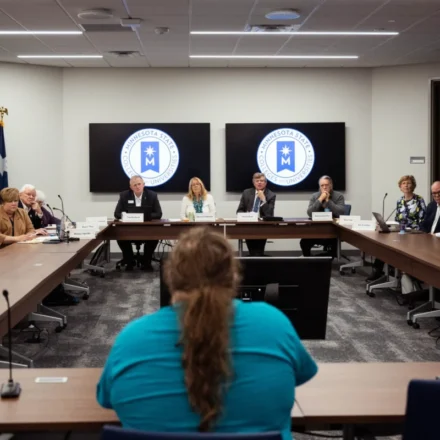
The council—which includes heavyweights such as David Mortenson (Mortenson), Audrey Lucas (McKinsey & Co.), and John Naylor (Medica)—emphasized that the spirit of the project remains alive. "Business and other community leaders gather at many tables to help work toward a vision for the region where everyone can thrive," the memo stated. "It is inspiring to see this work continue in countless ways and is proof of how strong the spirit of Itasca has become."
Lynn Casey, Former Chair:
Casey has previously pushed back against the notion that the business community is retreating from civic life. She characterized the shift as an "evolution driven by the complexity and intensity of the corporate environment," noting that modern CEOs are under immense pressure to focus on internal operations, ESG goals, and global market volatility, necessitating that "leaders below the CEO level" take on more of the civic mantle.
Implications: A New Era for Minnesota Civic Life
The dissolution of the Itasca Project raises several critical questions for the future of the Twin Cities and the State of Minnesota.
1. The Loss of a "Neutral Table"
For 20 years, Itasca provided a space where the public and private sectors could meet without the immediate pressure of legislative lobbying or profit motives. With the organization gone, there is a risk that regional problem-solving will become more fragmented. While Greater MSP and the GroundBreak Coalition are highly capable, they often have specific mandates (economic development and capital equity, respectively) that may not cover the broad, "all-of-the-above" social issues Itasca once tackled.
2. The CEO Engagement Gap
The disbanding occurs at a time when Minnesota is facing significant headwinds: anemic population growth, fiscal deficits in Minneapolis and St. Paul, and a widening political divide. Some observers worry that the end of Itasca is a symptom of "CEO retreat," where corporate leaders are increasingly hesitant to engage in public-facing civic leadership for fear of political blowback or due to the demands of a 24/7 global economy.
3. The Decentralization of Power
Conversely, the "graduation" of Itasca’s work could be seen as a healthy democratization of civic power. By moving the Minnesota Young American Leaders Program (MYALP) to the University of Minnesota and Harvard Business School, and shifting other initiatives to more diverse coalitions, the region may be moving away from a "top-down" model of progress toward a more "bottom-up" approach that reflects the state’s changing demographics.
4. Fiscal and Political Challenges
The timing is particularly poignant. As the Twin Cities navigate the complexities of post-pandemic urban recovery, the absence of a unified business voice could complicate efforts to address public safety and infrastructure. The Itasca Project was often the "adult in the room" during fiscal crises; without it, the burden falls entirely on elected officials and a more dispersed set of advocacy groups.
Next Steps
The Itasca Project leadership has announced that they will host a virtual meeting in the coming weeks to provide a forum for "dialogue" among funders and partners. This session will likely serve as a formal handoff, ensuring that the legacy of programs like Business Bridge and the various leadership cohorts continue under their new stewards.
For now, the questions, concerns, and ideas regarding this transition are being directed to Steve Grove and Peter Frosch, CEO of Greater MSP. As the "spirit of Itasca" transitions into its next phase, the Minnesota business community must decide if "many tables" are indeed better than one.