





















































By [Your Name/Journalistic Desk]
Originally reported by Kate Sosin for The 19th
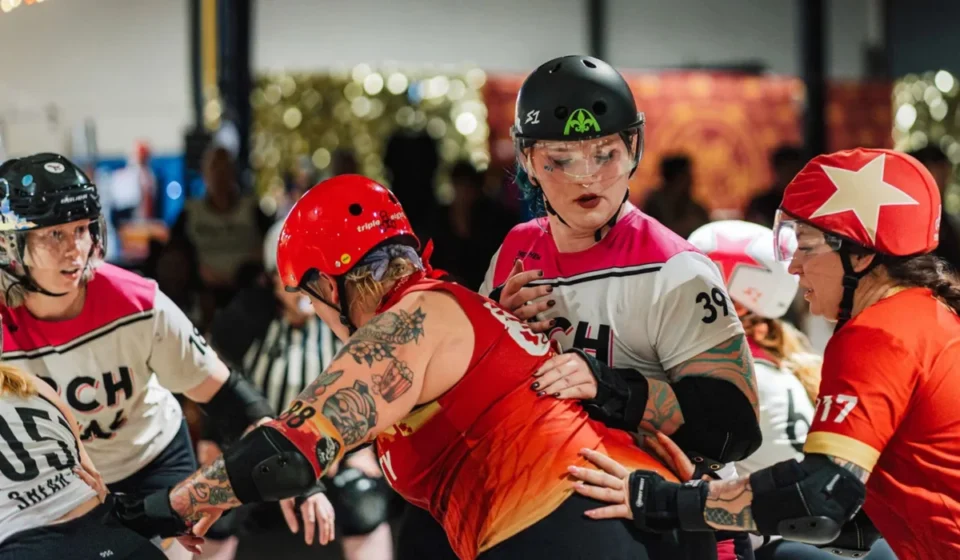
In the landscape of modern athletics, where the debate over transgender participation has become a focal point of legislative and cultural warfare, one high-contact sport has carved out a distinct, defiant path. Roller derby—a sport defined by its punk-rock aesthetic, banked tracks, and fierce physical hits—has spent the better part of the last two decades intentionally constructing a culture of radical inclusion. While mainstream sports institutions struggle with rigid, often exclusionary policies, roller derby has prioritized the humanity of its athletes over traditional binary frameworks.
The Human Experience: Finding Community on Eight Wheels
For Juniper Simonis, the memory of 2012 is etched in sharp, vivid detail. It was a warm summer evening in Ithaca, New York, and the wind whipped through her hair as she navigated the streets on her bicycle, American folk singer Mariee Siou pulsing through her headphones. The euphoria of that moment was not just the result of a pleasant ride; it was the psychological liberation of receiving an email from the Ithaca League of Women Rollers. The team had voted to accept her.
“As somebody who played sports and was queer, but those were two very separate parts of my life, the promise and the opportunity to integrate those was very hopeful for me,” Simonis recalls. As a transgender woman, being voted onto an all-women’s team was more than an invitation to compete—it was an affirmation of identity. “Getting a message that was like, ‘You are welcome,’ was very, obviously, very uplifting.”
Yet, the reality of the sport is nuanced. Simonis’s journey, like that of many trans athletes, has not been without peril. She has faced abuse and even physical assault on the track from opposing players, highlighting the gap that remains between institutional policy and individual behavior. Her experience serves as a microcosm for the sport at large: a community that strives for progress but continues to grapple with the prejudices that persist in the wider world.
A Chronology of Inclusion: From Counter-Culture to Global Standard
Roller derby’s history is as complex as its current political stance. Tracing its roots to the 1930s as a commercial endurance spectacle, the sport was technically co-ed from its inception, though it was plagued by the era’s systemic gender pay gaps. However, the modern version of the sport—the flat-track phenomenon that exploded in the early 2000s—was built on a foundation of DIY feminist resistance.
In the early aughts, leagues began to form in Austin, Texas, and beyond. This era was defined by a rejection of conventional pop culture. It was the age of "riot grrrl" energy, where the track became a sanctuary for women to reclaim their strength. Players adopted aggressive, tongue-in-cheek personas—"Beyonslay," "Iron Maven," and "belle right hooks"—to challenge the patriarchal expectations of femininity.
As the Women’s Flat Track Derby Association (WFTDA) grew to encompass over 400 leagues across six continents, the question of gender became central to its identity. Initially, policies were rudimentary, often mirroring Olympic standards that required hormone replacement therapy for two years. These policies were, by admission of league leaders, "well-intentioned but not iron-clad."
By the 2010s, a new generation of skaters, such as Penelope "Fifi Nomenon" Nederlander, began to challenge these barriers. When Nederlander joined the LA Derby Dolls in 2010, she was met with a simple, refreshing question: Did her driver’s license reflect her identity? When she confirmed it did, the team welcomed her without hesitation. "It was the first group of friends who I met who only knew me as Penny, and that was huge," she said.
This bottom-up pressure eventually forced a systemic shift. In 2015, the WFTDA officially updated its policy, declaring that anyone of a "marginalized gender" is welcome to participate. This was a watershed moment that moved beyond medical gatekeeping, allowing nonbinary, trans, and gender-diverse athletes to compete on their own terms.
Supporting Data and the Myth of "Fairness"
The debate surrounding trans inclusion in sports is frequently framed around the concept of competitive fairness and safety. Critics argue that allowing trans women to compete compromises the integrity of women’s sports. However, veterans of the sport, such as Nicole Williams—widely regarded as the "LeBron James" of roller derby—argue that this perspective is based on a fundamental misunderstanding of the sport’s nature.

"When I see ‘protect women’s spaces,’ that feels so repressive," Williams notes. "I don’t want to discount that women’s spaces are important. They are, but I don’t really identify with that in the way that I used to."
Data from the track suggests that the fears often cited in political arenas—namely, that trans athletes pose an inherent threat to the safety or competitive balance of the game—have not materialized in the roller derby community. Because the sport is inherently high-contact, injuries are part of the game’s reality regardless of an athlete’s gender identity.
Rachel "Rotten" Johnston, director of the Angel City League, argues that the focus on "fairness" is a distraction. "People who are concerned about people getting hurt are missing the fact that we’re playing a full-contact sport," she says. "You’re going to get hurt no matter what. Life isn’t fair, and sports most certainly are not fair."
The Ongoing Struggle: Intersectionality and Bias
Despite the progressive policies of the WFTDA, the sport is not a utopia. Donita "Blaxyl Rose" Green, who skates for Angel City Derby, points out that the challenges for trans skaters are compounded by systemic racism.
"I’ve seen firsthand how much worse some of these microaggressions and problems happen when you are a dark-skinned Black skater," Green explains. "You add knowledge of trans identity, and it tends to be even worse. We talk often about ‘skating while Black.’ It just happens."
This intersectional reality means that for skaters of color, the "inclusive" space of the track can still be fraught with the same exclusionary attitudes found in society at large. The work of creating a truly equitable environment is an ongoing, daily struggle, not a static policy that can be "solved" and forgotten.
Implications: A Different Way Forward
The implications of roller derby’s experiment are significant. While other sports organizations have spent years in legal and political limbo, effectively barring trans athletes in the name of "fairness," roller derby has demonstrated that inclusion does not destroy the sport—it sustains it.
The sport has repeatedly rejected the prospect of Olympic inclusion, fearing that the bureaucratic requirements of international governing bodies would force them to compromise their values regarding gender. By choosing to remain independent, they have preserved their ability to define their own culture.
Penelope Nederlander advocates for a more honest dialogue. She suggests that we can acknowledge physical differences between athletes without defaulting to exclusion. "I want to arrive at the same conclusion, but with honesty about it," she says. "In roller derby, there doesn’t seem to be an important difference. We really don’t have any complaints about trans skaters. So that’s awesome."
As the world continues to debate the future of athletics, the roller derby community stands as a testament to the idea that sports are more than just a measurement of physical output; they are communities of belonging. By prioritizing the inclusion of all bodies, the sport has not only survived but flourished, proving that the most radical act in athletics may simply be opening the door.