


















































The Pulse Returns: Target’s Mandate and the Revitalization of Downtown Minneapolis

MINNEAPOLIS — For years, the Monday morning rhythm at Corner Coffee in downtown Minneapolis was defined by a quiet, steady trickle of local residents and the occasional remote worker. But as September 2025 began, that rhythm underwent a jarring, albeit welcome, transformation. Store manager Mia Pariseau found herself at the center of a caffeinated whirlwind, with a line of customers stretching out the door for over an hour.
“We got just slammed,” Pariseau remarked, reflecting on the sudden influx of foot traffic. “And it was just me and one other person here.”
The catalyst for this surge is located just a few blocks away at the sprawling headquarters of Target Corporation. On September 2, the retail giant implemented a new policy requiring employees within its massive commercial unit to work in person at least three days a week. As the city’s second-largest employer, Target’s shift in policy is more than just a corporate adjustment; it is a significant economic lever for the Twin Cities’ urban core.
Main Facts: The Return of the Corporate Commuter
The revitalization of downtown Minneapolis has reached a critical inflection point. According to data provided by the Minneapolis Downtown Council, in-person work occupancy has climbed to nearly 75% of its pre-pandemic levels. This figure, while still shy of the 2019 baseline, represents a massive leap from the "ghost town" atmosphere that characterized the city during the height of the COVID-19 pandemic.
The influx of workers is driven by a broader trend among the city’s largest employers. Out of the top 15 companies headquartered or maintaining a major presence downtown, 12 have now instituted formal return-to-office (RTO) policies. While Target’s recent mandate is the most high-profile, it follows a summer of increased activity spurred by the public sector. On June 1, Minnesota state government employees were required to return to the office for at least 50% of their working hours, providing an initial boost to the central business district’s service economy.
For small business owners like Pariseau, the change is visceral. The "Target effect" is not merely a statistic; it is the sound of steaming milk and the sight of a crowded sidewalk. However, the transition has not been without its growing pains, as businesses that scaled down during the lean years now find themselves understaffed to handle the sudden return of the midday rush.

Chronology: From Desolation to Re-Emergence
To understand the weight of the current recovery, one must look back at the trajectory of the Minneapolis skyway system and street-level commerce since 2020.
- 2020–2021: The Era of Desolation. Following the onset of the pandemic, downtown Minneapolis saw an exodus of its 200,000-strong daily workforce. The skyways—the city’s famed climate-controlled pedestrian arteries—became eerie, empty corridors. Minnesota’s share of primarily remote workers surged to 21% in 2021, significantly higher than the national average of 17.9%, according to data from the Federal Reserve Bank of Minneapolis.
- 2022: The Slow Thaw. As vaccines became widely available, some firms began "voluntary" return programs. The remote work share in Minnesota dropped to 16.9%, signaling the beginning of a hybrid era. However, the streets remained quiet, and many iconic lunch spots and retailers shuttered permanently.
- June 2025: The Public Sector Mandate. The State of Minnesota signaled a definitive end to the remote-first era for government workers. Despite some labor resistance and threats of strikes from state worker unions, the policy brought thousands of employees back to the Capitol area and downtown offices, providing a foundational level of activity for the summer months.
- September 2025: The Target Wave. The implementation of Target’s three-day-a-week mandate for its commercial unit acted as a secondary "back-to-school" surge. This move has been credited with shifting the downtown energy from "recovering" to "vibrant."
Supporting Data: Measuring the Urban Core’s Recovery
The recovery of Minneapolis is being tracked through a variety of metrics, from cell phone pings to transit ridership and tax revenue. Kittie Fahey, the senior director of advancement for the Minneapolis Downtown Council, notes that the current 75% occupancy rate is expected to climb as more corporate units finalize their autumn schedules.
The Federal Reserve Bank of Minneapolis has been closely monitoring the "Ninth District" (which includes Minnesota) to see how work-from-home trends evolve. Their findings suggest that while Minnesota was initially slower than its Midwestern neighbors to bring workers back, the state is now "catching up." The concentration of professional services, creative industries, and corporate headquarters in Minneapolis—sectors that leaned heavily into remote work—explains the prolonged lag.
However, the data also reveals a shift in how people use the city. Fahey points out that the traditional "9-to-5" peak has flattened. "Traffic hours are more spread out than before the pandemic," she explained. Many hybrid policies allow for flexible start times, meaning the morning rush might now peak at 10:00 AM, with a secondary wave of commuters arriving around noon.
Official Responses: Professionalism and Collaboration
The push for a return to the office is often framed by leadership as a necessity for "culture" and "innovation." This sentiment is echoed by those on the ground. Madelyn Dunn-Lammert, an associate designer for Target who spent much of her first three years with the company working remotely, has noticed a distinct change in her professional life.
“It’s more vibrant and exciting during the day,” Dunn-Lammert said. She emphasized that for creative professionals, the digital barrier of Zoom and Teams often stifled the spontaneous "hallway conversations" that lead to breakthroughs. “Being able to grab lunch with co-workers or work through a project in person helps build team connections and facilitate collaboration.”
From the perspective of the Minneapolis Downtown Council, the return of workers is a civic duty as much as a corporate one. Kittie Fahey has been a vocal advocate for workers to re-engage with the city’s resources. “Go out for lunch, stay after and go meet friends, go do some things,” Fahey urged. “Use all the resources we have.”

However, not all responses have been purely optimistic. Labor groups and some long-term commuters have expressed frustration over the loss of flexibility. Jenny Lissarrague, an attorney who has worked downtown since 2012, offers a tempered view. While she acknowledges the city feels less "isolated" than it did in 2021, she notes that the infrastructure of the city has yet to catch up to the new demand.
Implications: The Challenges of a New Equilibrium
While the "bright future" predicted by business owners like Mia Pariseau seems within reach, significant structural hurdles remain. The return to the office has exposed a mismatch between the city’s current service offerings and the needs of a modern workforce.
1. The Transit Bottleneck:
One of the most pressing implications of the RTO movement is the state of public transportation. Jenny Lissarrague noted that getting downtown is more difficult now than in 2019. During the pandemic, Metro Transit reduced the frequency of many express bus routes due to low ridership. Now that workers are returning, the lack of frequent service creates a "vicious cycle" where commuters choose to drive, increasing traffic congestion and parking costs, which in turn makes the office return less appealing.
2. The "Ghost Town" After 5:00 PM:
A recurring concern for city planners is the "commuter-only" nature of the current recovery. While the 60,000 residents living in the downtown core provide a base level of activity, the "central business district" still struggles with evening vitality.
“It used to be you sort of came downtown, you hung out downtown,” Fahey said. “But now it’s like they kind of come in, they work and they go home.”
This is compounded by a lack of late-night amenities. Many restaurants that survived the pandemic now close significantly earlier—often by 8:00 or 9:00 PM. Finding a full-service kitchen open until 11:00 PM in the heart of the business district is nearly impossible, a stark contrast to the pre-2020 landscape.
3. Economic Sustainability for Small Business:
The "slamming" of Corner Coffee highlights a staffing crisis. Many service industry workers left the urban core during the pandemic for more stable hours in the suburbs. As foot traffic returns, downtown businesses must compete for labor in a tight market, often having to raise wages or limit hours, which can hinder their ability to fully capitalize on the Target-led resurgence.
Conclusion: A Trending Optimism
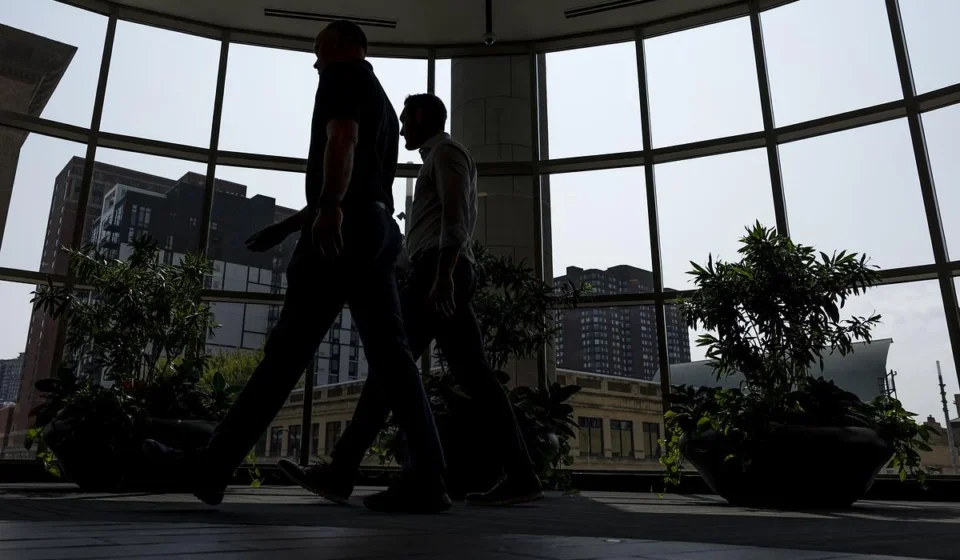
Despite the logistical hurdles and the changed nature of the American workday, the sentiment in downtown Minneapolis is shifting toward a cautious but determined optimism. The sight of lines at coffee shops, the return of the midday skyway "power walk," and the hum of collaborative workspaces suggest that the city is reclaiming its identity as the economic heart of the region.
For the city to fully recover, it will require a symbiotic relationship between major corporations like Target, the city government, and the service industry. As Mia Pariseau put it while navigating the morning rush: “The future is bright.” Whether that brightness extends past the 5:00 PM whistle remains the next great challenge for Minneapolis.