























































This story was produced as part of ThreeSixty Journalism’s 2026 Capitol Reporting Workshop for Minnesota youth, with financial support from the Saint Paul & Minnesota Foundation.
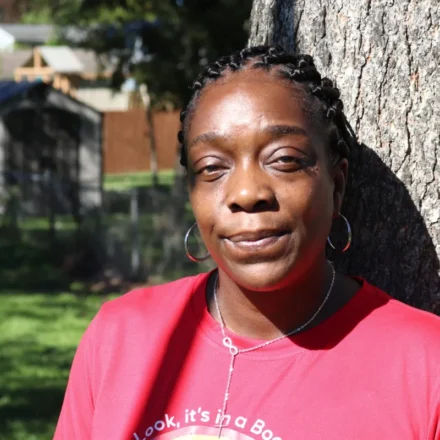
Every day, as the clock strikes 11:30 a.m., Dah Htoo undergoes a daily transition that sets him apart from most of his peers at Johnson Senior High School. While his classmates head to the cafeteria or their next elective, Htoo leaves the St. Paul campus, driving six miles north to the Finishing Trades Institute of the Upper Midwest. There, the academic atmosphere of high school is replaced by the hum of industrial tools and the tangible reality of professional craftsmanship.
For Htoo, a senior, this is not merely an extracurricular activity; it is his future. Through the Finishing Trades program, he earns high school credit while receiving hands-on training that mirrors real-world industry standards. "Right now, we’re doing drywalling," Htoo explains. "We go through the process exactly how someone would do it if they were working in the trades full-time."
Htoo’s path represents a growing movement in Minnesota education: the shift toward Career and Technical Education (CTE) as a viable, respected alternative to the traditional four-year college track. As the state grapples with labor shortages and a growing disconnect between classroom curriculum and the modern workforce, programs like those at Johnson Senior High are becoming vital pipelines for the next generation of skilled laborers.
A Chance Encounter: Bridging the Gap
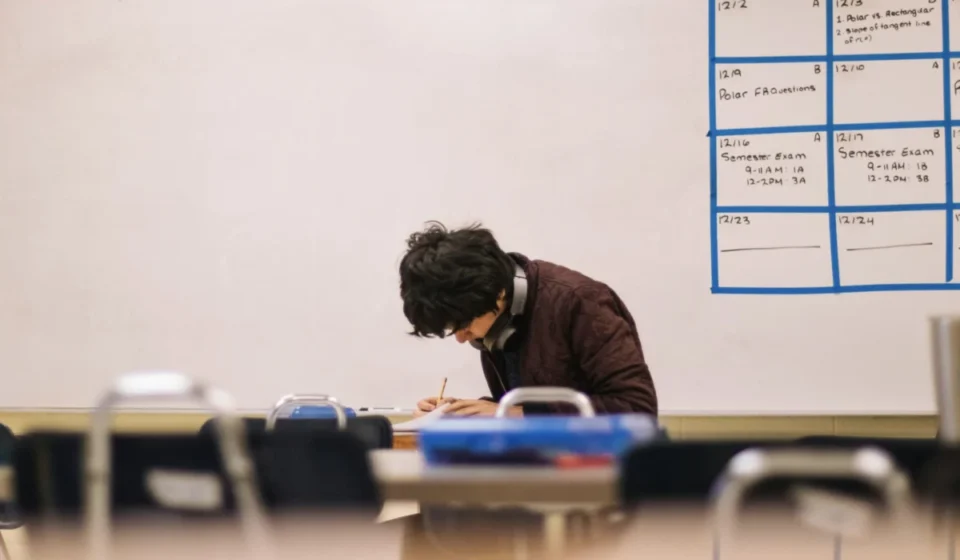
Htoo’s journey into the trades was not part of a long-term academic plan. In fact, for much of his high school career, he was disengaged. He admits he had never been interested in a traditional academic career path, and while he had occasionally considered learning a trade, he felt lost regarding how to actually access those opportunities.
The trajectory of his life changed in a hallway. Mary Voigt, the Career Pathway coordinator at Johnson Senior High, was preparing to lead a group of students on a field trip to the Finishing Trades Institute when she spotted Htoo skipping a class. Instead of disciplinary action, she offered an invitation.
That encounter was the catalyst Htoo needed. It highlights a recurring theme in modern education: the "hidden" nature of vocational opportunities. Without dedicated staff like Voigt, many students who are ill-suited for the traditional "college-for-all" model are left to drift, unaware of the pathways that could lead them to gainful, fulfilling employment.
The Evolution of Career Pathways
Mary Voigt’s advocacy for CTE did not emerge in a vacuum. It was a realization that began to solidify just before the onset of the COVID-19 pandemic. As she worked with students on the east side of St. Paul, she noticed a troubling trend: a lack of engagement and a perception that school was irrelevant to their long-term survival.
"It was really clear that families didn’t see any value in school," Voigt recalls. "I started to think: ‘Why would they care about school? What are we offering?’"
Her solution was to push for robust CTE programming. At Johnson High, this has evolved into a diverse array of pathways spanning health, engineering, education, and business. These programs are part of a nationwide CTE system designed to move education away from a series of bureaucratic "hoops" and toward a cohesive strategy for career readiness. By integrating professional credentials and work experience directly into the school day, the program provides students with a tangible return on their educational investment.
Legislative Action: Funding the Future
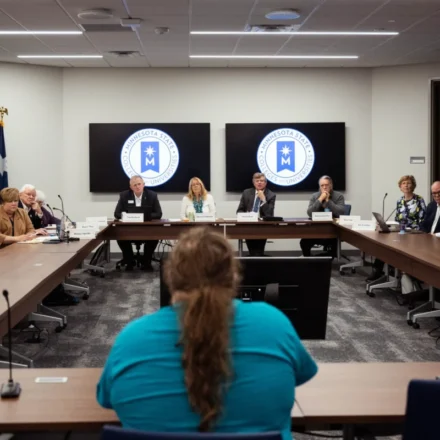
Recognizing the success of these programs, Minnesota lawmakers are currently debating a bipartisan bill that would significantly increase state funding for CTE. The proposed legislation, which is currently in committee, aims to raise the state’s reimbursement rate for CTE programs from 35% to 50%.
Rep. Bianca Virnig, a DFLer from the Twin Cities suburbs and the author of the bill, views this as a moral and economic imperative. "The goal is to get those young people to make it through the week, the month, the year—to get the life skills needed to live into adulthood," Virnig stated.
The bill’s fiscal requirements are substantial: it mandates that the Commissioner of Education raise $46.5 million in each fiscal year through tax adjustments to support these programs. It also introduces a layer of accountability, requiring school districts to submit annual reports to the Minnesota Department of Education to ensure transparency and effectiveness.
However, the path to legislative victory is rarely straightforward. Senate Majority Leader Erin Murphy has expressed support for the bill in concept but offered a note of caution. "The devil is in the details," she noted, signaling that the legislature will need to balance the high costs of these programs against the state’s broader budgetary obligations.
The Wage Gap Paradox: A Complex Reality
While supporters of CTE often tout the benefits of entering "high wage and high demand" fields, the statistical reality is nuanced. Troy Haugen, the director of Career and College Readiness at Minnesota CTE, frequently highlights the demand for skilled workers, yet state data presents a sobering counter-narrative.
A 2024 study by the Minnesota Department of Employment and Economic Development (DEED) revealed a challenging trend: on average, none of the fields offered by current CTE programs generate a "living wage"—defined by the MIT Living Wage Calculator as approximately $48,500 per year in the Twin Cities—for workers within their first five years post-graduation. The exception to this trend is the international business program, which is the only CTE pathway where graduates consistently earn above the living wage threshold early in their careers.
This data suggests that while CTE programs are successful at keeping students in school and teaching them technical skills, there is a secondary challenge: ensuring that these pathways lead to middle-class stability rather than entry-level jobs that may hit a wage ceiling.
The Graduation Multiplier
Despite the wage concerns, the educational impact of CTE cannot be overstated. A 2025 study by the Minnesota Department of Education found that 92% of students enrolled in two or more CTE programs graduate from high school—an 8% improvement over the statewide average.
For many students, the trade program is the "hook" that keeps them in the building. It provides a sense of agency and belonging that traditional coursework often fails to provide. The challenge, however, remains one of awareness.
"I know that there are a lot of opportunities you can get with the school," said Anna Warren, a student at Highland Park Senior High School. "But oftentimes, they’re not very well publicized."
This sentiment is echoed by educators across the state. Even in districts with robust CTE offerings, students often remain in the dark, relying on word-of-mouth or chance encounters with staff like Mary Voigt to discover their options.
Looking Ahead: A Culture Shift
At Johnson Senior High, Mary Voigt is working to bridge the information gap. She has implemented a weekly advertising strategy, using school communications to draw attention to career pathways. Her visibility as a "career champion" has transformed the perception of the program from an afterthought to a core pillar of the school’s identity.
For students like Dah Htoo, the impact of these efforts is profound. Having grown up with a distaste for the sedentary nature of traditional schooling, he finds fulfillment in the physicality of the trades. "I didn’t want to just sit in an office and type all day," Htoo said. "I just want to do something productive and hands-on."
As he prepares for life after graduation, Htoo is focused on pursuing a career in construction or welding—fields that offer him a clear sense of purpose.
The success of students like Htoo underscores the critical nature of the current legislative debate. If Minnesota is to maintain a healthy economy and ensure that its youth are prepared for the realities of the 21st-century workforce, it must continue to support and scale these programs. The task ahead for policymakers, educators, and the community is twofold: first, to ensure these programs are adequately funded; and second, to ensure they provide a clear, sustainable ladder to a true living wage for every student who walks through their doors.
As the state moves forward, the focus must remain on the individual—the student in the hallway who, with the right guidance, can find a path that transforms their education from a series of hurdles into a bridge toward a successful future.