



















































For millions of Americans, three digits have become a vital lifeline in their darkest hours. Since the national launch of 988—the Suicide and Crisis Lifeline—in July 2022, the service has transformed mental health intervention. Among those who have relied on this service is Cadence Van Beek, a student who, during a high school mental health crisis, found not a cold, automated response, but a patient, compassionate counselor.
"It didn’t feel rushed," Van Beek recalled. "She took her time with me, and she was very kind—just a kind soul."
However, while the service is saving lives, its future in Wisconsin remains precarious. Despite proven efficacy and surging demand, the state lacks a permanent, dedicated funding stream. As neighboring states move toward sustainable, long-term models, Wisconsin finds itself at a crossroads, balancing record-breaking call volumes with a fractured, unpredictable financial foundation.
The Power of the Lifeline: Proven Impact
The 988 system has yielded tangible results. A recent study published in JAMA revealed that in the first 30 months of the lifeline’s operation, suicide rates among individuals aged 15 to 34 dropped by 11% compared to projections—a figure that represents approximately 4,400 lives saved.
For many, particularly the digital-native Generation Z, the ability to text or chat with a counselor via 988 is a game-changer. Van Beek, now a psychology student at the University of Wisconsin-Whitewater, emphasizes that the accessibility of the platform is what makes it so effective for younger demographics. "Gen Z has always been behind a screen," she noted. "988 gives youth the option to text, and that is vital because talking or going in person can be overwhelming."

Chronology of a Growing Demand
When the 988 service launched in 2022, Family Services of Northeast Wisconsin, which operates the state’s lifeline, prepared for a steady influx of callers. They anticipated moderate to high interest, but the reality far exceeded their most aggressive projections.
- July 2022: The 988 Suicide and Crisis Lifeline officially launches nationwide, replacing the former 10-digit toll-free number.
- 2023-2024: Demand for services in Wisconsin begins to consistently outpace national models.
- 2024: A 24/7 text and chat feature is introduced, further increasing accessibility for younger users.
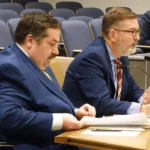
- May 2026: Cadence Van Beek presents her research at the Wisconsin State Capitol, urging legislators to adopt a 911-style funding model.
- Present Day: Wisconsin struggles to keep pace with an in-state answer rate of 81%, trailing behind neighbors like Illinois and Minnesota, which boast 90% rates.
Tana Koss, Senior Vice President at Family Services of Northeast Wisconsin, attributes the surge to both the lingering mental health repercussions of the COVID-19 pandemic and a gradual reduction in the social stigma surrounding mental health help-seeking. "The demand from Wisconsinites for this service has surpassed every model of projection that was available to us," Koss said.
Supporting Data: The Funding Gap
The discrepancy between Wisconsin’s 81% in-state answer rate and the 90% rate seen in states with dedicated funding is not a matter of personnel quality, but of infrastructure and capacity. When an in-state counselor is unavailable, calls are routed to national backup centers. While these centers are professional, they lack the localized knowledge of community-based resources—such as county-specific mental health clinics or local support groups—that can be essential for a long-term recovery plan.
The financial math is stark. Wisconsin requires approximately $12.2 million annually to maintain the current level of service. While Governor Tony Evers recommended this amount in previous budget cycles, the legislature ultimately approved only $7 million. Furthermore, federal grants—while helpful—are not guaranteed. Last year, delays in federal funding left administrators in a state of anxiety, fearing the lifeline’s operations would be forced to scale back.
A $6.195 million deficit is currently projected for 2028, creating an administrative burden that forces leaders to focus on budget survival rather than expansion or service refinement.

Official Responses and Political Stances
The debate over how to fund 988 has become a flashpoint for bipartisan discussion. In 2025, state Representative Ben Franklin (R-De Pere) and state Senator Jesse James (R-Thorp) authored a bill aimed at securing grant funding for the lifeline. However, the legislation was criticized by opponents for lacking an attached, recurring funding source. The bill ultimately failed to pass the Senate and never reached an Assembly vote.
Brandy Tollefson, a De Pere School Board member and Franklin’s challenger, has framed the issue as a personal priority. Having lost a stepbrother to suicide, she argues that the lack of concrete funding in past legislative attempts is a failure of leadership. "I fully support working with any Democrat or Republican who wants to get this permanently funded," Tollefson said.
Advocates like Julia Polk, an advocacy coordinator for the National Alliance on Mental Illness (NAMI) Wisconsin, are pushing for a model similar to 911. Since 2009, Wisconsin residents have paid a monthly 75-cent fee on their telecommunications bills to support 911. Twelve states have already implemented a similar "988 fee."
"What we would love to see is that we can educate our legislators on why 988 is so important and why it’s important to fund it long-term," Polk stated.
Implications: The Role of AI and Future Risks
The conversation around mental health is evolving alongside technology. As generative AI becomes a staple of daily life, there is growing concern that individuals experiencing suicidal ideation might turn to AI chatbots instead of trained professionals.

Legislators in states like Illinois are currently exploring measures to hold AI companies accountable, proposing fines of up to $15,000 per day if these platforms fail to provide referrals to human-staffed services like 988 when users express thoughts of self-harm.
Megan Zimmerman of NAMI Fox Valley emphasizes the danger of relying on artificial intelligence for emotional support. "I know it’s easy to bring up ChatGPT or Claude or Gemini," she said. "But I always encourage people to instead think about 988 because then you’re getting a real live human being."
The importance of this human connection cannot be overstated. Statistics show that 99.6% of 988 calls in Wisconsin are resolved by counselors providing support and coping strategies without the need for law enforcement or emergency medical intervention. The fear that calling 988 will lead to an unwanted police response is a common misconception that counselors work hard to debunk.
Conclusion: A Call for Sustainability
As Cadence Van Beek continues her journey as a student and advocate, she remains deeply concerned about the peers who might not find the same support she did if the system collapses under its own weight.
"988 has always kind of been a given," Van Beek said. "We assume it’ll be there. The possibility that there might not be enough counselors on the line because of funding… makes me a little worried."

Tana Koss echoed this sentiment, noting that she is not married to a specific legislative path—whether it be a phone bill fee, a permanent state appropriation, or other mechanisms—as long as the result is stability. "I think the request that I would have and advocate for is sustainability over the long haul," Koss said. "Because what we’re projecting is this growth hasn’t stopped."
For the state of Wisconsin, the challenge is clear: The lifeline is proving its worth every day, saving lives and providing a safety net for thousands. The remaining question is whether the state government will provide the bedrock of financial security necessary to ensure that when a citizen in crisis dials 988, someone will always be there to pick up.