





















































The Return of the Commuter: Target’s Mandate and the Fragile Resurgence of Downtown Minneapolis

MINNEAPOLIS — On a recent Monday morning at Corner Coffee, the atmosphere was a stark departure from the quietude that has defined the downtown core for much of the last five years. For store manager Mia Pariseau, the shift was immediate and visceral. Where Monday mornings were once a slow crawl, this week saw a relentless queue of patrons stretching out the door for over an hour.
“We got just slammed,” Pariseau remarked, reflecting on a morning where she and a single colleague struggled to keep pace with the sudden influx of caffeine-seeking professionals. “It was just me and one other person here.”
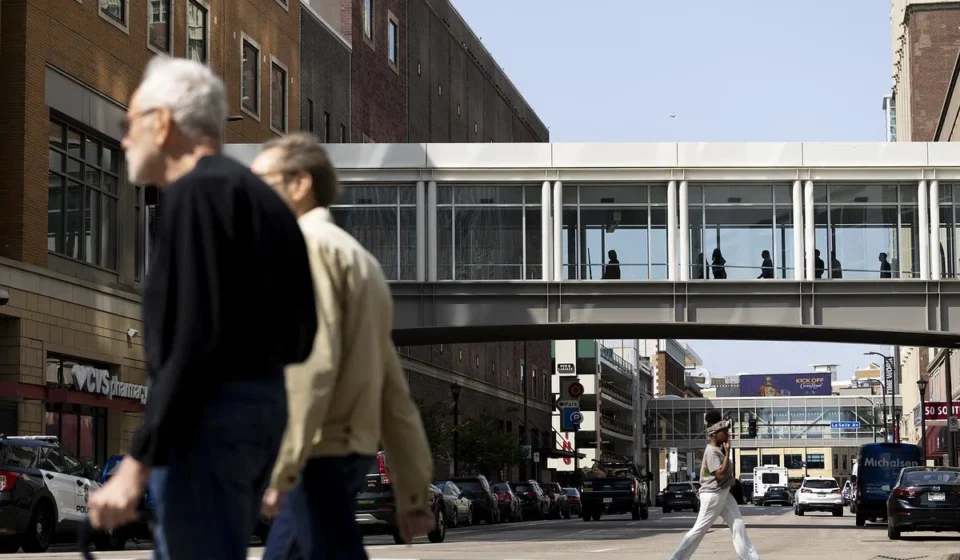
The surge is not a random fluctuation in foot traffic but the direct result of a significant shift in corporate policy. Corner Coffee sits in the shadow of Target Corporation’s headquarters, and as of September 2, 2025, the retail giant’s commercial unit was ordered back to the office for a minimum of three days per week. This mandate has acted as a catalyst, pumping thousands of employees back into the skyways and streets of Minneapolis, providing a long-awaited litmus test for the city’s post-pandemic recovery.
Main Facts: A City in Transition
The revitalization of downtown Minneapolis is currently anchored by the return of its second-largest employer. Target’s decision to transition from a largely remote or optional hybrid model to a mandated three-day in-person schedule for its commercial unit represents a turning point for the Central Business District (CBD).
According to Kittie Fahey, senior director of advancement for the Minneapolis Downtown Council, in-person work levels have climbed to nearly 75% of their pre-pandemic benchmarks. This figure is expected to rise further as the full weight of Target’s policy is felt across the service economy.
The influx of workers is more than a statistical victory for the city; it is a cultural shift. Madelyn Dunn-Lammert, an associate designer for Target who has spent the majority of her three-year tenure working remotely, noted that the energy in the office now mirrors a "back-to-school" atmosphere. For creative professionals, the return is framed not just as a corporate requirement, but as a functional necessity.

“Being able to grab lunch with co-workers or work through a project in-person helps build team connections and facilitate collaboration, especially in a creative field,” Dunn-Lammert said. Her perspective highlights the primary argument used by leadership in the "Return to Office" (RTO) movement: that spontaneous innovation and cultural cohesion cannot be fully replicated via video conferencing.
Chronology: From "Ghost Town" to the New Normal
The journey to this moment has been a protracted and often painful one for the Twin Cities. To understand the significance of the current resurgence, one must look at the timeline of the city’s vacancy and subsequent re-emergence.
- 2020–2021: The "Ghost Town" Era. Following the onset of the COVID-19 pandemic, Minneapolis became a textbook example of the urban exodus. Federal Reserve Bank of Minneapolis data shows that Minnesota’s share of primarily remote workers peaked at 21% in 2021—significantly higher than the national average of 17.9%. During this period, downtown was described by long-time workers like attorney Jenny Lissarrague as a "ghost town" where the bustling skyway system fell silent.
- 2022–2023: The Slow Thaw. By 2022, the remote work share in Minnesota dropped to 16.9% as some firms began implementing optional hybrid models. However, the recovery was slower than in peer cities. Large swaths of the skyway remained underutilized, and many small businesses that relied on the 9-to-5 lunch crowd shuttered permanently.
- June 2024–June 2025: The Public Sector Lead. A major shift occurred in the summer of 2025 when Minnesota state government employees were required to spend at least 50% of their workdays in the office. This move was met with significant resistance, including threats of labor strikes, but it set a precedent for the private sector to follow.
- September 2025: The Target Mandate. The most recent and impactful milestone arrived on September 2, with Target’s commercial unit returning for three days a week. As a cornerstone of the local economy, Target’s policy change has forced a recalibration of the downtown ecosystem, from transit schedules to coffee shop staffing.
Supporting Data: The Economic and Demographic Landscape
The recovery of Minneapolis is being tracked through a variety of metrics that paint a picture of a city catching up to national trends. The Minneapolis Downtown Council reports that of the top 15 downtown employers, 12 have now instituted formal back-to-office policies.
Target, while influential, is part of a broader coalition of employers including Hennepin Healthcare (the city’s largest downtown employer), Wells Fargo, and Ameriprise Financial. The collective presence of these organizations is vital for the 60,000 residents who live downtown, as the services they require—grocery stores, pharmacies, and restaurants—depend on the "daytime population" to remain viable.
However, the data also reveals significant hurdles. While foot traffic is up, the timing of that traffic has changed. Kittie Fahey notes that commute times are now more "spread out" than the traditional 8:00 AM and 5:00 PM peaks. Many employees are utilizing the flexibility within their three-day mandates to commute during off-peak hours, such as midday, which complicates transit planning and staffing for service businesses.
Furthermore, the "vibrancy gap" remains a concern. Pre-pandemic Minneapolis was characterized by a 24-hour cycle. Today, the city struggles with a "work-and-bolt" culture. Fahey points out that many restaurants in the central business district still close much earlier than they did in 2019. "You’d be hard-pressed to find a restaurant open until 11 p.m. in the CBD," Fahey said. "That’s crazy different than pre-pandemic."
Official Responses: Leadership vs. The Rank-and-File
The push to return to downtown has created a tension between institutional goals and individual lifestyles. On one side, city officials and business advocates like Fahey are championing a "use it or lose it" approach to urban resources.

“Go out for lunch, stay after and go meet friends, go do some things,” Fahey urged, addressing the returning workforce. “Use all the resources we have. It used to be you sort of came downtown, you hung out downtown… we’d love to see that not be the direction anymore.”
On the other side, workers point to the logistical decay that occurred during the pandemic as a barrier to returning. Jenny Lissarrague, who has worked downtown since 2012, noted that the transit infrastructure is no longer as robust as it once was. With fewer buses running and adjusted schedules, the simple act of getting to the office has become more burdensome.
Additionally, the resistance seen among state workers in June 2025 highlights a broader labor sentiment: many employees feel they have proven their productivity in a remote environment and view mandates as an unnecessary regression. While Target’s employees like Dunn-Lammert see the benefits of collaboration, the broader workforce remains divided on whether the "energy" of downtown is worth the cost of the commute.
Implications: The Future of the Urban Core
The current state of downtown Minneapolis serves as a microcosm for the future of American cities. The "Target Effect" suggests that large corporate mandates can indeed jumpstart urban economies, but they cannot, by themselves, restore the pre-pandemic status quo.
Several implications emerge from this new phase of recovery:
- The Evolution of Retail and Dining: Small businesses like Corner Coffee must adapt to a "peak-and-valley" demand cycle. The "slammed" Monday mornings described by Pariseau require different staffing models than the more predictable flows of 2019. If restaurants continue to close early, the city risks becoming a "9-to-5" office park rather than a vibrant residential and entertainment hub.
- Transit Re-calibration: Metro Transit and city planners face the challenge of aligning services with a workforce that no longer moves in a synchronized fashion. If transit does not improve, the friction of the commute may continue to fuel employee resentment toward RTO policies.
- The "Third Place" Crisis: For downtown to thrive, it must provide "third places"—spaces outside of home and work—that are accessible after hours. The current trend of employees "clocking out and heading home" threatens the long-term viability of the city’s nightlife and cultural institutions.
- Real Estate Stability: With 12 of the top 15 employers enforcing office attendance, the commercial real estate market in Minneapolis may find a floor. However, the "flight to quality" remains, as companies seek office spaces that offer enough amenities to justify the commute for their employees.
Despite the challenges, the mood among those on the front lines of the service economy is shifting toward the positive. As the skyways fill and the coffee machines hiss with newfound frequency, there is a sense that the "ghost town" era is finally in the rearview mirror.
As Mia Pariseau of Corner Coffee put it, looking out at the revitalized line of customers: “The future is bright.” Whether that brightness translates into a full-scale urban renaissance remains to be seen, but for now, downtown Minneapolis is finally waking up.