


























































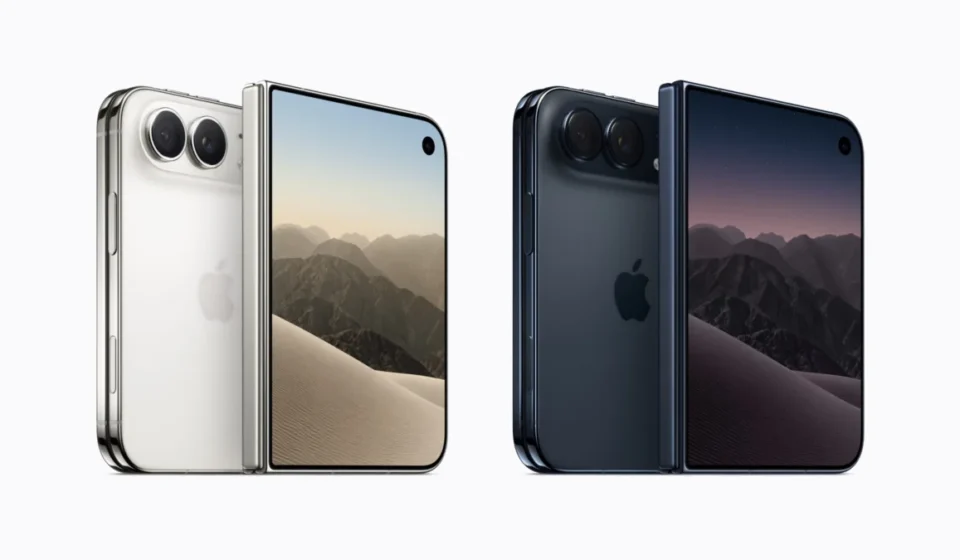
The Intelligent Personal Hub: Apple’s AI-Driven Evolution and the Arrival of the iPhone Duo

Twenty-five years ago, the tech landscape was vastly different. I sat in a crowded auditorium, watching Steve Jobs unveil the "digital hub" strategy—a visionary roadmap that cast the Mac as the central command post for a burgeoning ecosystem of portable peripherals. It was a bold claim that defined an era. Today, we have reached the logical conclusion of that vision, though the stage has shifted. The peripherals have been absorbed, the hub has shrunk, and the Mac’s former mantle has been claimed by the device currently resting in your pocket.
At Wednesday’s "Surprise and Shine" event, Apple’s new CEO, John Ternus, solidified this shift, positioning the iPhone not merely as a smartphone, but as an "intelligent personal hub"—an AI-powered conductor for the modern human experience.
The Evolution of the Hub: From Desktop to Pocket
The core message of the event was clear: the iPhone has matured into an indispensable, context-aware agent. As Ternus noted in his opening manifesto, the future of Apple is not just in hardware, but in the seamless intersection of powerful computing and deep, privacy-centric personal understanding.
"AI makes entirely new kinds of experiences possible," Ternus told the audience. "An AI can become even more useful when it brings together your life with the apps, services, and products you use every day. This means the product at the center of your experiences becomes even more essential."
This is the "brave new world" of Apple’s AI strategy. After years of speculation regarding Apple’s silence in the generative AI race, the company has emerged with a strategy that emphasizes "applied contextual AI." By leveraging Siri AI, users can now manipulate files, manage complex workflows, and organize their daily lives through natural, spoken commands. The goal is to move beyond generic LLM chatbots and toward an AI that understands the specific nuances of your digital life while maintaining the company’s signature "fortress" approach to user privacy.
Chronology: The Road to the iPhone 18 and the Duo
The event followed a predictable, yet high-stakes, rhythm. For months, the rumor mill had been churning, suggesting everything from a hardware refresh to a radical shift in form factor. By and large, the leaks were accurate.
- Pre-Event: Speculation peaked regarding a foldable device, with industry analysts debating whether Apple would enter the segment or continue to refine the traditional slab design.
- The Keynote: Ternus opened the proceedings by framing the iPhone 18 lineup as the foundation for the next quarter-century of Apple computing.
- The Hardware Reveal: Apple unveiled the standard iPhone 18 series alongside the flagship Pro models and the much-anticipated "iPhone Duo."
- The Pricing Strategy: In a move that surprised many observers, Apple maintained pricing parity for its standard accessories and kept the iPhone 18 Pro entry price within a reasonable margin of its predecessor, despite the massive performance gains under the hood.
The iPhone Duo: Challenging the Foldable Status Quo
The undisputed star of the show was the iPhone Duo. For years, the folding phone market has been dominated by Samsung, which treated the form factor as a niche experiment for tech enthusiasts. Apple’s entry, priced at a starting point of $1,999, is clearly designed to change the narrative.
While the entry-level price is a barrier for many, it aligns with market expectations for a premium foldable device. At the top end, a 2TB iPhone Duo will run you $3,199—an "eye-watering" sum, to be sure, but one that Apple is betting will be justified by the device’s engineering superiority.
Engineering Against the Grain
Where the iPhone Duo differentiates itself is in its physical resilience. While competitors like the Samsung Galaxy Z Fold series have made significant strides, Apple has set a new benchmark for durability. The Duo boasts an IP68-rated dust and water resistance, allowing it to withstand submersion in nearly twenty feet of water—a stark contrast to the IP48 rating found in rival hardware.
This engineering focus suggests that Apple is not just interested in the gimmick of a folding screen; they are interested in the professional reliability of a folding tablet that fits in a pocket. By combining this hardware with the "most powerful mobile processor on the planet," Apple is aiming to position the Duo as a legitimate, mobile productivity powerhouse.
Supporting Data: Why This Matters
The shift toward the iPhone as an intelligent hub is supported by staggering usage statistics provided during the keynote. Apple reported that over 300,000 apps are already integrated with Siri AI, and the ecosystem processes more than 2.5 billion Siri requests daily.
This scale is crucial. AI performance is not just about the silicon in the phone; it is about the data loop. The more the device understands the user’s context—their calendars, their files, their communication networks—the more "intelligent" the hub becomes. By optimizing its silicon specifically for these AI-driven, context-heavy tasks, Apple is creating a moat that few competitors can easily cross.
Official Responses and Industry Implications
The response from the analyst community has been one of measured respect. Francisco Jeronimo of IDC, a long-time observer of the mobile hardware market, noted the significance of the move: "Apple entered the foldable market and, in one keynote, set the price and the standard every rival will now be measured against."
This is the "Apple effect." By entering a category, they validate it, but by positioning it as an "intelligent hub," they redefine the requirements for success. The implications for the rest of the industry are profound:
- Productivity Shifts: The emergence of the iPhone Duo, with its massive, folding display and AI-driven command interface, likely signals the beginning of the end for the traditional tablet market. If a phone can do what an iPad does, the tablet faces an existential crisis.
- Market Segmentation: While the Duo is currently priced for the "affluent consumer, C-class executive, and AI professional," history suggests a trajectory toward mass-market adoption. Much like the original iPad, which was initially viewed as an oversized smartphone, the Duo will likely evolve into a category-defining tool for a much broader demographic over the next five years.
- The Privacy-AI Paradox: Apple’s most significant challenge remains balancing the depth of its AI integration with its reputation as a privacy advocate. If the company succeeds in executing "on-device" intelligence that keeps personal data from leaving the "hub," they will have successfully solved the greatest concern currently facing the AI industry.
The Future of the Hub: A Vision Realized
As the event concluded, the overarching theme was one of continuity. Despite the technological leaps—the AI integration, the foldable form factor, and the massive processing power—the goal remains exactly what it was in 1999.
Apple is still building a "digital hub." It is just no longer a desk-bound Mac connected to a web of wires. It is a sleek, folding piece of glass and silicon that uses artificial intelligence to anticipate your needs, manage your networks, and serve as the central nervous system of your daily life.
Is the iPhone Duo for everyone? Not yet. At $2,000, it remains a luxury tool for those who need to push the boundaries of mobile productivity. However, in the world of Apple, today’s "Pro" innovation is almost always tomorrow’s standard. The company has laid out its roadmap for the AI era, and it is clear that they intend to own the center of the experience, ensuring that while the world changes, the hub remains—as always—in the hands of the user.