



















































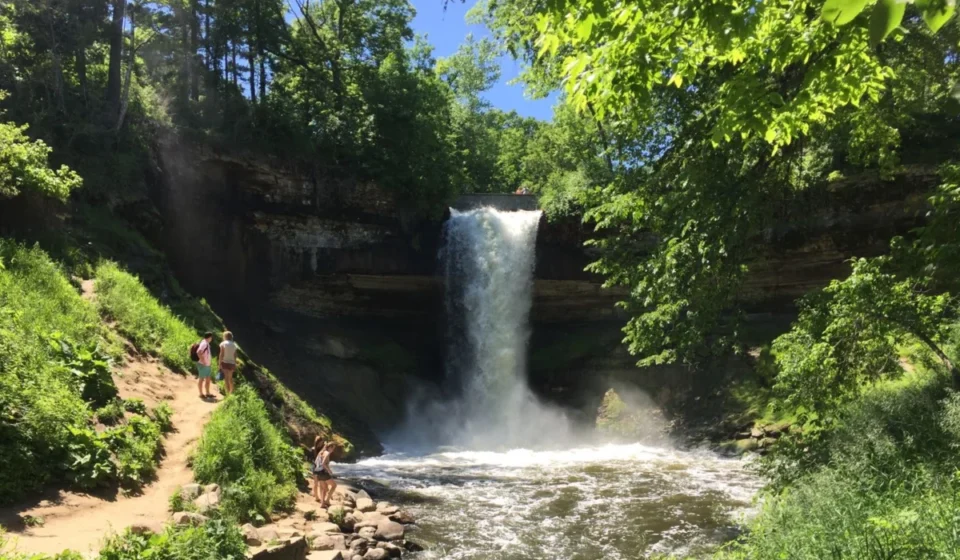

In an era defined by intense political polarization and social fragmentation, finding common ground among the American public is a rare feat. Yet, across the deep divides of the contemporary political landscape, one unifying consensus has emerged: the essential value of public parks. Whether in the bustling heart of a metropolis or the quiet outskirts of a suburb, Americans view green spaces not merely as aesthetic luxuries, but as foundational pillars of community health and stability.
A recent, comprehensive poll underscores this near-universal appreciation. Data reveals that 88 percent of Americans visited a public park in the past year. Perhaps more strikingly, the support for these spaces transcends party lines: nearly 90 percent of voters who supported Kamala Harris and 80 percent of those who backed Donald Trump categorize parks as "critical infrastructure."
As city planners and elected officials search for solutions to housing shortages and the escalating threats of climate change, a new report from the Trust for Public Land (TPL) provides a compelling mandate: Investing in parks is not just a social good; it is a high-yield economic strategy. The report reveals that for every dollar invested in parks and recreation, communities generate $3 in annual economic benefits.
The Economic Engine of the Great Outdoors
The TPL report, titled "Parks’ Undeniable ROI," paints a vivid picture of how municipal green spaces function as engines of local prosperity. Will Klein, the director of parks research at the Trust for Public Land, emphasizes that the benefits are both tangible and pervasive.
"You really do get so much goodness out of them," Klein explains. "People are healthier, they connect with each other, and they drive business activity—particularly for local small businesses."
The economic impact is multifaceted. Parks act as a "third place"—a vital social space distinct from the workplace and the home. In a world where every square foot of urban space is increasingly commodified, parks remain one of the few locations where citizens can gather without the pressure of a financial transaction. By providing a free, accessible venue for recreation, cities alleviate the burden of entry costs associated with private gyms or social clubs.
Beyond the direct recreational value, the surrounding economic ripple effect is significant. Visitors to urban green spaces frequently patronize nearby cafes, restaurants, and retail boutiques, injecting capital directly into the local tax base. High-profile urban parks—such as New York City’s Central Park, Chicago’s Millennium Park, and the newly developed Sunset Dunes in San Francisco—serve as primary tourist magnets. Furthermore, large-scale projects like the 420-mile Florida Gulf Coast Trail are projected to generate $200 million in economic activity in Sarasota County alone by attracting cyclists and outdoor enthusiasts.
A Public Health Crisis and the Green Solution
The United States currently spends an staggering $5.3 trillion annually on healthcare. A significant portion of this expenditure is linked to chronic illnesses, many of which are exacerbated by physical inactivity. According to public health experts, physical inactivity costs the nation more than $200 billion per year, contributing to rising rates of cardiovascular disease and metabolic disorders.
"Our polling this year showed that the most popular place in America in 2025 to run, play, and exercise are parks and public spaces—far more popular than private gyms," says Klein. "That physical activity has real health and economic benefits, accounting for approximately $2,000 per person in healthcare savings each year."
The implications extend well beyond physical wellness. The modern mental health crisis, characterized by rising rates of anxiety and loneliness, has prompted researchers to look toward nature as a low-cost, high-impact intervention. Numerous studies have confirmed that proximity to greenery significantly boosts psychological well-being. By fostering social interaction through community events—such as outdoor concerts, movie nights, and neighborhood barbecues—parks combat the epidemic of loneliness that currently plagues many urban populations. For the elderly and those on fixed incomes, these free, accessible spaces are often the primary means of maintaining a high quality of life.
Real Estate and the Tax Base
Even for residents who rarely set foot on the grass, the presence of a well-maintained park provides a significant financial boost. Property values consistently climb in neighborhoods proximate to green spaces, a phenomenon that has long been recognized by urban economists.
"People want to live near green spaces," Klein notes. "This leads to increased property values, which supports a broader tax base. That, in turn, allows for reinvestment into community benefits through the resulting increase in property tax revenue."
This mechanism creates a virtuous cycle. As the city invests in the park, the neighborhood becomes more desirable; as property values rise, the city collects more revenue, which can then be used to further improve the park or expand the city’s green footprint.
Climate Resilience: Nature as Infrastructure
As climate change accelerates, cities are facing a new, existential challenge: extreme precipitation. Modern urban sewer systems, designed for the weather patterns of the 20th century, are increasingly overwhelmed by the intensity of contemporary storms.
Parks serve as critical climate-adaptation infrastructure. By providing permeable surfaces, green spaces act as massive sponges that soak up runoff, reducing the strain on municipal water management systems. This dual benefit—preventing catastrophic neighborhood flooding while lowering infrastructure maintenance costs—makes parks an essential tool in the climate-conscious city planner’s kit.
Furthermore, in dense urban environments, the "heat island" effect poses a major threat to public health. The strategic inclusion of "pocket gardens" within new housing developments can significantly lower local ambient temperatures, providing a natural cooling effect that concrete jungles lack.
The Future of the "Agrihood" and Inclusive Design
The challenge for modern urbanism lies in the equitable distribution of these benefits. Historically, high-quality green spaces have been concentrated in affluent areas. However, modern developers and city officials are increasingly prioritizing "inclusive greening."
The integration of housing and nature is evolving. We are seeing a rise in "agrihoods"—residential developments built around working farms. These communities offer residents the benefits of local food production, environmental stewardship, and shared public space. By designing density that incorporates nature rather than replacing it, cities can accommodate a growing population without sacrificing the livability that makes urban life sustainable.
Implications for Policy and Governance
For elected officials, the data presents a clear roadmap. The "green dividend" is not a vague promise but a measurable fiscal outcome. The path forward involves several key imperatives:
- Prioritizing Equitable Access: Investment must be directed toward underserved neighborhoods to ensure that the health and economic benefits of parks are not limited to the wealthy.
- Integrating Infrastructure: Parks should be treated as functional infrastructure (similar to roads or sewage systems) rather than merely ornamental features.
- Cross-Sector Collaboration: By linking parks to public health initiatives, climate resilience, and economic development, cities can tap into a wider variety of funding sources.
As the nation navigates the complexities of the 21st century, the humble green space stands out as an surprisingly powerful tool. It is a solution that is quite literally under our feet. By investing in the park system, local leaders are not just planting trees or pouring concrete—they are investing in the social, physical, and financial bedrock of the American community.
In the final analysis, the message from the Trust for Public Land is clear: The most effective way to build a resilient, prosperous city is to ensure that every citizen has a place to walk, to play, and to breathe. As we look toward the future of urban development, the park remains our most reliable asset.