























































The Silent Reveal: Behind the Shocking Telluride Premiere of ‘You Can See Everything’

In a cinematic landscape often dominated by leaks, spoilers, and relentless marketing campaigns, the Telluride Film Festival achieved the impossible this past Sunday night. In what is being hailed as one of the most successful "secret screenings" in the festival’s storied history, 650 unsuspecting attendees found themselves locked into a theater, their mobile devices surrendered at the door, with no knowledge of the narrative journey they were about to embark upon.
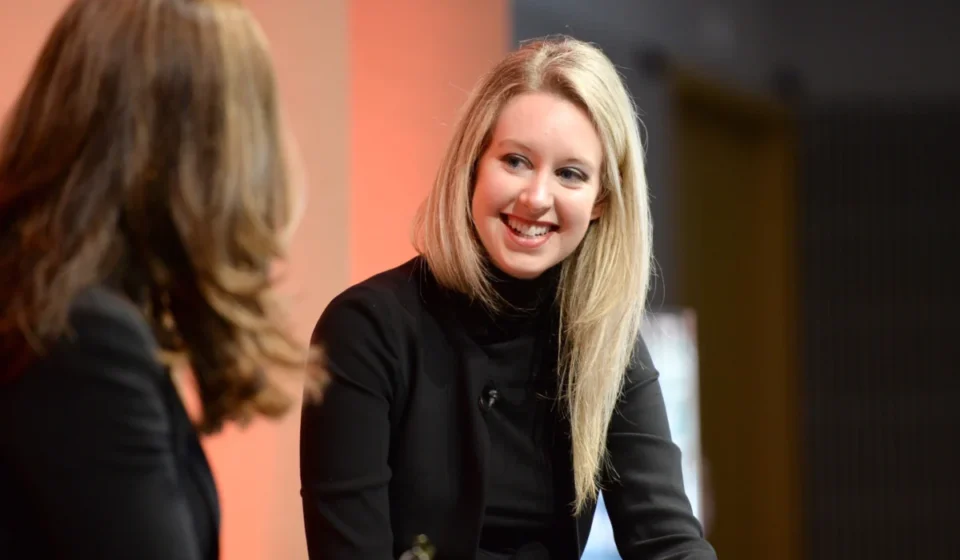
The mystery film, which had been kept under wraps with near-military precision, was revealed to be a sprawling, three-hour documentary titled You Can See Everything. Co-directed by the master of deadpan satire Nathan Fielder and documentarian Lance Oppenheim, the project offers an unprecedented, fly-on-the-wall perspective of the most infamous figure in Silicon Valley history: Elizabeth Holmes.
Main Facts: A Portrait of Imminent Incarceration
You Can See Everything is not a traditional retrospective of the rise and fall of Theranos. Instead, it is a hyper-focused, claustrophobic character study. The film captures the 34-day window preceding May 30, 2023—the date Holmes reported to the Federal Prison Camp in Bryan, Texas, to begin serving her 11-year sentence for defrauding investors.
The access granted to the filmmakers is, by any journalistic standard, staggering. According to reports from the screening, Nathan Fielder—known for his own meta-documentary work—reportedly lived in the guest house of the residence shared by Holmes and her husband, Billy Evans, during the lead-up to her surrender. This proximity allowed the cameras to capture the mundanity, the tension, and the surreal domesticity of a woman preparing to trade a life of high-stakes corporate deception for the austere reality of federal prison.
The film has already been acquired by A24, the powerhouse indie studio known for its bold curation, and is slated for an October release. While the documentary’s technical merits are being lauded, the industry is buzzing about a singular, unexpected element: the involvement of an A-list actress who reportedly integrates herself into the narrative, blurring the lines between objective documentary and performative reality.
A Chronological Descent: From Silicon Valley Darling to Inmate
To understand the weight of You Can See Everything, one must contextualize the timeline that led to the film’s inception.
- 2003–2014: Elizabeth Holmes founds Theranos, promising a revolutionary blood-testing technology that could run hundreds of tests with a single drop of blood. She becomes a media darling, reaching a valuation of $9 billion.
- 2015: John Carreyrou’s investigative reporting for The Wall Street Journal begins to unravel the facade, revealing that the technology does not work as claimed.
- 2018: Theranos dissolves. Holmes and former COO Ramesh "Sunny" Balwani are indicted on federal fraud charges.
- January 2022: A jury convicts Holmes on four counts of wire fraud and conspiracy to defraud investors.
- November 2022: Holmes is sentenced to 11 years and three months in prison.
- February 2023: Holmes’s appeals to overturn the conviction are rejected by the courts.
- May 2023: After exhausting legal avenues, Holmes reports to prison.
- Late 2023–Present: Holmes files a clemency petition with the White House, seeking a commutation of her sentence.
The documentary captures the final, frantic month of this timeline. It documents the transition from a woman fighting to maintain her public image to a woman resigned to the reality of the legal system’s finality.
Supporting Data: The Legal Quagmire
The documentary arrives at a precarious moment in Holmes’s legal saga. Her journey through the American judicial system has been marked by a series of desperate pivots. After the 2022 conviction, her defense team argued that the sentencing was excessive and that the trial was marred by procedural errors. When the appellate courts denied these motions in February 2023, the path to freedom narrowed significantly.
The "clemency" angle remains a point of intense public interest. As of the latest updates from the Department of Justice’s Office of the Pardon Attorney, Holmes’s petition for executive clemency is officially listed as "pending." This status implies that the request has passed the initial intake phase and is undergoing review, though the likelihood of a commutation—especially for a high-profile white-collar crime—remains a subject of intense debate among legal scholars.
You Can See Everything appears to provide the human subtext to these cold, bureaucratic filings. It shows the private conversations, the quiet moments of deliberation, and the strain placed on her family unit during the final weeks of her freedom.
Official Responses and Industry Reception
The response to the Telluride premiere has been polarized yet electric. Critics who saw the film have remarked on the "unnerving" nature of the access. Fielder, whose work often explores the ethics of observation, appears to have pushed the boundaries of documentary filmmaking.
"There is a pervasive sense of complicity," noted one festival attendee. "You aren’t just watching Elizabeth Holmes; you are watching the filmmakers watch her. It forces you to question what constitutes ‘truth’ when the subject is someone who built an entire career on a manufactured persona."
A24 has remained relatively quiet, letting the mystery of the film’s structure build anticipation. However, the involvement of the mystery A-list actress has prompted speculation about whether the film leans into "docu-fiction." By injecting a celebrity presence into the home life of a convicted felon, the directors seem to be interrogating the cult of personality that allowed Theranos to thrive in the first place.
The Implications: A New Era of True Crime?
The release of You Can See Everything raises profound ethical questions regarding the intersection of fame, crime, and media consumption.
1. The Normalization of the Infamous
By granting filmmakers such intimate access, is Holmes attempting to reframe her narrative? The film serves as a document of a woman who—despite being found guilty of defrauding investors of hundreds of millions of dollars—retains enough cultural capital to command a high-profile documentary.
2. The Ethics of "Living" with the Subject
Nathan Fielder’s choice to reside in the guest house of his subject is a departure from traditional investigative journalism. It suggests a level of intimacy that borders on participation. This "immersion method" creates a proximity that is both technically impressive and ethically fraught. It removes the wall of objective distance, potentially transforming the documentary from a study of the subject to a study of the relationship between the filmmaker and the subject.
3. The Role of Performance
If, as rumored, the documentary features an actress stepping into the narrative, the film may be the first of its kind to explicitly acknowledge that for people like Elizabeth Holmes, life is a performance. By casting an actor, Fielder and Oppenheim may be arguing that Holmes’s own life was a scripted event, and that to understand her, one needs the tools of theater rather than just the lens of journalism.
Conclusion: A Mirror to Silicon Valley
You Can See Everything is poised to be the most discussed documentary of the year. Whether it serves as an apology, a condemnation, or a piece of meta-commentary, its release in October will undoubtedly reignite the public debate surrounding Elizabeth Holmes.
For the audiences at Telluride, the experience was visceral—a reminder that in the age of digital transparency, the most shocking stories are the ones that happen behind closed doors. As we await the wider release, the film serves as a haunting reminder of the fragility of the tech-utopian dream and the long, slow, and often public collapse that follows when the illusion finally breaks.
The question that remains for the viewers is not just what they saw, but what they were intended to see. In the final, quiet days before her incarceration, Holmes’s life was captured in full. Whether that footage offers redemption or further indictment is a judgment that will be left to the court of public opinion.