


























































The End of "Tokenmaxxing": How Rippling’s New AI Spend Console Aims to Tame Enterprise AI Budgets

The "wild west" era of corporate artificial intelligence adoption has hit a cold, hard fiscal reality. For the past year, tech companies have been engaged in a practice affectionately—and perhaps derisively—dubbed "tokenmaxxing": an unrestrained, all-in approach to integrating Large Language Models (LLMs) into every possible workflow, often without regard for the mounting cost of inference.
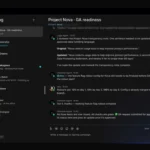
This week, HR software provider Rippling officially declared the end of that era with the launch of its AI Spend Console. Designed as an anti-tokenmaxxing governance tool, the product aims to transform AI from a bottomless money pit into a measurable, optimized business asset. By tracking individual employee, team, and departmental usage, the platform distinguishes between genuine productivity gains and what industry insiders call "AI slop"—the generation of low-value, high-cost digital debris.
The Fiscal Wake-Up Call: A $50,000-a-Month Engineer
The genesis of the AI Spend Console was not a visionary board room strategy, but a moment of corporate sticker shock. In March, during a routine executive review, Rippling’s Chief Financial Officer, Adam Swiecicki, presented figures that sent a ripple of concern through the company’s leadership.
Rippling’s internal data revealed that the company was on a trajectory to burn 40% of its entire R&D headcount budget on AI tokens. To put that in perspective, the firm was spending as much on API calls to frontier AI labs as it was on the salaries of nearly half of its engineering workforce. Worse yet, that spend was ballooning by 80% month-over-month. If left unchecked, the company projected that within a year, AI token costs would consume 90% of the R&D payroll—an unsustainable fiscal cliff that would have effectively gutted the company’s ability to pay human talent.
"We were incredulous," said Chief Product Officer Matt MacInnis. The discovery prompted an urgent, company-wide audit. The results were telling: roughly 10% to 15% of the workforce was responsible for 60% of the total AI expenditure. In one extreme instance, a single engineer was racking up a $50,000 monthly bill—a figure that, while potentially productive, demanded immediate oversight.
Chronology of a Crisis
To understand how enterprises arrived at this point, one must look at the rapid evolution of the AI landscape over the last eight months of 2026.
- Early 2026: The "Gold Rush" Phase. Businesses rushed to integrate tools like Cursor, OpenAI, and Anthropic. Because these providers have no inherent incentive to limit consumption, enterprises saw runaway expenses. There was little to no interoperability, and employees defaulted to using the most expensive, "frontier" models for every task, regardless of complexity.
- Mid-2026: The Realization Phase. As bills mounted, companies began to experiment with model diversification. Executives realized they didn’t need the most expensive model for a simple grammar check or a basic code refactor.
- Late 2026: The Governance Phase. The launch of tools like Rippling’s AI Spend Console marks the shift toward centralized control. Companies are now implementing "AI gateways" to route prompts to the most cost-effective model capable of handling the specific task at hand.
Strategic Shifts: Routing and Model Diversity
A pivotal part of Rippling’s turnaround involved a fundamental change in how the company interacts with LLMs. MacInnis noted that before the intervention, employees were reflexively using the most powerful—and most expensive—models for every query.
"The truth is that the inference providers… have every incentive for it to be a runaway expense," MacInnis explained. "They don’t provide you with great usage insight, and they don’t collaborate with one another."
To combat this, Rippling developed its own AI gateway. This internal routing layer evaluates the complexity of a prompt and directs it to the appropriate model. This strategy has been buoyed by the rise of high-performance, lower-cost models. For instance, Rippling CEO Parker Conrad recently highlighted that while SpaceX’s Grok is a performance leader, alternatives like GLM 5.2—a model gaining traction among major firms like Databricks—offer near-identical performance for a fraction of the cost.
By routing non-critical tasks to these more efficient models, Rippling saw a dramatic turnaround. While its total token consumption in July 2026 (600 billion) was nearly identical to its peak in April, the cost of that consumption was just 37% of the April bill.
The Metrics of Productivity: "AI Captains" and Data Analysis
The AI Spend Console provides a granular dashboard that measures more than just dollars spent; it correlates spend with output. By tracking prompts per day against actual work output—such as lines of code, pull requests, or customer onboarding milestones—the tool aims to identify who is using AI to accelerate their work and who is simply burning compute cycles.
The company is even going as far as identifying "AI captains"—employees who have demonstrated an ability to use AI tools with high efficiency—and tasking them with mentoring their peers. This human-centric approach is intended to ensure that AI adoption is driven by best practices rather than indiscriminate usage.
However, Rippling acknowledges that applying these metrics to non-engineering roles remains a work in progress. "We have to be able to link token consumption in G&A functions and in customer-facing functions back to productivity," MacInnis noted. "If we can’t do that, all bets are off on any of this stuff being available to the broader employee base."
The Implications for the Future of Enterprise AI
The rise of the AI Spend Console signals a broader maturation of the enterprise software market. The era where AI access was treated like an unlimited utility—much like email or Slack—is drawing to a close.
The implications for the broader tech industry are significant:
- The Rise of the "AI Gateway": Expect companies to increasingly adopt middleware that sits between their employees and AI labs to enforce budget caps, model routing, and security.
- Productivity Accountability: As CFOs gain better visibility into AI costs, employees will likely face increased pressure to justify their AI usage. We may see the introduction of "AI budgets" for departments, similar to travel or software licensing budgets.
- The End of "One Size Fits All": Companies will move away from monolithic AI strategies. Instead, they will adopt a "best-fit" model strategy, utilizing frontier models for high-stakes research and development while relying on cheaper, specialized models for day-to-day administrative tasks.
- A Potential Contraction in Access: If companies find that they cannot correlate AI usage with tangible productivity gains, it is entirely possible that AI access will be restricted to high-performing power users, rather than being democratized across the entire organization.
Conclusion
Rippling’s AI Spend Console serves as both a product and a warning. It is a product that provides the necessary guardrails for modern, tech-forward businesses, but it is also a warning that the "infinite money" phase of the AI revolution is over.
As the technology becomes more commoditized and the costs become more transparent, the focus of the C-suite is shifting from "how can we use AI?" to "what is the return on investment for every token we burn?" For companies looking to survive the next phase of the AI cycle, the ability to measure, manage, and optimize AI spend will be just as important as the ability to build the models themselves.
The shredder in Rippling’s launch ad—filled with the remnants of wasted cash—serves as a reminder: in the future of work, AI is a tool, not a toy. And like any powerful tool, it must be used with precision, or the cost will simply be too high to bear.