
















































This report was originally published by The New Lede and has been expanded to provide comprehensive context regarding the ongoing legal battle surrounding Bayer’s controversial glyphosate settlement.
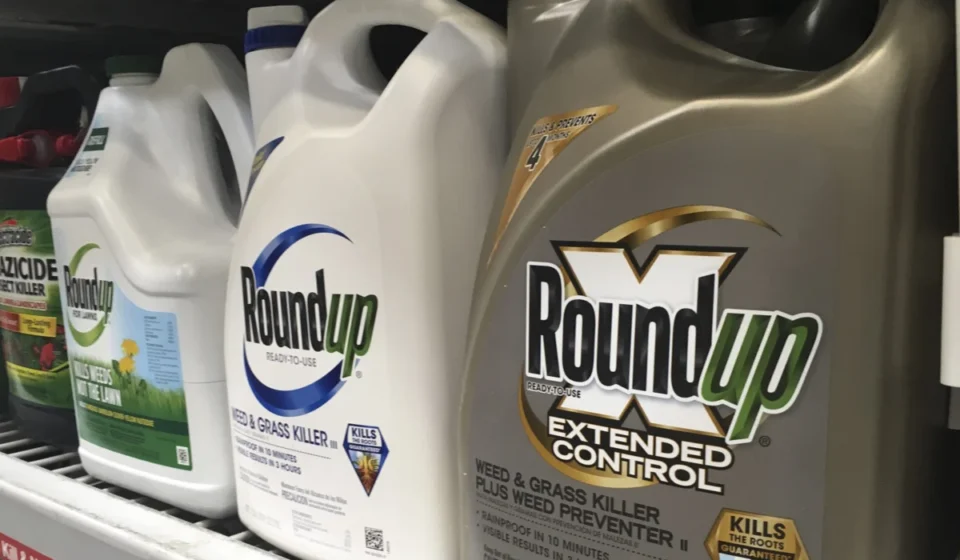
The legal landscape surrounding Bayer AG and its glyphosate-based herbicide, Roundup, has entered a volatile new phase. A proposed $7.25 billion class-action settlement, intended to resolve decades of litigation linking the product to non-Hodgkin lymphoma (NHL), is currently facing a fierce, multi-front legal challenge. Critics are characterizing the agreement as a "sweetheart deal" that effectively shields a global corporate giant from accountability while providing minimal relief to the very individuals it claims to compensate.
On May 21, 2026, a scathing court filing was submitted to the Circuit Court of the City of St. Louis, Missouri, formally objecting to the settlement. The filing argues that the agreement violates the U.S. Constitution, specifically asserting that it runs "roughshod over basic due process rights." As the industry watches, the future of this massive financial resolution remains in significant jeopardy.
The Anatomy of the Controversy
At the heart of the dispute is a fundamental disagreement over what constitutes "justice" for thousands of cancer victims. Bayer, which acquired Monsanto in 2018—inheriting its massive portfolio of litigation—seeks to utilize this class-action settlement to finally put the "Roundup issue" to rest. The company argues that the deal provides a stable, guaranteed pathway to compensation for those who might otherwise spend years navigating clogged court dockets.
However, legal observers and plaintiffs’ attorneys have identified several "red flags" within the structure of the deal. Chief among these is the provision for $675 million in legal fees allocated to the attorneys who helped negotiate the settlement. Critics contend that this massive payout is disproportionate to the "paltry" compensation slated for the actual victims of the herbicide. Furthermore, the settlement would allow Bayer to continue selling Roundup without adding cancer warning labels—a concession that critics argue effectively rewards the company for its past marketing practices.
"It would reward Bayer and Monsanto for its past deeds and give them the green light to have Roundup sprayed everywhere on everything and everybody," the May 21 court filing asserts. "Approval of the settlement would be to free one of the nation’s most notorious, long-term polluters from jury trials and real liability for their misdeeds."
Chronology of a Legal Quagmire
The timeline of this litigation reflects a decade of intense judicial scrutiny:
- 2016–2018: The first wave of federal multidistrict litigation (MDL) regarding Roundup begins in California, overseen by U.S. District Judge Vince Chhabria.
- 2018: Bayer acquires Monsanto for $63 billion, inheriting thousands of lawsuits from individuals claiming glyphosate caused their cancers.
- February 2026: Bayer and a select group of plaintiffs’ attorneys propose a $7.25 billion nationwide class-action settlement. The proposal receives rapid, preliminary approval from a Missouri state judge.
- April 2026: High-profile attorney Ashley Keller argues before the U.S. Supreme Court on behalf of Monsanto’s interests, a move intended to limit future failure-to-warn lawsuits.
- May 21, 2026: Keller, alongside the Tennessee firm Frazer PLC, files a formal objection to the class-action settlement, alleging unconstitutional practices.
- May 22, 2026: A "notice of removal" is filed, seeking to shift the Missouri case into federal court to disrupt the current settlement path.
- June 4, 2026: The deadline for Roundup plaintiffs to formally "opt-out" of the settlement agreement.
- Late June 2026: The U.S. Supreme Court is expected to deliver a pivotal ruling on whether federal law (FIFRA) preempts state-level failure-to-warn claims.
- July 2026: A final approval hearing for the settlement is scheduled in Missouri.
Supporting Data and Procedural "Laundering"
The objection filed by Ashley Keller and his team goes beyond mere disagreement; it alleges a sophisticated "laundering" scheme. The notice of removal filed on May 22 suggests that the settlement was never intended to litigate active claims but was instead a strategy to manage liability through a friendly court venue.
By seeking to move the case to federal jurisdiction, specifically the U.S. District Court in California where Judge Vince Chhabria presides, the objectors hope to subject the deal to a more skeptical review. Judge Chhabria has previously been highly critical of the settlement, labeling it "filthy," "mind-boggling," and "legally problematic."
The core of the legal argument rests on the "futures" subclass. The current proposal includes not only those already diagnosed but also future Roundup users who may develop cancer. Critics argue that binding individuals who have not yet been exposed—or in some cases, not yet born—is entirely unprecedented and unconstitutional. "The class seeks to bind a group of millions upon millions of people… Such a class is unconstitutional and unprecedented in the annals of US jurisprudence," the filing states.
Official Responses and Corporate Strategy
Bayer has remained steadfast in its defense of the settlement. In an official statement, the company framed the objections as a normal part of the legal process, insisting that the deal is "long-term, well-financed, and supported by plaintiff law firms representing thousands of potential class members."
Chris Seeger, a lead attorney for the plaintiffs who helped structure the deal, dismissed the removal notice as a "baseless delay tactic." Seeger maintains that the settlement is the only viable path to ensuring cancer victims receive compensation before the legal landscape shifts. He emphasizes that if the Supreme Court rules in favor of Monsanto, current lawsuits could be "wiped out" entirely, leaving plaintiffs with nothing.
"We remain confident in this agreement," Seeger noted. "It is the clearest path to guaranteed compensation for cancer victims who have waited more than a decade for justice."
Broader Implications: The Shadow of the Supreme Court
The ultimate fate of this settlement is intrinsically linked to the looming Supreme Court decision. The Court is currently weighing whether the Federal Insecticide, Fungicide, and Rodenticide Act (FIFRA) shields manufacturers from state-level lawsuits if the EPA has not deemed a product’s label to be misleading regarding carcinogenicity.
If the Supreme Court rules in favor of Monsanto, it could effectively nullify thousands of existing and future claims based on a "failure-to-warn" theory. Bayer and the supporting attorneys are actively using this threat to pressure plaintiffs to join the settlement before the June 4 opt-out deadline.
For the plaintiffs, the decision is agonizing: opt-out and risk losing everything if the Supreme Court rules in Bayer’s favor, or join a settlement that provides lower compensation but offers a degree of certainty.
Environmental and Public Health Context
Beyond the courtroom, the Roundup saga has become a lightning rod for broader debates regarding pesticide regulation and public health. In regions like the Red River Valley in North Dakota, residents have faced an uphill battle in seeking legal redress due to state laws that provide companies like Bayer with significant immunity.
The persistence of these lawsuits highlights a widening gap between corporate regulatory approval—specifically the EPA’s stance that glyphosate is "unlikely" to be carcinogenic—and the lived experience of thousands of farmers, landscapers, and gardeners who report cancer diagnoses after years of herbicide use.
As the July hearing approaches, the judicial system faces a significant test. Does the legal system exist to provide a final, efficient resolution for corporations looking to shed liability, or is its primary purpose to protect the due process rights of individuals harmed by the products they were told were safe?
The outcome of this $7.25 billion battle will likely set the precedent for how mass torts are handled in the United States for years to come. For now, the "sweetheart deal" remains in limbo, trapped between the high-stakes maneuvering of corporate defense teams and the persistent, if fractured, resistance of those seeking their day in court.