




















































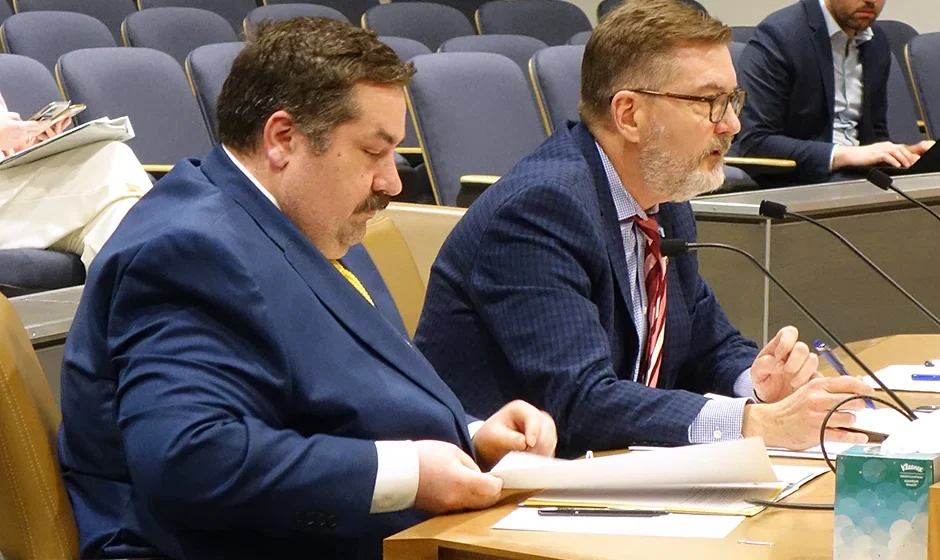
Leadership Continuity in the North Star State: Eric Taubel Appointed Permanent Director of Minnesota’s Office of Cannabis Management

ST. PAUL, MN — In a move signaling a desire for stability and regulatory momentum, Governor Tim Walz officially appointed Eric Taubel as the permanent Executive Director of the Minnesota Office of Cannabis Management (OCM) on Wednesday. Taubel, who has served as the agency’s interim leader since January and previously acted as its general counsel, takes the helm of an organization tasked with overseeing one of the most complex and socially ambitious marijuana legalization frameworks in the United States.
The appointment comes at a critical juncture for Minnesota’s emerging cannabis industry. While the state legalized adult-use marijuana in 2023, the path to a fully operational retail market has been marked by administrative hurdles, legislative adjustments, and a "rocky" start that Governor Walz himself has acknowledged. By elevating Taubel, the administration is betting on a steady hand to transition the state from the "exploratory" phase to a robust, statewide commercial reality.
Main Facts: A Permanent Hand for a Growing Industry
The transition from interim to permanent status for Eric Taubel is more than a title change; it is a validation of the OCM’s recent trajectory. Since taking over the interim role following a period of leadership uncertainty, Taubel has been credited with streamlining the agency’s internal processes and navigating the legislative tweaks passed during the 2024 session.
Key Details of the Appointment:
- Executive Endorsement: Governor Walz expressed high confidence in Taubel’s performance over the last eight months, noting that he has successfully aligned the office’s operations with the state’s core priorities: social equity, tribal sovereignty, and public safety.
- Proven Track Record: As general counsel, Taubel was instrumental in drafting the initial regulatory guardrails. As interim director, he oversaw the launch of the social equity applicant verification process and the first rounds of business license approvals.
- The Mandate: Taubel is now charged with meeting the ambitious goal of having 100 to 150 fully licensed retailers operational by the end of the 2024 calendar year, a target he reiterated in recent interviews.
Chronology: From Legislative Concept to Regulatory Reality
The journey to Wednesday’s announcement began in May 2023, when Governor Walz signed Chapter 63 (HF 100) into law, making Minnesota the 23rd state to legalize recreational marijuana. However, the road to implementation has been anything but linear.
2023: The Initial Turbulence
Following the bill’s signing, the state faced immediate pressure to stand up a new regulatory body. The initial search for an executive director hit a significant snag when the first appointee, Erin DuPree, resigned just one day after being named following reports of past business practices involving non-compliant hemp products. This left the OCM in a state of flux during its most formative months.
January 2024: Taubel Takes the Interim Reins
Eric Taubel, then the agency’s general counsel, was tapped to lead in an interim capacity. His primary task was to professionalize the agency’s operations and rebuild trust with both the legislature and the public. During this period, the OCM focused on hiring staff, establishing testing protocols, and preparing for the first wave of license applications.
May 2024: Legislative Fine-Tuning
Recognizing that the original law had bottlenecks—particularly regarding the speed of licensing—the Minnesota Legislature passed a series of "cleanup" measures. These changes allowed for a "vetted lottery" system for social equity applicants and moved up the timeline for certain license types to begin operations. Taubel was a key witness during these hearings, providing the technical expertise needed to refine the law.
July – August 2024: The First Green Lights
The OCM began issuing the first "final approvals" for cannabis businesses. While tribal nations like the Red Lake Nation and White Earth Nation had already begun sales on sovereign land, the first non-tribal retail approvals signaled the start of the broader commercial market.
Supporting Data: The Scale of the Emerging Market
To understand the weight of Taubel’s new role, one must look at the scale of the market the OCM is attempting to build. Minnesota’s approach is unique in its heavy emphasis on municipal participation and social equity.
Licensing Projections
Taubel has publicly stated that the OCM is on track to grant final license status to between 100 and 150 retailers by the end of this year. This is part of a broader rollout that will eventually include hundreds of cultivators, processors, and delivery services.
The Municipal Landscape
While many states leave cannabis retail entirely to the private sector, Minnesota law allows for municipal liquor-store-style cannabis shops. Currently, 13 Minnesota cities are in the formal exploratory stage of opening publicly-owned pot shops. These cities view municipal retail as a way to control the local market while generating revenue for community projects.
Tribal Leadership
Tribal nations have served as the vanguard of the Minnesota market. Because of their sovereign status, they were able to open dispensaries months before the state-regulated market was ready.
- White Earth Nation: Recently reached an agreement to open dispensaries off-reservation in St. Cloud and Moorhead, a significant expansion of tribal economic reach.
- Red Lake Nation: Operates one of the state’s most prominent dispensaries, drawing customers from across the region.
Official Responses: Confidence Amidst Challenges
The reaction to Taubel’s appointment has been largely positive, though tempered by the reality of the work ahead.
Governor Tim Walz praised Taubel’s ability to turn the tide during a difficult period. "Over the past eight months, Eric Taubel has ensured that the priorities that drove cannabis legalization in Minnesota—equity, safety, and a well-regulated market—are reflected in our emerging industry," Walz said in a statement. "He has done a fantastic job under pressure."
State Senator Scott Dibble, a key architect of the legalization bill, has also signaled support for Taubel’s steady leadership. During committee hearings in March, Dibble and Taubel worked closely to address concerns from potential business owners regarding the lottery system and the transition from the illicit market.
For his part, Eric Taubel has maintained a pragmatic, business-first tone. In a recent interview, he emphasized that the OCM has moved past its "start-up" phase. "We’ve transitioned to the point where the onus is on the applicant and a prospective business owner," Taubel remarked. He noted that while the state provides the framework, the speed of the rollout now depends largely on the readiness of the private sector to meet rigorous regulatory standards.
Implications: The Road Ahead and Local Friction
Despite the stability Taubel brings to the OCM, his permanent tenure begins as a new set of challenges emerges: the tension between state authority and local control.
The Albert Lea Precedent
A significant shadow was cast over the rollout last month when the Albert Lea City Council denied a business registration license to The Smoking Tree, despite the business having already received final approval from the state OCM.
This move shocked many observers who believed state approval would be the final word. The incident suggests that local governments may have more "nuanced" regulatory levers—such as zoning, building permits, and local business registrations—to delay or block shops they find undesirable. Taubel and the OCM will likely face legal and administrative battles as they attempt to reconcile state-level mandates with local-level resistance.
Social Equity and the "Vetted Lottery"
One of Taubel’s primary challenges will be ensuring the "vetted lottery" system remains fair. Critics have worried that large out-of-state "multi-state operators" (MSOs) might find loopholes to bypass social equity requirements. Taubel’s background as general counsel will be vital here, as he must defend the OCM’s vetting process against potential lawsuits from disappointed applicants.
Economic and Public Health Impact
As the market moves toward 150 stores, the OCM must also scale up its enforcement and public health wings. This includes:
- Product Testing: Ensuring all retail cannabis is free of heavy metals, pesticides, and mold.
- Packaging Standards: Implementing strict "plain packaging" rules to prevent appeal to minors.
- The Illicit Market: Competing with established illicit networks by ensuring the legal market is accessible and price-competitive.
Conclusion
The appointment of Eric Taubel marks the end of the "interim" era for Minnesota cannabis. With a permanent director in place, the Walz administration has signaled that the foundational work of the OCM is complete. The focus now shifts from writing rules to enforcing them, and from planning a market to populating it. For Taubel, the coming months will be a test of whether his "applicant-onus" philosophy can successfully launch a multi-billion dollar industry while maintaining the social equity promises that made Minnesota’s law a national model.