


















































By [Your Name/Tech Editorial Desk]
August 4, 2026
The lines separating Elon Musk’s corporate empire have never been more blurred. In a series of financial disclosures released Tuesday, SpaceX revealed a massive capital allocation toward Tesla’s energy division, highlighting a deepening reliance on internal supply chains to fuel the rapid expansion of Musk’s artificial intelligence ambitions.
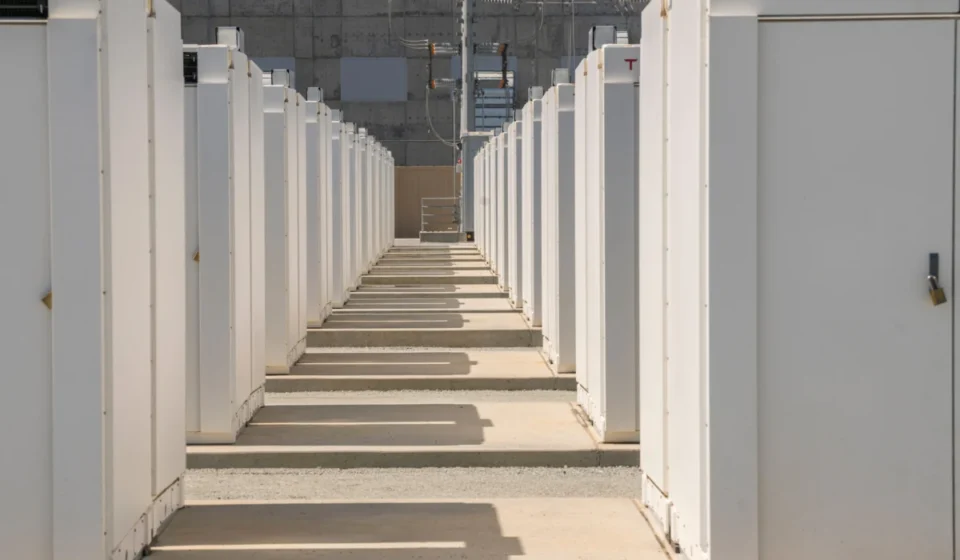
According to the company’s Q2 2026 earnings report, SpaceX has funneled $295 million into the purchase of Tesla Megapack battery storage systems in the second quarter alone. When combined with first-quarter figures, the company’s total expenditure on these industrial-scale batteries has reached $329 million so far this year. This latest spending streak underscores a pivotal trend: the systematic integration of Tesla’s energy storage hardware into the infrastructure powering xAI, the artificial intelligence firm now operating as a subsidiary of SpaceX.
The Interconnected Universe of Elon Musk
The financial relationship between these entities is more than just a series of B2B transactions; it is a manifestation of a closed-loop ecosystem. Elon Musk, serving as the CEO and largest shareholder of both SpaceX and Tesla, has orchestrated a corporate structure where his ventures frequently act as each other’s primary customers and infrastructure providers.
The consolidation of this "Musk-sphere" accelerated significantly in 2025, when xAI acquired the social media platform X. That move was followed earlier this year by SpaceX’s acquisition of xAI, a merger that brought heavy-duty data center operations under the umbrella of the aerospace giant. With the purchase of Megapacks, SpaceX is effectively subsidizing the expansion of its own AI computational capacity using hardware manufactured by its sister company, Tesla.
Chronology of an Infrastructure Build-Out
The trajectory of this spending reveals a deliberate strategy to secure high-performance energy infrastructure in an increasingly supply-constrained market.
- Pre-2026: Before the formal merger with SpaceX, xAI independently invested heavily in its own power resilience, purchasing $430 million in Tesla Megapacks to support its initial data center projects.
- Q1 2026: Initial reports indicated a more modest investment of $34 million in battery equipment for the quarter, suggesting a period of strategic planning or procurement consolidation.
- February 2026: SpaceX officially completes the acquisition of xAI, integrating the AI company’s data centers into its broader corporate operations.
- Q2 2026: SpaceX ramps up capital expenditure, deploying $295 million into Megapack systems, signaling the start of a massive scaling effort for data center capacity.
- December 2025: Regulatory filings reveal that SpaceX had previously acquired $131 million worth of Tesla Cybertrucks, further highlighting the "Tesla-as-a-vendor" model for Musk’s other ventures.
Supporting Data: Why Megapacks?
The technical justification for this massive investment lies in the unique power demands of modern AI training. Unlike traditional server farms, AI data centers are "bursty." When GPUs are engaged in training a large language model or running complex inference tasks, their power consumption fluctuates violently.
The Role of Energy Buffers
Megapacks—Tesla’s large-scale lithium-ion battery storage products—serve two primary functions in this ecosystem:
- Peak Shaving: By storing energy during off-peak hours and discharging it when computational loads spike, these batteries prevent the data center from overwhelming local utility grids. This avoids the astronomical "peak demand" charges that utility companies impose on industrial users.
- Instantaneous Response: In the event of a power fluctuation or a utility grid failure, Megapacks provide near-instantaneous power. This "ride-through" capability is critical; even a millisecond-long dip in voltage can crash a rack of GPUs, potentially ruining weeks of model training progress.
While reports have surfaced regarding xAI’s reliance on natural gas—including the controversial use of dozens of unpermitted turbines at a Mississippi site—battery storage remains the "glue" that stabilizes the power delivery from those turbines to the sensitive AI hardware.
Official Responses and Regulatory Transparency
The recent filings provide a rare, if limited, look into the internal mechanics of these private and public entities. By disclosing these transactions in its earnings report, SpaceX is adhering to the transparency requirements necessitated by its current financial standing and its complex shareholder base.
However, the nature of these transactions—buying hardware from a company owned by the same individual who runs the purchasing company—continues to raise eyebrows among governance experts. While such "related-party transactions" are not inherently illegal, they do invite scrutiny regarding the arm’s-length pricing of the equipment. According to the filing, the Cybertruck purchases were made at the manufacturer’s suggested retail price (MSRP), an attempt by the company to demonstrate that it is paying fair market value for its internal acquisitions.
Strategic Implications: The Future of AI Infrastructure
The move to heavily invest in Tesla energy storage has profound implications for both the energy sector and the competitive landscape of AI.
1. Scaling "Colossus" and Beyond
With the xAI "Colossus" data center project serving as a cornerstone of Musk’s AI ambitions, the demand for stable, reliable, and high-density power is insatiable. By bypassing traditional third-party energy procurement, SpaceX is likely achieving faster deployment timelines. It is not waiting for grid upgrades; it is building a self-contained, high-availability power grid.
2. Tesla’s Growth Engine
For Tesla, these massive orders provide a guaranteed, high-margin revenue stream. As the electric vehicle market faces increased competition and price pressure, Tesla’s energy division has emerged as a high-growth pillar of the company. Having a captive customer in SpaceX ensures that Tesla can continue to ramp up production of the Megapack with the confidence of a massive, pre-existing order book.
3. Energy Independence as a Competitive Edge
In the race to build the world’s most powerful AI, power is the ultimate bottleneck. By controlling the entire stack—from the energy generation (natural gas and potentially future renewable sources) to the storage (Tesla Megapacks) and the end-use compute (xAI’s data centers)—Musk is building an infrastructure that is significantly more agile than those of competitors who must rely on municipal power grids and third-party utility providers.
Conclusion
The $624 million (combined) investment in battery storage by SpaceX and its xAI subsidiary is a clear signal that the AI arms race is as much about energy management as it is about software engineering. As Musk continues to integrate his various companies into a singular, verticalized machine, the distinction between aerospace, automotive, and artificial intelligence becomes increasingly academic.
For now, the strategy appears to be one of absolute self-reliance. By deploying Tesla’s battery technology at scale, SpaceX is insulating its AI operations from the volatility of the energy market, ensuring that its supercomputing clusters remain online, regardless of the challenges posed by the external grid. As the 2026 fiscal year progresses, industry observers will be watching closely to see if this synergy results in a performance lead for xAI, or if the sheer scale of the power requirements leads to further regulatory or environmental pushback.