























































The Gamification of Governance: White House Launches Retro Arcade Promoting Administration Policies

In an unprecedented fusion of digital pop culture and executive branch communications, the official White House website has introduced a dedicated "Arcade" section. Located at WhiteHouse.gov/arcade, the platform hosts a suite of low-resolution, retro-inspired browser games designed to translate complex, often controversial federal policies into simplistic gameplay mechanics.
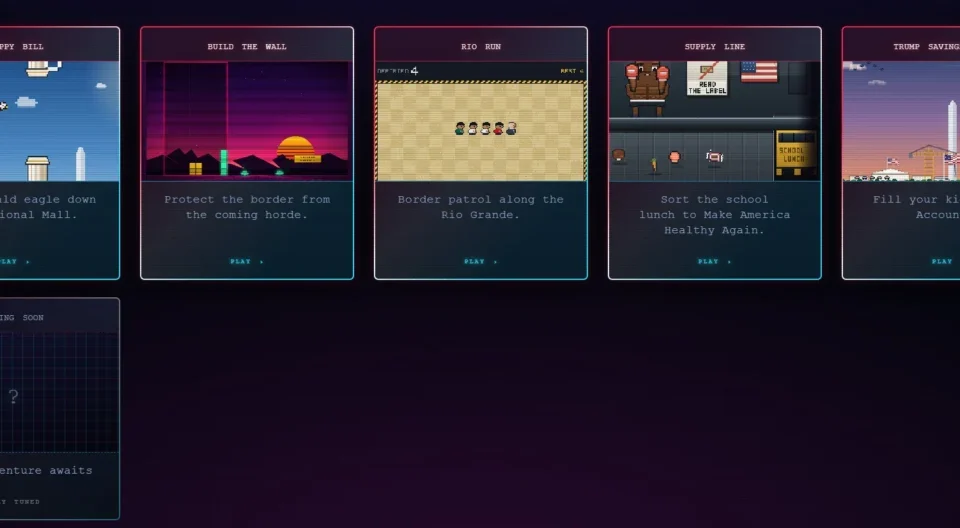
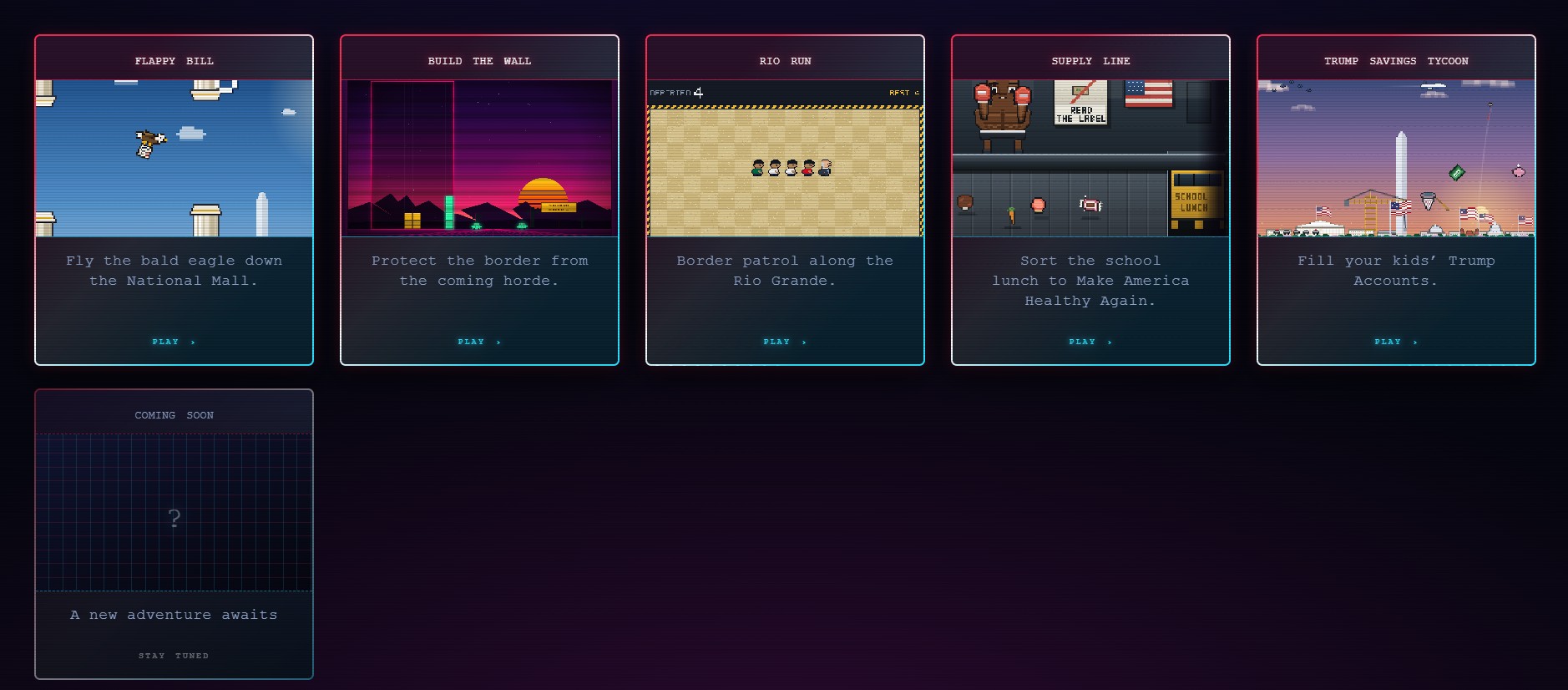
The initial launch features five playable titles: Build the Wall, Rio Run, Supply Line, Flappy Bill, and Trump Savings Tycoon. A sixth tile, marked "Coming Soon," indicates that the administration plans to expand this digital library. By converting core policy initiatives—ranging from border security and immigration enforcement to school lunch reform and federal savings programs—into classic arcade formats, the executive branch has initiated a highly unusual experiment in political gamification.
Chronology: From Policy Proposals to Pixelated Play
The integration of interactive video games into the official digital portal of the executive branch marks a distinct shift in communication strategy. Historically, WhiteHouse.gov has served as a repository for executive orders, press releases, policy briefs, and historical archives. The transition toward gamified public relations represents a deliberate effort to bypass traditional media channels and engage directly with the public through nostalgic digital mediums.
The Genesis of the Project
The development of the White House Arcade appears to have been fast-tracked to align with the administration’s mid-term policy pushes. Internal discussions reportedly centered on finding novel ways to communicate legislative goals and executive actions to a public increasingly fatigued by standard political messaging.
The Digital Rollout
The launch of the arcade section was accompanied by a highly stylized promotional campaign across the administration’s official social media channels. The marketing materials heavily leveraged nostalgia, featuring parodies of classic 16-bit console startup sequences. Most notably, the iconic "SEGA" startup screen and chime were re-engineered to display "MAGA" (Make America Great Again), signaling the administration’s intent to blend state communications with its distinct political branding.
The Public Unveiling
Upon the quiet activation of the webpage, visitors were met with an interface reminiscent of a late-1990s Flash gaming portal. Positioned alongside standard government materials, such as presidential proclamations and cabinet updates, the arcade represents a stark aesthetic and functional departure from conventional state-sponsored digital infrastructure.
Technical and Structural Breakdown: The Five Launch Titles
The games themselves are basic, low-fidelity adaptations of well-established video game formats. Rather than introducing novel mechanics, the developers have mapped specific administrative policies onto classic gameplay templates that are instantly recognizable to the general public.
+-------------------------------------------------------------------------+
|                          WHITEHOUSE.GOV/ARCADE                          |
+-------------------+-------------------+---------------------------------+
| Game Title        | Classic Template  | Policy Focus                    |
+-------------------+-------------------+---------------------------------+
| Build the Wall    | Tetris            | Border Infrastructure           |
| Rio Run           | Snake             | Border Patrol & Enforcement     |
| Supply Line       | Tapper / Arcade   | School Lunch Reform (MAHA)      |
| Flappy Bill       | Flappy Bird       | Legislative Passage Process     |
| Trump Savings     | Vertical Catcher  | Child Savings Accounts Policy   |
+-------------------+-------------------+---------------------------------+
1. Build the Wall (The Tetris Analogy)
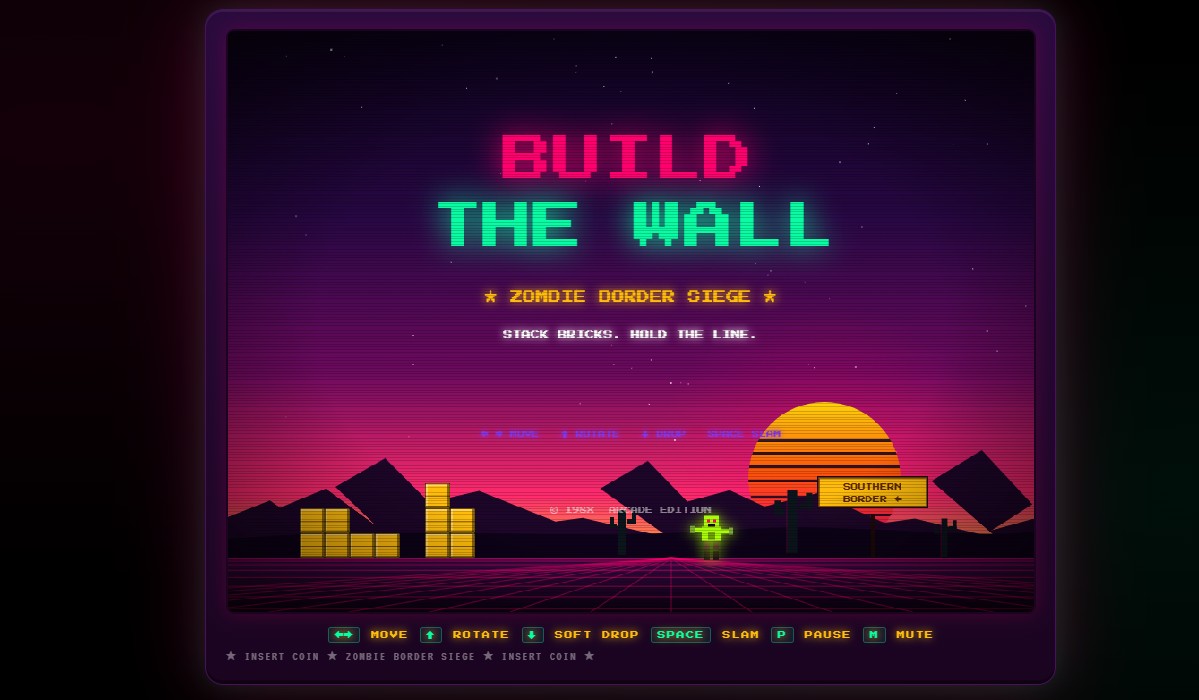
Build the Wall is arguably the most politically charged title in the collection. Utilizing the structural logic of Tetris, players must manipulate falling, multi-colored blocks to construct a continuous, solid barrier.
- Thematic Integration: The official White House description frames the objective as defending the nation’s southern border from what it characterizes as an incoming "horde."
- Gameplay Dynamics: Unlike traditional Tetris, where clearing lines causes them to disappear to keep the game going, the objective here is cumulative construction. The puzzle mechanics are directly equated with physical border security infrastructure, leaving little room for metaphor or policy nuance.
2. Rio Run (The Snake Variant)
Sharing a thematic focus with Build the Wall, Rio Run adapts the mechanics of the classic mobile game Snake to simulate border enforcement operations along the Rio Grande.
- Gameplay Dynamics: The player controls an avatar resembling President Donald Trump, navigating a digital representation of the river border.
- Thematic Integration: Instead of collecting abstract items to grow longer, the player gathers small, pixelated figures representing individuals attempting to cross the border. Each collected figure is appended to a growing line trailing behind the player’s character, directly gamifying the apprehension and processing of migrants.
3. Supply Line (The MAHA Conveyor Belt)
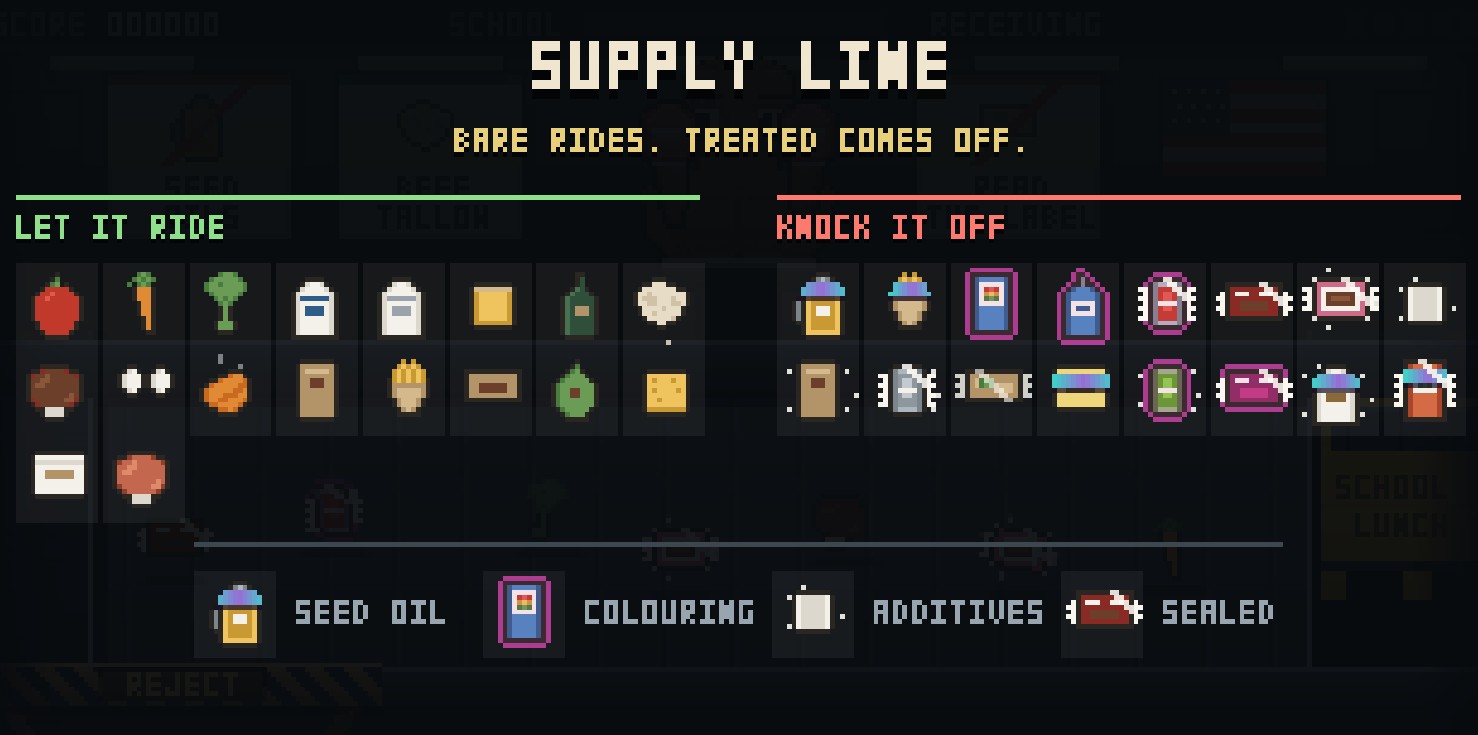
Shifting focus from national security to domestic welfare, Supply Line aligns with the administration’s "Make America Healthy Again" (MAHA) campaign, which emphasizes agricultural reform and nutritional standards.
- Gameplay Dynamics: Drawing inspiration from classic arcade titles like Bally Midway’s Tapper, the game features a rapidly moving conveyor belt carrying various food items.
- Thematic Integration: The player is tasked with sorting through the items, retaining those that meet newly proposed nutritional standards for public school lunches, and discarding those that do not. Of the five launch titles, Supply Line most closely resembles traditional educational software, though it remains heavily branded with the administration’s specific policy slogans.
4. Flappy Bill (Legislative Navigation)
Flappy Bill addresses the complex and often gridlocked nature of the legislative process in Washington, D.C., using the frustratingly simple mechanics of the 2013 mobile phenomenon Flappy Bird.
- Gameplay Dynamics: Players control a bald eagle carrying a rolled-up legislative bill. By repeatedly tapping or clicking, the player keeps the eagle airborne while navigating through a series of physical obstacles representing congressional hurdles, bureaucratic red tape, and partisan opposition.
- Thematic Integration: The backdrop features a simplified, low-resolution rendering of the National Mall. The game serves as a literal representation of "getting a bill through Congress," translating institutional friction into physical obstacles.
5. Trump Savings Tycoon (Financial Gamification)
The final active game, Trump Savings Tycoon, is designed to promote the administration’s proposed "Trump Accounts"—a federal child savings initiative. Under this policy proposal, eligible children born during a specified coverage window would receive a $1,000 seed contribution from the federal government to establish a long-term savings account.
- Gameplay Dynamics: Set against the skyline of Washington, D.C., the game requires players to move an avatar across the screen to collect falling coins and gold bars.
- Thematic Integration: The collected currency is deposited into virtual "Trump Accounts." This title represents perhaps the most abstract translation of public policy to game logic, converting a structured federal savings program into a literal exercise in catching falling cash.
Official Rhetoric vs. Public Reception
The launch of the White House Arcade has generated polarized reactions from policymakers, media analysts, and the public. The stark contrast between the administration’s stated goals and the criticisms leveled by opponents highlights the divisive nature of this digital initiative.
The Administration’s Defense
Spokespersons for the administration have defended the arcade as an innovative civic education tool. According to official statements, the platform is designed to lower the barrier to entry for understanding federal policy:
"The White House Arcade represents a modern approach to civic engagement. By utilizing familiar, accessible formats, we are demystifying the legislative process, highlighting our commitment to school lunch nutrition, and explaining our economic and national security priorities in a format that appeals to Americans of all ages. It is about transparency, accessibility, and meeting the public where they are."
Critical Backlash and Ethical Concerns
Conversely, critics have raised significant ethical, legal, and humanitarian objections to the platform.
- Dehumanization of Migrants: Civil rights organizations and immigration advocacy groups have strongly condemned Rio Run and Build the Wall. Critics argue that reducing complex, humanitarian issues at the southern border to a game of Snake or Tetris dehumanizes asylum seekers and trivializes the dangerous realities of border crossings.
- Misuse of Government Resources: Legal scholars and ethics watchdogs have questioned the propriety of hosting partisan campaign-style messaging on a tax-funded
.govdomain. While administrations have historically used official websites to advocate for their policies, critics argue that the overt branding, use of campaign slogans, and caricature-based gameplay cross the line into partisan propaganda. - Simplification of Policy: Policy analysts have noted that the games strip away all necessary nuance from complex socio-economic debates. By presenting school lunch standards or federal savings accounts as simple binary choices or arcade collect-a-thons, the platform risks misinforming the public on the systemic challenges involved in implementing these programs.
Broader Implications: Gamification, Propaganda, and the Future of State Media
The introduction of the White House Arcade is more than a novel public relations stunt; it represents a significant milestone in the evolution of political communication and state-sponsored digital media.
The History of State-Sponsored Gamification
While the White House Arcade is unprecedented in the context of the American presidency, the use of video games by state entities is not entirely new. The U.S. military famously launched America’s Army in 2002 as a highly successful recruitment and public relations tool. Globally, various governments have developed or sanctioned video games to foster patriotism, promote specific historical narratives, or disseminate state ideology.
However, the White House Arcade is distinct in its direct focus on active domestic policy and its placement on the primary portal of the executive branch. It signals a shift from long-term institutional branding (such as military recruitment) to short-term, policy-specific advocacy.
+--------------------------------------------------------------------------+
|                 EVOLUTION OF US STATE-SPONSORED GAMIFICATION             |
|                                                                          |
|  [2002] America's Army ------------------> [2026] White House Arcade     |
|  * Military Recruitment                    * Direct Policy Advocacy      |
|  * Long-Term Branding                      * Immediate Legislative Goals |
|  * Tactical/Realistic Simulation           * Retro/Casual Accessibility  |
+--------------------------------------------------------------------------+
The Blurring of Information and Entertainment
As political campaigns and administrations adapt to an attention economy dominated by short-form digital content, the boundaries between information, entertainment, and propaganda continue to dissolve. The White House Arcade capitalizes on "infotainment," utilizing retro aesthetics to evoke nostalgia and bypass the critical filters that audiences typically apply to political speeches or policy white papers.
By embedding political arguments within the core mechanics of a game—where winning is structurally tied to supporting the administration’s policy outcome—the platform attempts to naturalize partisan viewpoints. In Build the Wall, for example, the player cannot progress or achieve a high score without successfully completing the barrier, implicitly reinforcing the policy’s necessity through the game’s internal rules.
Looking Ahead
With a sixth game slot explicitly marked "Coming Soon," the administration has signaled that this interactive platform is an ongoing project. As digital communication strategies continue to evolve, the White House Arcade may serve as a template for future administrations—both domestic and international—seeking to leverage the interactive power of video games to shape public opinion and advance legislative agendas. Whether this initiative will be remembered as a passing novelty or the dawn of a new era of gamified state media remains to be seen.