
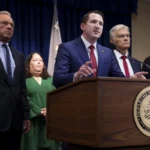




















































NEW ULM, Minn. – In the heart of Minnesota’s sprawling 1st Congressional District, a familiar narrative is unfolding, echoing a political upset from nearly two decades ago. Jake Johnson, a 42-year-old high school math teacher with no prior political experience, is embarking on an ambitious campaign to unseat Republican incumbent Rep. Brad Finstad. This challenge draws striking parallels to 2006, when another political newcomer and educator, Tim Walz, successfully flipped the deeply conservative district from red to blue, a victory that ultimately propelled him to the governor’s mansion.
Johnson’s campaign, marked by an impressive fundraising capacity and a tireless grassroots effort, has already captured the attention of the national Democratic Party. His inclusion on the Democratic Congressional Campaign Committee’s (DCCC) coveted "Red to Blue" list signals a serious belief that this largely rural, GOP-leaning district, once considered a Republican stronghold, could again be ripe for a Democratic takeover. Yet, the political landscape of 2026 is vastly different from 2006, shaped by shifting demographics, partisan polarization, and the enduring influence of national figures like former President Donald Trump.
A Chronology of Challenges: From Walz’s Upset to Johnson’s Ascent
The story of Minnesota’s 1st Congressional District is one often punctuated by unexpected turns, especially for a region so consistently favoring conservative politics. The 2006 election remains a touchstone, a powerful precedent for any Democrat daring to challenge the established order here.
The Walz Precedent (2006):
Twenty years ago, Tim Walz, then a history teacher and football coach at Mankato West High School, launched his bid for Congress. He faced off against Gil Gutknecht, a five-term Republican incumbent who, by most accounts, held a seemingly unshakeable grip on the district. Walz, running as a moderate Democrat, captivated voters with his accessible demeanor and focus on local issues. His background as an educator resonated deeply, fostering connections with former students, their families, and the influential teachers’ unions. In a stunning upset, Walz defeated Gutknecht, marking the first time in over four decades that a Democrat had won the district. His victory was attributed to a combination of factors: a national anti-Republican wave fueled by dissatisfaction with the Iraq War and President George W. Bush, Gutknecht’s perceived complacency, and Walz’s ability to campaign effectively across the diverse, largely agricultural landscape.
The Current Contender: Jake Johnson (2026):
Fast forward to today, and Jake Johnson, a math teacher from Rochester, finds himself in a strikingly similar position. Like Walz, he is a political neophyte leveraging his teaching background to build rapport and trust. Johnson, 42, is challenging Rep. Brad Finstad, a 50-year-old Republican who first won the seat in a 2022 special election and successfully defended it in 2024. Finstad, a former state representative and executive director of the Minnesota Turkey Growers Association, embodies the district’s agricultural roots and conservative values.
While the similarities between Walz and Johnson are compelling – both educators, both Democrats, both aiming to flip a red seat – the context of their respective campaigns diverges significantly. The district itself has undergone a demographic and political metamorphosis, and the broader American political environment is far more polarized than it was in 2006.
Supporting Data: Deep Diving into Candidates, District, and Dynamics
Understanding the complexity of this race requires a detailed examination of the candidates, the district’s unique characteristics, and the overarching political forces at play.
Shared Roots, Different Eras:
Both Walz and Johnson have strategically leveraged their decades as educators within the district. This profession offers an inherent advantage: a built-in network of former students, colleagues, and parents who can form a vital base of support. Furthermore, the endorsement and mobilization efforts of powerful teachers’ unions provide significant organizational and financial backing.

Walz, during his congressional tenure, was known for his pragmatic, centrist approach, a stance that allowed him to connect with independent and moderate Republican voters in the district. While some 1st District voters now contend that Walz became more liberal after ascending to the governor’s office, his initial appeal was rooted in his moderate image. Johnson is also attempting to carve out a centrist lane, particularly by positioning himself as a fiscal conservative. He has pledged to vote against any legislation that increases the national debt until Congress balances its budget, stating, "Members of both parties are not taking this seriously," in reference to the nearly $40 trillion national debt. This message aims to appeal to fiscally conscious voters who might otherwise lean Republican.
However, Johnson, like most mainstream Democrats, simultaneously advocates for shoring up the federal social safety net. This duality reflects a core tenet of the Democratic Party’s appeal to working-class families. Walz, as governor, similarly prioritized expanding social welfare programs, championing initiatives like universal school breakfasts and lunches and a generous paid family leave program.
Their personal histories further underscore their commitment to such programs. Johnson, one of eleven siblings, grew up in Stewartville, recounting how his father collected garbage and his mother read meters door-to-door. His family frequently relied on community support and government assistance. "I was a SNAP (food stamp) kid," he openly shares, adding, "We were a Medicaid family." Walz also experienced hardship; after his father’s death, his mother and younger brother depended on Social Security survivor benefits. These narratives are crucial for establishing authenticity and empathy with voters who have faced similar economic struggles, especially in a district with a significant working-class population.
The District’s Evolving Identity: Rural, Red, and Resilient:
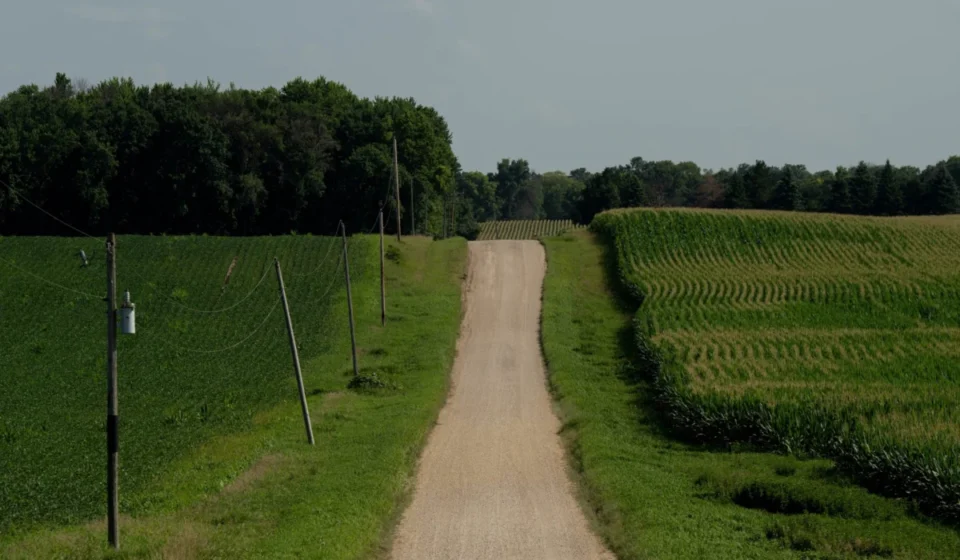
Minnesota’s 1st Congressional District is vast, encompassing much of southern Minnesota, stretching from the suburbs of Rochester to the Iowa border. It is overwhelmingly rural, characterized by fertile farmland, small towns, and a strong sense of community. This landscape has long been a bedrock of Republican support. In 2024, Donald Trump carried the district with 55% of the vote, signaling its continued conservative lean. The Cook Political Report currently rates the district as "likely Republican," underscoring the formidable challenge Johnson faces.
The city of New Ulm, Finstad’s hometown, serves as a poignant microcosm of the district’s deep-rooted heritage and conservative leanings. Dominated by its German heritage, visible in the towering Hermann Monument, daily glockenspiel chimes, and popular Oktoberfest celebrations, New Ulm is a city where history and tradition run deep. Organizations like the Junior Pioneers of New Ulm and Vicinity celebrate the descendants of early settlers. Locals observe that while the community has become more open and welcoming over time, newcomers can still struggle to shed the "auslander" (outsider) label. As the county seat of Brown County, which Trump won handily, New Ulm epitomizes the district’s political inclination.
The Incumbency Advantage vs. Grassroots Zeal:
Finstad benefits from the inherent advantages of incumbency: heightened name recognition, a proven track record (even if short), and generally greater fundraising capacity. Political science professor Kevin Parsneau of Minnesota State University in Mankato notes, "He’s certainly acting like internal (campaign) polls are telling him he has a wide lead."
However, Johnson is actively challenging this advantage through relentless grassroots campaigning. His commitment to holding town halls in all 21 counties of the district demonstrates a dedication to direct constituent engagement, a trait voters appreciate. Pat Booker, a military veteran and retired probation officer from New Ulm, who closely followed Walz’s rise and now observes Johnson’s, highlights this distinction. She praises Johnson’s willingness to "answer questions and… meet with constituents," recalling that Walz shared this accessibility. In stark contrast, Booker recounts her frustration trying for eight months to secure a meeting with Finstad regarding concerns about SNAP and Medicaid cuts. "I got one pat letter saying thank you for your concerns," she states, highlighting a perceived lack of responsiveness from the incumbent.
The "Red to Blue" Lifeline:
Johnson’s campaigning prowess and fundraising success have not gone unnoticed by the DCCC. His inclusion on their "Red to Blue" list is a critical development. This designation identifies Democratic candidates who are seen as having a credible path to flipping a Republican-held seat. It unlocks vital resources, including fundraising support, strategic guidance, and campaign training, significantly bolstering Johnson’s ability to compete in a challenging district. As of June 30, Johnson had amassed nearly $1.9 million in campaign funds, closely trailing Finstad’s nearly $2 million, a testament to the DCCC’s confidence and Johnson’s own fundraising acumen.

The National Political Headwinds:
The DCCC’s strategy is predicated on broader national trends. Democrats hope that factors like former President Trump’s low approval ratings, an energized Democratic base, and the historical tendency for the party out of power in the White House to gain seats in midterm elections will create a favorable environment. To regain control of the U.S. House, Democrats need to win in swing districts and, crucially, flip seats in "likely Republican" territories like MN-01.
However, the district’s political landscape has grown considerably more conservative since Walz’s victory. Kate Knutson, a political science professor at Gustavus Adolphus College, observes, "It’s gotten a lot more conservative." This shift is partly due to redistricting following the Census, which added more rural territory along the Mississippi River, further entrenching the district’s agricultural and conservative character.
Beyond redistricting, a broader national trend sees rural areas increasingly aligning with the Republican Party. Social scientists attribute this to concerns among rural residents that their cultural values – centered on church, family, and freedom from government interference – are under threat from a rapidly changing nation. Many rural residents also perceive the Democratic Party as composed of urban elites who dismiss rural lifestyles and prioritize urban or immigrant populations over the struggles of the rural working class. Knutson notes that the "farmer" component of Minnesota’s Democratic-Farmer-Labor Party has effectively "peeled off."
Agricultural Anxieties:
Despite the district’s conservative lean, Johnson sees an opening by highlighting the economic frustrations of farmers. He aims to "depress – at least a little bit – the enthusiasm among farmers for the GOP" by criticizing Finstad’s embrace of Trump-era policies that have, according to some, harmed the agricultural sector. Knutson points to specific grievances: "Farmers are frustrated by tariff and immigration sweeps that are hurting the meat packing industry in southern Minnesota." Furthermore, global events like Iran’s shutdown of the Strait of Hormuz have stalled critical deliveries of oil and fertilizer, significantly raising input costs for farmers and adding to their economic strain.
Official Responses: Contrasting Approaches
The campaigns of Finstad and Johnson reflect distinct strategies in how they engage with voters and address critical issues.
Finstad’s Incumbent Strategy:
Rep. Finstad largely avoids direct engagement with his challenger, preferring to focus on official business and events tailored to his base. "He’s speaking to his base," Parsneau explains. "He does not want to be in an unscripted situation." Finstad’s public engagements frequently involve meetings with police officers, farm groups, and local businesses, allowing him to reinforce his image as a dedicated public servant addressing the concerns of his constituents without directly debating his opponent.
When pressed on his constituent engagement, Finstad told MinnPost, "I travel all over southern Minnesota." He asserted, "I’m always listening and communicating with constituents who agree and don’t agree with me. I’m having those conversations and I would say reach out to me, reach out to our office. I’m more than willing to have a conversation and answer questions." He concluded with a statement reflecting his deep-seated values: "It’s an honor of a lifetime to serve the 1st District’s 750,000 residents, but my goal is heaven, not Congress." He added, "When November comes, the voters of southern Minnesota will decide, but no one is going to outwork me."
On the economic challenges facing farmers, Finstad has consistently deflected criticism of Trump-era policies, instead blaming the Biden administration for the distress. "We’re heading in the right direction," he told MinnPost after a veterans’ issues roundtable in Mankato. "We have come out of some tough times where the inputs have been really crippling for the last six years, and then on top of that we’ve had that stale market because of that lack of trade." This narrative aligns with the broader Republican message of economic mismanagement by the current Democratic administration.

Johnson’s Challenger Approach:
Jake Johnson, as the challenger, is compelled to be more proactive and accessible. His commitment to town halls in every county and his appearance at events like New Ulm’s Bavarian Blast festival parade in July, with a town hall scheduled in the city for August, demonstrate a deliberate effort to penetrate Finstad’s home turf and engage directly with voters, even in conservative strongholds. His consistent messaging on fiscal responsibility combined with support for the social safety net aims to appeal to a broad spectrum of voters. His personal story of relying on government programs as a child serves as a powerful testament to his policy positions.
Implications: Can Lightning Strike Twice?
The race for Minnesota’s 1st Congressional District is more than just a local election; it carries significant implications for both national parties and the evolving political landscape of rural America.
For the national Democratic Party, a victory for Jake Johnson would be a monumental achievement. It would demonstrate that even in increasingly red rural districts, a compelling candidate with a strong grassroots campaign and national party support can still compete effectively. It would offer a blueprint for challenging entrenched Republican incumbents and expanding the party’s reach beyond urban and suburban strongholds. It also validates the DCCC’s "Red to Blue" strategy as a vital tool for flipping targeted seats.
For Republicans, a strong challenge from Johnson signals that even in reliably conservative districts, complacency is not an option. Finstad’s perceived reluctance to engage directly with all constituents, as highlighted by Pat Booker, could be a vulnerability. The race forces the GOP to actively defend its positions on economic issues affecting farmers, particularly in light of global events and past trade policies.
The broader implications for rural America’s political alignment are also significant. If Johnson can successfully chip away at the Republican dominance by focusing on economic grievances and presenting a moderate Democratic platform, it might suggest a path forward for Democrats struggling to connect with rural voters. It could challenge the narrative that rural areas are irrevocably lost to the GOP, especially if candidates can effectively address local economic concerns and cultural anxieties without alienating their base.
Ultimately, the question remains: Can Jake Johnson replicate Tim Walz’s improbable 2006 victory? The parallels are undeniable, from their shared profession to their centrist appeals and personal narratives of hardship. However, the political currents of 2026 are far more turbulent. The district is redder, the national political divide is deeper, and the influence of national figures like Donald Trump looms large. Johnson’s success will depend on his ability to navigate these complexities, connect with a diverse electorate, and convince voters that, despite the district’s conservative lean, another teacher can indeed bring about change in Minnesota’s First. The coming months will reveal whether this echo of the past can truly alter the future of this crucial congressional district.