

















































In the unforgiving ecosystem of the NBA, there exists a specific archetype of player that fans inevitably turn against. They are not the lazy players who lack effort, nor are they the selfish players who chase box score glory at the expense of team success. They are the "teasers"—the enigmatic talents who, for a three-possession stretch, look like they could physically bulldoze their way through a Western Conference Finals game, only to spend the subsequent eight minutes drifting aimlessly along the perimeter, spinning into triple-coverage, or reacting a half-second too slow to a defensive rotation.
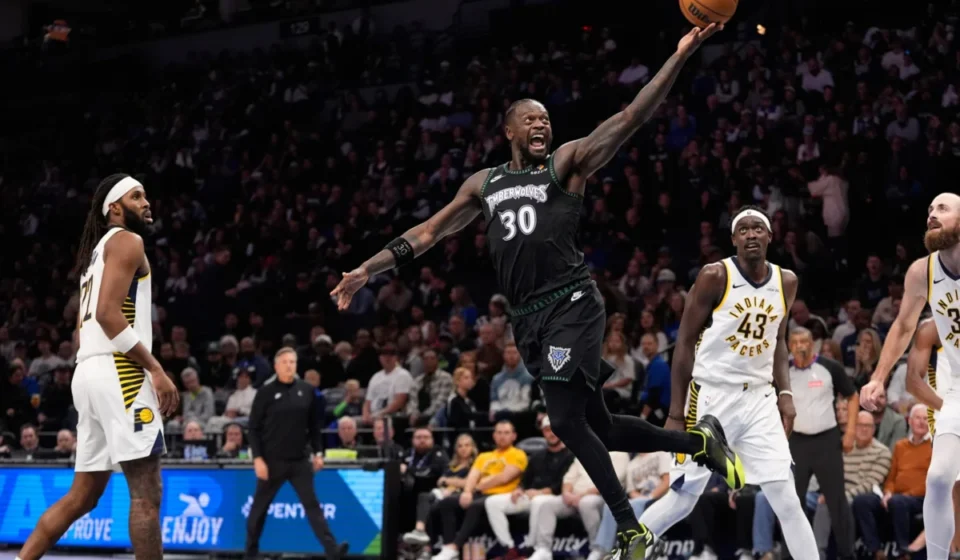
Julius Randle has officially become that player in Minnesota. Following an underwhelming and ultimately painful postseason exit, the frustration among the Timberwolves faithful has curdled into something far more vitriolic than mere sports critique. It is an exhaustion born of cognitive dissonance: the gap between the player the front office envisioned and the player who occupies the court during the high-stakes pressure of May.
The Chronology of a Collapse: From Hope to Heartbreak
To understand the current hostility, one must look at the arc of Randle’s tenure in the Twin Cities. When he arrived, the move was touted as a high-upside acquisition—a way to add secondary creation and physical bulk to a roster centered around Anthony Edwards.
The regular season provided enough fuel for that fire. Randle averaged 21.1 points, 6.7 rebounds, and 5 assists, occasionally looking like an All-NBA force who could command a defense’s full attention. There were nights where he bullied smaller defenders in the paint, reminding observers why he has remained a focal point for three different franchises over the last decade.
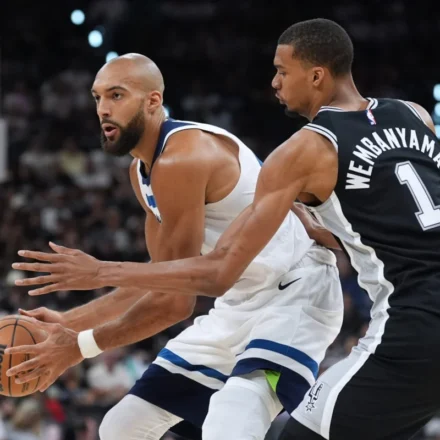
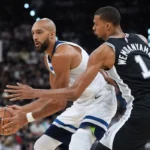
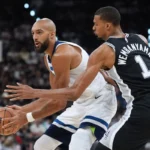
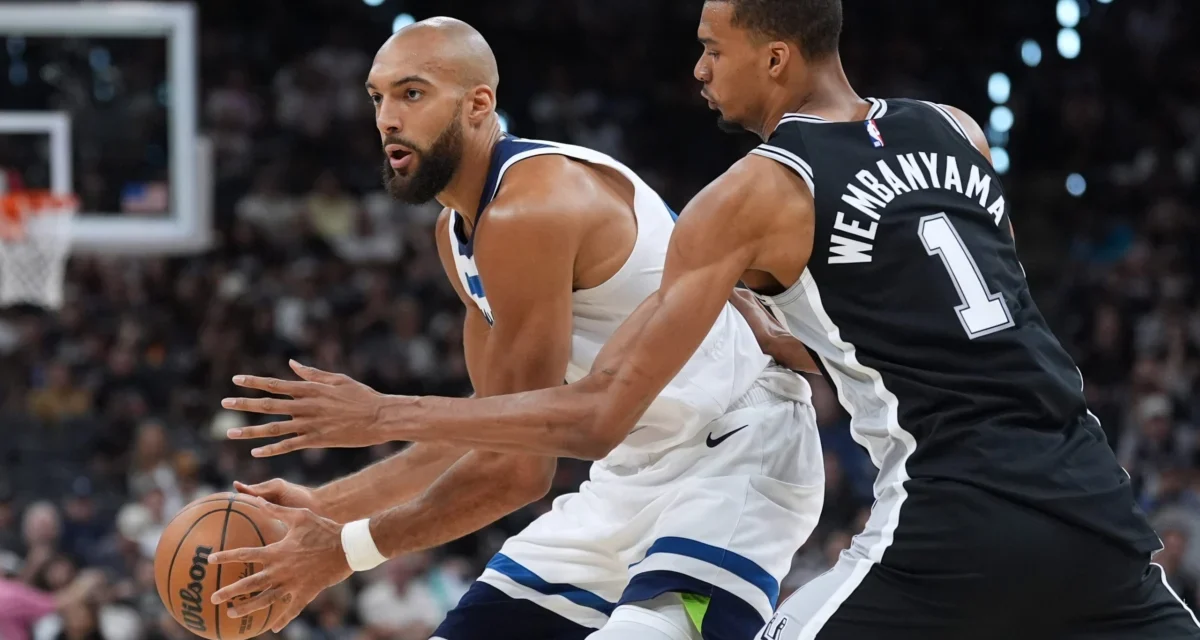
However, the postseason acts as a crucible that strips away the vanity of regular-season metrics. In the first round, the cracks appeared: Randle managed only 15.5 points per game on inefficient 43/30/0 shooting splits. By the second round against the San Antonio Spurs, the "teasing" stopped, replaced by a visible unraveling. The nadir arrived in Game 6—a season-ending blowout where Randle managed a mere three points in under 24 minutes of play. It was not merely a "bad night"; it was a public breakdown of rhythm and confidence that left the Target Center crowd stunned and, eventually, indignant.
The Statistical Reality: The Weight of Expectations
The numbers suggest that the vitriol, while perhaps excessive in tone, is grounded in a valid basketball assessment. Randle is an overextended asset. When he is asked to be the engine of an offense, his limitations—the "stickiness" of his playstyle, his tendency to hold the ball until the shot clock dies, and his periodic lapses in defensive transition—become glaring liabilities.
| Metric | Regular Season | Playoffs (Round 1) |
|---|---|---|
| Points Per Game | 21.1 | 15.5 |
| Field Goal % | 47.2% | 43% |
| Three-Point % | 34.1% | 30% |
| Offensive Impact | High (Secondary) | Low (Stagnant) |
The issue for the Timberwolves is that their offensive identity is predicated on pace, explosive improvisation, and the gravity of Anthony Edwards. When the ball stops in Randle’s hands, the floor shrinks. The chaos that the Timberwolves thrive on is replaced by the methodical, grind-it-out style that Randle prefers—a style that, in the modern playoff environment, rarely yields high-quality shots.
The Finch Connection: Loyalty vs. Logic
A pivotal element of the Randle saga is his relationship with head coach Chris Finch. Their history dates back to the New Orleans Pelicans, where Finch was an assistant and Randle enjoyed a career-defining breakout. Finch has been the most vocal defender of Randle’s presence, often citing the intangible value of their mutual trust.
For Finch, Randle represents a "failsafe"—a veteran capable of carrying offensive weight when the spacing fails or when Edwards requires a breather. However, this loyalty has created a strategic bottleneck. By maintaining a large role for Randle, the coaching staff has essentially forced a square peg into a round hole, hoping that the "version of Randle" that appeared in the regular season would manifest in the playoffs.
As the season wore on, this adherence to familiarity began to look less like tactical wisdom and more like a refusal to acknowledge the evolving needs of the roster. The emotional machinery of Randle’s game—which requires a certain level of empowerment to function—clashed with the cold reality of playoff efficiency.
The Human Factor: Separating the Player from the Persona
It is here that the discourse risks losing its way. The internet-driven "hate" directed at Randle often ignores the fact that he is a professional who has navigated a difficult career transition with relative grace. Off the court, Randle is widely regarded as a grounded family man, intentional about his mental health and structure. His recent, candid discussions regarding the challenges of fatherhood and aging highlight a maturity that is rarely acknowledged in the heat of a "fireable offense" social media thread.
Furthermore, it is fundamentally dishonest to paint Randle as the villain of the Timberwolves’ season. He did not hand himself a bloated contract. He did not trade himself for Karl-Anthony Towns. He did not demand to be the second-most important player on a championship-caliber team. The NBA, as an industry, is perpetually addicted to the idea of players like Randle: big, strong, capable of creating their own shot, and physically imposing. When front offices pay for that illusion, they cannot blame the player when the reality fails to scale to the championship level.
Implications for the Future of the Timberwolves
As the Timberwolves look toward the off-season, the implications of the Randle experience are clear: the roster does not currently fit. The team’s future belongs to the pace and space generated by Anthony Edwards. Any piece that slows that ecosystem down—even a talented one—becomes a weight that the team must drag uphill.
The organization now faces a difficult pivot. Do they continue to bet on the "flashes" of excellence that Randle provides, hoping that a full off-season of integration will solve the spacing issues? Or do they accept that Randle’s role in Minnesota has hit a functional ceiling?
The most likely reality is that the Timberwolves need a change in structure rather than a change in personnel at the top. The "Randle Paradox" is that he is talented enough to keep you interested, but flawed enough to prevent you from winning a title. He is not the sole reason the Timberwolves failed, but he is the most visible symbol of a roster that lacks the cohesive identity required to survive the Western Conference gauntlet.
Ultimately, the frustration directed at Julius Randle is an indictment of the NBA’s broader culture of expectations. Fans are not wrong for wanting more, and they are not wrong for being tired of the inconsistency. But they should recognize that the player they are angry at is the same player the league spent a decade promising would be a superstar. The fault lies not in Randle’s lack of effort, but in the league’s inability to reconcile his actual output with the massive projections placed upon his shoulders.
The Minnesota Timberwolves are now left to navigate the aftermath of this realization, tasked with building a team that can finally move past the "teasing" phase and into the reality of true contention. Whether that involves Randle or a shift toward a different profile of player will be the defining question of the next calendar year.