



































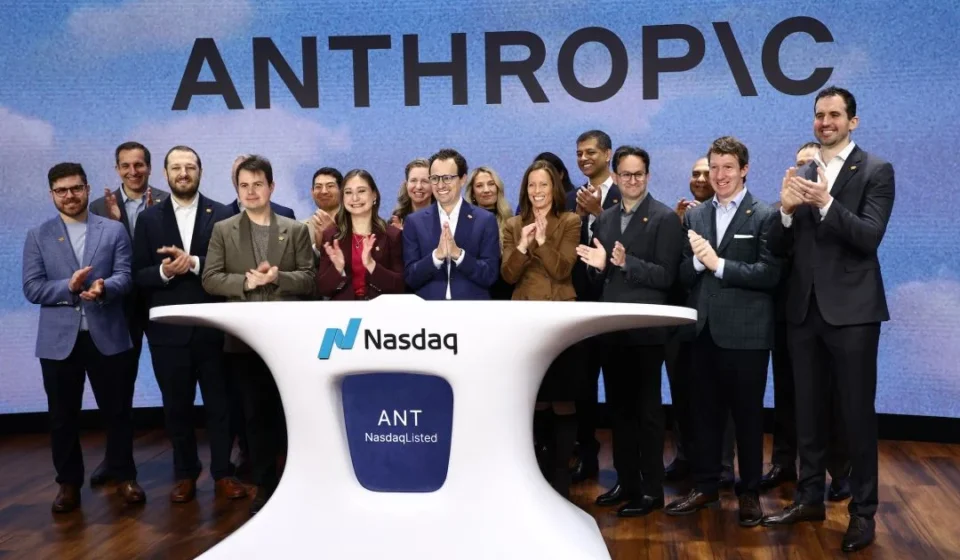
The Trillion-Dollar Bet: How Anthropic Defied Skepticism to Rewrite Venture Capital History

In the high-stakes world of artificial intelligence, few gambles have been as polarizing—or as profoundly successful—as the capital poured into Anthropic. When the venture firm Notable Capital (formerly GGV Capital) committed roughly 10% of its $1 billion-plus fund to Anthropic’s Series E round, the move was met with widespread bewilderment. At the time, the startup was trailing its primary competitor, OpenAI, in public perception, and the rapid emergence of DeepSeek’s R1 model suggested a looming threat to closed-source dominance. With a valuation of $61.5 billion, the investment represented the highest entry price in Notable’s 25-year history.
Today, those doubts have been thoroughly silenced. Following a historic $81.3 billion IPO—the largest in market history—Anthropic reached a fully diluted valuation of approximately $1.5 trillion. For early backers, this represents a staggering 15x return on paper, transforming once-controversial bets into the defining investment successes of the decade.
A Calculated Risk: The Strategy Behind the Notable Bet
The decision to back Anthropic was not a product of blind optimism, but of rigorous, data-driven analysis. Notable’s team, led by managing partners Hans Tung and Glenn Solomon, alongside principal Dan Cahana, looked past the headline valuations to evaluate the fundamental behavior of the market’s most important stakeholders: developers.
Their internal data indicated a seismic shift in technical preference. While ChatGPT had long been the default for AI-curious users, developers were increasingly gravitating toward Claude. Notable’s research found that developers were utilizing Claude 70% of the time—a sharp reversal from the previous year’s metrics.
"We just knew that for AI, the developer is at the center because they’re the early adopters," Hans Tung, co-founder of the firm, explained to TechCrunch.
Beyond the developer preference, Notable recognized a geopolitical and operational necessity. Navigating the complex intersection of U.S.-China relations, the firm concluded that "mission-critical" enterprise work would ultimately demand robust, secure, and U.S.-based closed-source models. By betting on Anthropic, Notable wasn’t just betting on a chatbot; they were betting on the future infrastructure of the global economy.
Chronology of Conviction: From Series E to IPO
The ascent of Anthropic was marked by a series of strategic funding rounds that saw the company’s valuation climb from tens of billions to nearly a trillion dollars.
- Series E (The Foundation): Notable Capital’s entry point. Despite skepticism over the $61.5 billion valuation, the firm doubled down on the premise that Claude was becoming the "developer’s choice."
- Series F (The Enterprise Expansion): By late 2025, the narrative had shifted. Singapore’s sovereign wealth fund, GIC, entered the fray after a pivotal meeting between GIC’s Chris Emanuel and Anthropic CFO Krishna Rao. The discussion centered on how model improvements were directly driving enterprise adoption. The round was announced in September 2025 at a $183 billion valuation.
- Series G and Pre-IPO: GIC’s conviction deepened, leading them to co-lead the Series G round at a $380 billion valuation, eventually investing a total of $4.5 billion across multiple rounds.
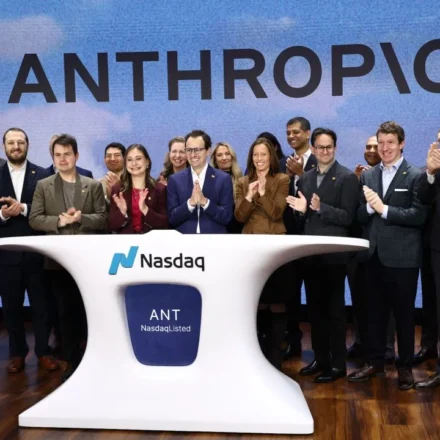
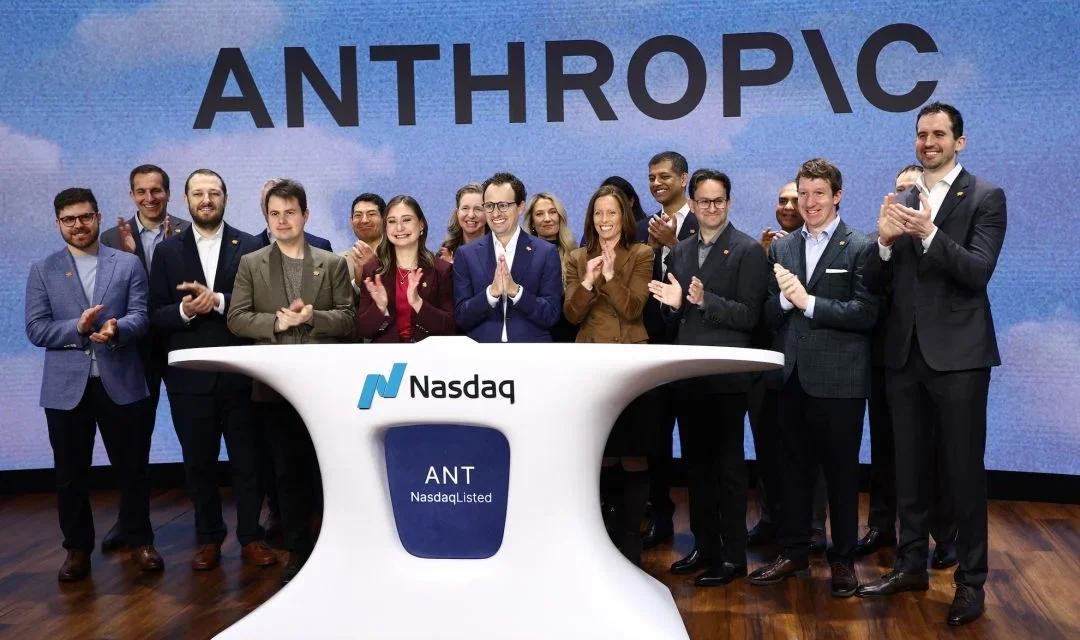
- The IPO (The Milestone): On Wednesday, Anthropic finalized its IPO at $83 a share, exceeding initial projections. By the time shares began trading, the company commanded a $1.5 trillion valuation, cementing its status as a cornerstone of the modern tech stack.
Data-Driven Growth: The Institutional Perspective
The success of Anthropic is not merely a tale of market hype; it is a story of consistent execution. Institutional investors like Baillie Gifford, who committed $1.5 billion across three funding rounds, emphasized the company’s ability to pair innovation with fiscal discipline.
Lilian Li, who leads U.S. growth investments at Baillie Gifford, noted that the firm spent two years vetting Anthropic before writing a check. "It’s actually quite incredible how consistent they have been with how quickly everything’s been changing," Li remarked.
For Baillie Gifford, the decision to invest was validated by Anthropic’s "compelling gross margins" and its aggressive expansion into high-value verticals, including legal services, life sciences, and cybersecurity. The introduction of tools like "Claude Code" further served as a barometer for the company’s sticky integration within the software development lifecycle. By focusing on these high-barrier industries, Anthropic successfully transformed from a consumer-facing AI novelty into an indispensable utility for the Fortune 500.
The Institutional Windfall: A Shift in Venture Returns
The Anthropic IPO has created a tidal wave of capital that has benefited more than just early-stage venture firms. Even traditional late-stage investors, who typically operate under narrower margins, have seen their portfolios balloon in value.
GIC’s $4.5 billion commitment, which secured a 1% stake in the company, stands as one of the most significant sovereign wealth investments in AI history. By recognizing the trend toward "mission-critical" AI early, GIC—alongside partners like Coatue—managed to capture massive upside on a company that many traditional analysts once dismissed as "overvalued" at a mere $60 billion.
This phenomenon highlights a new reality in the venture ecosystem: the "valuation ceiling" is being rewritten. As AI models become the foundational layer for all other software, the distinction between a "tech startup" and "critical infrastructure" is blurring, allowing companies like Anthropic to command trillion-dollar valuations that would have been unthinkable for a software company just five years ago.
Implications for the Future of AI Investment
The success of the Anthropic IPO carries several profound implications for the venture capital industry:
1. The Death of the "Valuation Ceiling"
For years, investors feared that AI companies were caught in a bubble of astronomical valuations. Anthropic’s $1.5 trillion exit proves that when a company captures the developer ecosystem and proves enterprise-grade utility, the traditional rules of valuation are suspended.
2. Developer-Centricity as the North Star
Notable Capital’s strategy of prioritizing developer adoption over general consumer hype is now the blueprint for AI investment. Firms that ignored developer sentiment in favor of marketing reach have largely found themselves sidelined.
3. The Geopolitical Moat
Anthropic’s position as a U.S.-based, closed-source leader provided a unique layer of stability. As governments tighten regulations around AI safety and data sovereignty, the ability to operate within the U.S. regulatory framework has become a competitive advantage, not just an operational necessity.
4. The Rise of "Mega-Rounds"
With GIC and other institutional giants moving into the venture space, the scale of funding required to win in AI has increased exponentially. This suggests that future AI leaders will likely require billions, rather than millions, in early capital to maintain their edge, effectively raising the barrier to entry for smaller VC firms.
Conclusion: A New Era of Value Creation
The transformation of Anthropic from a promising, albeit controversial, startup into a $1.5 trillion titan is a testament to the power of conviction. While the skeptics focused on the price tag, the visionaries focused on the utility, the developer feedback loop, and the long-term enterprise demand.
As the industry looks ahead, the lessons from Anthropic’s rise are clear: in the age of artificial intelligence, the most valuable companies will not just be those that build the best models, but those that embed themselves into the fabric of the global digital economy. For firms like Notable Capital, GIC, and Baillie Gifford, the "astronomical" valuations of yesterday have paved the way for the historic rewards of today. The trillion-dollar question remains: who will be the next to follow in their footsteps, and will the market have the courage to back them when they are still just a name on a cap table?