

























































WASHINGTON — A sweeping, state-led initiative to root out fraud within Minnesota’s Medicaid system has inadvertently triggered a widespread humanitarian crisis, leaving thousands of the state’s most vulnerable residents—including children with autism, seniors, and individuals with complex disabilities—without the essential care they depend on to survive.
What began as a necessary effort to secure federal funding and ensure program integrity has devolved into a chaotic administrative bottleneck. As the Minnesota Department of Human Services (DHS) pushes through its "Revalidation 2026" initiative, the resulting red tape has not only crippled the financial viability of health service providers but has created a climate of fear, uncertainty, and physical decline for the families caught in the crossfire.
Main Facts: A System in Gridlock
The current crisis stems from a collision between federal pressure and state-level bureaucratic implementation. Under the Affordable Care Act, states are required to revalidate Medicaid providers every five years to combat "bad actors" and fraudulent billing. However, when federal authorities accused Minnesota of harboring high-risk programs prone to abuse, the state was forced into an accelerated, off-cycle revalidation process for approximately 5,600 providers across 13 high-risk service categories.
The consequences have been immediate and severe. Providers are reporting massive backlogs in the new authorization portal managed by Acentra Health, a third-party agent. These delays, which have stretched from a standard one-week turnaround to as long as two months, have left providers unable to staff their facilities, bill for services, or even accept new patients.

For families like the McGuires of Bloomington, the impact is visceral. Their 6-year-old son, Colin, who has cerebral palsy, suffered a four-month disruption in physical therapy. His mother, Caroline, describes a system that requires monthly, arduous proof of medical necessity—a hurdle that is both emotionally draining and logistically impossible for many.
Chronology of the Crisis
The timeline of this disruption highlights a rapid descent into dysfunction:
- Pre-2026: Federal authorities raise alarms regarding "high-risk" billing patterns in Minnesota’s Medicaid program, threatening to withhold hundreds of millions in federal matching funds.
- January 2026: The Minnesota DHS initiates an emergency, off-cycle revalidation for 5,600 providers to avoid the forfeiture of up to $2 billion in federal support.
- December 2025–May 2026: Implementation of new auditing requirements, including intensive site visits and background checks, begins to strain provider resources.
- May 2026: The deadline for revalidation passes, leaving hundreds of providers in limbo or facing outright denial.
- Summer 2026: The backlog reaches a breaking point. Third-party agent Acentra Health experiences severe processing delays, while provider payments remain frozen, forcing many small businesses to take out emergency loans.
- September 2026: Legislative hearings reveal that over 1,000 children are currently waiting for care, and hundreds of providers have been forced to cease operations or drastically reduce staff.
Supporting Data: By the Numbers
The scale of the collapse is captured in the sobering statistics provided by the DHS and industry stakeholders:
- $550 Million: The amount of federal funding deferred by the Centers for Medicare & Medicaid Services (CMS) due to ongoing fraud concerns.
- 3,587: The number of providers successfully revalidated as of early September.
- 1,872: The number of providers who either have appeals in progress (1,177) or were not revalidated and chose not to appeal (695).
- 1%: The remarkably low percentage of providers referred to the Office of Inspector General for further investigation, suggesting that the vast majority of the "Revalidation 2026" targets were legitimate businesses, according to a Georgetown University study.
- 34: The number of employees lost by a single agency, Behavior Frontiers, since May, resulting in 24 children losing access to their care providers.
Official Responses and Accountability
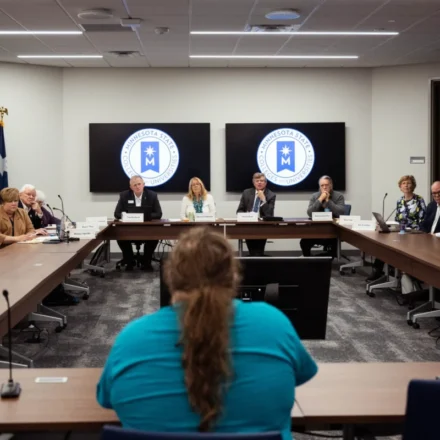
During a heated state Senate Human Services Committee hearing, the tension between administrative necessity and human welfare was laid bare. Medicaid Director John Connolly offered an apology to the families and providers, acknowledging the "difficult moment" the state is navigating.

However, many advocacy groups argue that the apology rings hollow. Maren Christensen, executive director of the Multicultural Autism Action Network, was blunt in her assessment, warning that the state’s current path is unsustainable. "There will be people who do not survive this," Christensen testified.
The DHS has defended its actions by citing the need for "program integrity controls," arguing that the complexity of the transition was a byproduct of ensuring long-term system stability. Yet, the agency has admitted it lacks a clear assessment of how many Minnesotans have been forced to go without care, noting that some families may be seeking alternative—and likely unaffordable—methods to secure support.
Implications: The Long-Term Fallout
The ripple effects of this crackdown are likely to be felt for years, even if the current administrative logjam is cleared tomorrow.
The Financial Drain on Providers
The "Revalidation 2026" mandate hit small providers hardest. By requiring detailed medical record submissions and auditing via companies like Optum, the state effectively created a cash-flow crisis. Providers like Paige Berland of Minnesota Behavioralist Specialists have been forced into debt, taking out private loans to keep their doors open. When small providers shutter, the communities they serve—often in rural or underserved urban areas—are left in a medical desert.

The Erosion of Trust
The most profound implication is the damage to the relationship between the state and its most vulnerable citizens. For parents like Addyson Carpenter of Red Wing, who has spent months fighting to get her partner enrolled as a caregiver for her daughter, the bureaucracy has become an adversary. While Carpenter, a disability advocate, stops short of blaming the state—pointing instead to the federal mandates—the outcome remains the same: a family in crisis, struggling to navigate a medical system that seems designed to obstruct rather than support.
The Threat of Service Cuts
The specter of further federal funding cuts looms over the state. If Minnesota cannot satisfy federal investigators regarding the efficacy of its anti-fraud measures, additional millions could be withheld. This creates a perverse incentive for the state to continue tightening the screws on providers, even as the evidence suggests that the current "high-risk" net is catching more legitimate, necessary services than actual fraudulent actors.
A Call for Reform
As the state enters a freeze on new provider authorizations until January 2027, the outlook for families remains grim. Experts suggest that while rooting out fraud is an essential function of government, the current strategy lacks nuance. The disproportionate impact on autistic children and those with profound disabilities suggests that future "integrity controls" must be balanced with a "care-first" mandate, ensuring that the quest for accountability does not come at the cost of human life.
Until the state can resolve the backlog and restore confidence in the authorization process, thousands of Minnesotans will continue to exist in a state of suspended animation—waiting for the help that the state has deemed too risky to provide.