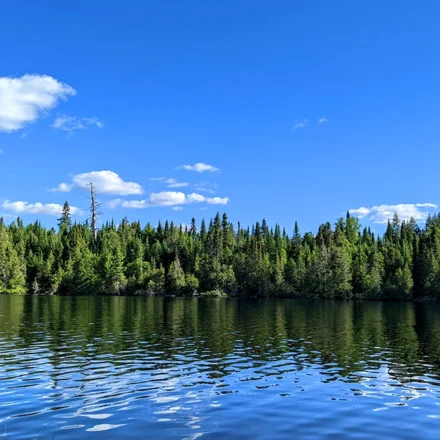













































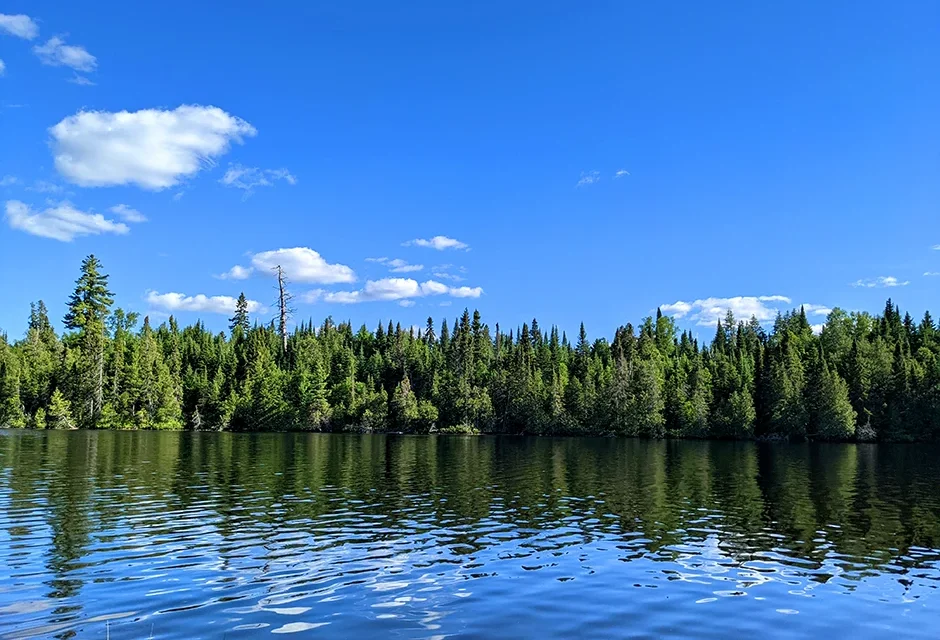




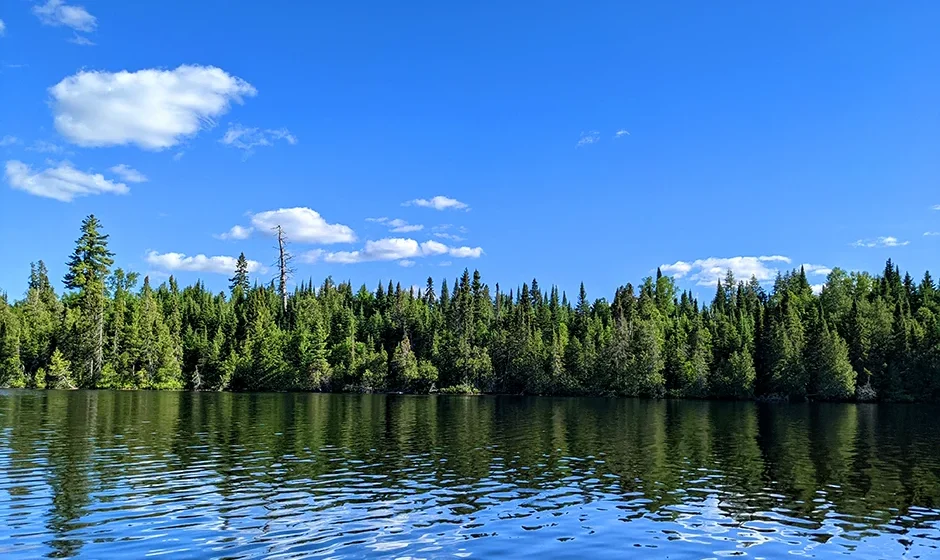

WASHINGTON D.C. & ST. PAUL, MN – The pristine wilderness of the Boundary Waters Canoe Area Wilderness (BWCAW), a jewel of North America’s boreal forest, finds its fate perpetually entwined with the shifting currents of political power. A recent hypothetical Democratic sweep in Congress and a potential change in Minnesota’s gubernatorial office, as envisioned in a past analysis, brought renewed hope for its preservation, signaling a potential reversal of policies that had favored mining interests. This complex interplay of federal and state politics, environmental advocacy, and economic ambition continues to define the future of one of the nation’s most cherished natural landscapes.
The core of the conflict centers on the proposed Twin Metals copper-nickel mine, situated in the Superior National Forest, a critical watershed for the BWCAW. This region holds vast reserves of strategic minerals, but their extraction poses significant environmental risks, primarily due to the nature of sulfide mining. For years, environmental groups have fought fiercely against such projects, while mining proponents highlight the economic benefits and the demand for domestic mineral resources. The legislative and executive branches, both in Washington and St. Paul, have become the battlegrounds for this high-stakes struggle.
A Chronology of Protections and Challenges
The history of the Boundary Waters’ protection is a testament to persistent advocacy and fluctuating political will. Its status as a federally protected wilderness area dates back decades, but the threat of sulfide-ore mining in its watershed has emerged as a defining challenge in recent years.
The Biden-Era Moratorium and its Reversal:
In a significant move aimed at safeguarding the BWCAW, the Biden administration had previously imposed a moratorium on new copper-nickel mining leases within the federally owned Superior National Forest, specifically targeting the watershed that feeds into the wilderness area. This action was a culmination of years of scientific study and public outcry regarding the potential for irreparable environmental damage from sulfide mining. Scientists and environmentalists presented compelling evidence that the extraction process, particularly from sulfide-rich ores, could lead to acid mine drainage, releasing heavy metals and sulfates into the interconnected network of lakes and rivers.
However, this moratorium proved to be a temporary reprieve. Under a Republican-controlled Congress and the Trump administration, efforts were swiftly made to overturn these protections. Representative Pete Stauber, a Republican from Minnesota’s 8th Congressional District, became a vocal champion for the Twin Metals project and the broader mining industry. Leveraging the GOP’s majority in Congress at the time, Stauber successfully spearheaded legislation that would lift the Biden-era moratorium on copper-nickel mining in the Superior National Forest watershed. This legislative victory for mining interests was seen as a significant setback by conservationists, who viewed it as a direct threat to the ecological integrity of the Boundary Waters.
McCollum’s Unwavering Advocacy:
Throughout these political shifts, Representative Betty McCollum (D-4th District, Minnesota) has remained a steadfast advocate for the BWCAW. For years, she has championed legislation aimed at permanently protecting the wilderness area from the threats of sulfide mining. Her efforts reflect a deep-seated commitment to environmental preservation and a recognition of the Boundary Waters’ unique ecological and cultural significance.
With the hypothetical Democratic sweep of Congress, as contemplated in the original analysis, McCollum was poised to reintroduce her protective legislation. "It’s the first thing on the agenda list," McCollum stated in an interview with MinnPost, expressing optimism. "I think there’s a great chance to defend the Boundary Waters." Her renewed legislative push underscores the enduring belief among conservationists that federal action is necessary to ensure the long-term health of this irreplaceable ecosystem.
State-Level Moratoriums and Gubernatorial Uncertainty:
The political fate of the Boundary Waters is not solely determined by federal actions. Minnesota’s state government also plays a critical role, particularly through its permitting processes. Governor Tim Walz had previously implemented a state-level moratorium on all state permitting for the proposed Twin Metals copper-nickel mine and other similar projects on the Iron Range. This executive action provided an additional layer of protection, effectively halting state-level progress for these mining operations.
However, the original analysis raised a critical question about the future of this state moratorium, positing a hypothetical scenario where Senator Amy Klobuchar might become the next Minnesota governor. In this speculative future, Walz’s moratorium was set to expire 90 days after he left office in January, unless Klobuchar chose to extend it. This uncertainty highlighted the precarious nature of even well-intentioned environmental protections, demonstrating how vulnerable they can be to changes in leadership and political priorities at both federal and state levels. The potential for a new governor to either reinforce or dismantle existing safeguards added another layer of complexity to the ongoing battle for the Boundary Waters.

The Heart of the Conflict: Environmental Concerns vs. Economic Imperatives
The debate over mining near the Boundary Waters is fundamentally a clash between two powerful, often competing, visions for the region: one focused on ecological preservation and sustainable recreation, the other on industrial development and resource extraction.
Environmental Arguments: The Irreplaceable Wilderness at Risk
At the forefront of the opposition to the Twin Metals mine are profound environmental concerns rooted in the unique geology of the region and the nature of sulfide-ore mining.
- Sulfide Mining and Acid Mine Drainage: Copper-nickel deposits in the Superior National Forest are found within sulfide-bearing rock. When this rock is exposed to air and water during the mining process, it can react to form sulfuric acid, a phenomenon known as acid mine drainage (AMD). This acidic runoff can leach heavy metals (such as lead, arsenic, copper, and mercury) from the surrounding rock, carrying them into nearby waterways. Unlike traditional iron ore mining, which is common in Minnesota, sulfide mining presents a much higher risk of long-term, self-perpetuating pollution.
- The Interconnected Watershed: The BWCAW is a mosaic of over 1,000 lakes and hundreds of miles of rivers and streams, forming an intricate, interconnected watershed. Pollution introduced at any point upstream in the Superior National Forest has the potential to flow directly into the Boundary Waters, affecting vast stretches of the wilderness. Environmental groups argue that even with modern mitigation techniques, the risk of spills, leaks, or long-term seepage of contaminated water is unacceptably high, especially given the project’s proposed longevity (decades of operation).
- Impact on Wild Rice (Manoomin): Elevated sulfate levels, a common byproduct of sulfide mining, are particularly detrimental to wild rice (Manoomin), a culturally significant staple food for Ojibwe communities and a vital component of the region’s ecosystem. Research indicates that increased sulfates can lead to the release of methylmercury, a potent neurotoxin, which then bioaccumulates in fish and other aquatic organisms. This not only threatens the health of wildlife but also poses risks to human consumers, particularly those who rely on local fish for sustenance.
- Mercury Accumulation: The Boundary Waters already faces challenges with mercury contamination in fish, primarily from atmospheric deposition. Sulfide mining could exacerbate this problem by introducing new sources of mercury and by creating conditions that promote the conversion of elemental mercury into its more toxic methylmercury form.
- Threat to a National Treasure: Beyond specific pollutants, conservationists emphasize the irreplaceable nature of the BWCAW as a federally designated wilderness area. It is a place of profound solitude, unparalleled beauty, and critical ecological importance, supporting diverse wildlife including moose, wolves, and bald eagles. Opponents argue that industrial mining, with its associated infrastructure, noise, and potential pollution, is fundamentally incompatible with the wilderness designation and would permanently alter the character of the region.
Economic Arguments: Jobs, Resources, and Regional Development
Proponents of the Twin Metals mine and similar projects present a compelling economic case, emphasizing the potential for job creation, regional development, and the strategic importance of the minerals.
- Job Creation and Economic Boost: The mining industry argues that these projects would bring hundreds of high-paying, long-term jobs to northeastern Minnesota, a region that has historically relied on resource extraction and faces economic challenges. These jobs would include miners, engineers, and support staff, injecting significant capital into local economies through wages, taxes, and procurement. Twin Metals itself has stated the project would create hundreds of direct and thousands of indirect jobs during construction and operation.
- Domestic Resource Security: Copper and nickel are critical minerals for modern technology, particularly in the rapidly expanding clean energy sector (electric vehicles, wind turbines, solar panels) and for national defense applications. Proponents argue that relying on foreign sources for these minerals carries geopolitical risks and environmental costs, as overseas mining often occurs with less stringent regulations. Developing domestic sources, they contend, enhances national security and promotes a more sustainable global supply chain.
- Responsible Mining Practices: Mining companies assert that modern mining techniques and strict environmental regulations can mitigate the risks associated with sulfide mining. They propose advanced water treatment facilities, comprehensive monitoring programs, and reclamation plans designed to minimize environmental impact. Twin Metals has consistently stated its commitment to operating safely and responsibly, adhering to all state and federal environmental standards.
- Balancing Development and Preservation: Some proponents argue that Minnesota can achieve a balance between protecting its natural resources and fostering economic development. They believe that with careful planning and robust oversight, mining can coexist with environmental stewardship, providing needed resources while safeguarding critical ecosystems.
Legislative Battles and Congressional Dynamics
The path forward for either protecting or developing the Boundary Waters is fraught with legislative hurdles and political maneuvering.
McCollum’s Reinvigorated Push and Congressional Math:
Representative McCollum’s plan to reintroduce her legislation, which would reinstate the mining moratorium, gains significant traction with a solid Democratic majority in the U.S. House of Representatives. Such a majority would make it considerably easier to pass the bill through the lower chamber, a stark contrast to the previous congressional session where Republican control blocked similar efforts.
However, the Senate presents a more formidable challenge. Despite a Democratic majority in the Senate, the legislative filibuster remains a powerful tool for the minority party. Overcoming a filibuster typically requires 60 votes, a threshold that Senate Democrats, with 56 seats, would not reach without significant bipartisan support. This means McCollum’s legislation, even if passed by the House, could languish in the Senate unless a bipartisan coalition forms, or unless alternative legislative strategies, such as budget reconciliation (which bypasses the filibuster but has strict rules), are employed.
McCollum herself acknowledged that the White House could pose the "greatest challenge" in fully reinstating the moratorium, stating, "I know the president is not going to sign (my bill)." This candid assessment highlights a potential disconnect between congressional intent and executive action, suggesting that even with legislative victories, the ultimate fate of the Boundary Waters might hinge on presidential priorities or the possibility of executive orders that could achieve similar outcomes. Her pragmatic approach – "But I’ll cross that bridge when I get to it" – indicates an awareness of the long game and the need for strategic flexibility.
The Broader Permitting Reform Debate: BAAJA and its Controversies
Adding another layer of complexity to the environmental policy landscape is the ongoing debate around permitting reform, exemplified by legislation like the Bipartisan American Affordability and Jobs Act (BAAJA). This bill, or similar efforts, represents a broader push by some lawmakers to streamline the approval process for large-scale infrastructure, energy, and mining projects.
Key Provisions and Intent:
BAAJA sought to constrain reviews under cornerstone environmental laws such as the National Environmental Policy Act (NEPA), the Clean Water Act, the Endangered Species Act, and the National Historic Preservation Act. The stated goal was to accelerate the construction of critical projects, from energy infrastructure to mining operations, by reducing bureaucratic delays and potential legal challenges. Proponents argued that such reforms are essential for economic competitiveness, energy independence, and the rapid deployment of new technologies.

A Divisive Issue for Environmental Groups:
Crucially, BAAJA presented a dilemma for the environmental community, as it aimed to speed up both traditional fossil fuel and mining projects and clean energy initiatives. This dual focus led to a split among environmental organizations:
- Opposition: Groups like the Sierra Club, the Natural Resources Defense Council (NRDC), and Save the Boundary Waters strongly opposed the bill. Their primary concern was that by limiting NEPA and other environmental reviews, the legislation would significantly erode public participation and the ability of watchdog groups to challenge potentially polluting projects in court. They argued that it would effectively "lock in" future leases, including any that might be awarded to Twin Metals, making it harder to protect sensitive areas like the BWCAW.
- Support (for clean energy aspects): Conversely, many clean energy advocacy groups supported the bill, or at least its stated intent to accelerate renewable energy projects. They argued that current permitting processes are too slow, hindering the rapid deployment of solar, wind, and transmission lines necessary to combat climate change. For these groups, the benefits of faster clean energy build-out outweighed the risks of weaker environmental reviews for other industries.
Legal and Political Resistance:
The broad implications of BAAJA drew significant opposition from a coalition of 17 Democratic attorneys general, including Minnesota Attorney General Keith Ellison. They voiced concerns that the legislation would weaken fundamental environmental protections, undermine public input, and potentially lead to increased environmental degradation.
Despite this opposition, Senate approval for such permitting reform bills is often expected, given bipartisan interest in infrastructure development. However, the path through the U.S. House of Representatives can be more contentious. Even some Republican lawmakers expressed concerns about the ambitious expansion of the nation’s electric grid proposed under the legislation, which would involve prodding utilities to establish more long-distance power lines and removing obstacles to running them across state lines. These concerns highlight the complex trade-offs inherent in large-scale infrastructure planning, even among those generally supportive of development.
The Future of the Boundary Waters: A Perpetual Battle
The fate of the Boundary Waters Canoe Area Wilderness remains a poignant barometer of America’s environmental values and political priorities. The ongoing saga of the Twin Metals mine, the shifting stances of federal and state governments, and the broader debate over environmental permitting reform all underscore the enduring nature of this conflict.
The hypothetical scenario of a Democratic-controlled Congress, as discussed in the original article, offered a glimpse of renewed hope for environmental advocates. Representative McCollum’s determined efforts to reinstate a mining moratorium reflect a consistent commitment to wilderness preservation. However, the legislative realities of the Senate filibuster and potential executive branch resistance reveal that even with political momentum, comprehensive protection is far from guaranteed.
Similarly, at the state level, the prospect of a new gubernatorial administration, as envisioned in the original analysis, introduced uncertainty regarding the continuation of vital state-level protections. This dynamic illustrates how local political shifts can have profound implications for environmental policies, complementing or contradicting federal actions.
Ultimately, the Boundary Waters represents more than just a wilderness area; it embodies a struggle over defining the nation’s relationship with its natural resources. It pits the immediate economic demands of resource extraction against the long-term, often intangible, values of ecological integrity, recreational opportunity, and cultural heritage. As political winds continue to shift, the vigilance of advocates, the resolve of policymakers, and the power of scientific understanding will remain crucial in determining whether this irreplaceable wilderness endures for generations to come. The battle for the Boundary Waters is not merely a political one; it is a profound reflection of societal choices about conservation, development, and the legacy we choose to leave for the future.