






































In the current technological climate, the discourse surrounding generative artificial intelligence has become almost exclusively defined by hyperbole. Tech conglomerates are racing to integrate Large Language Models (LLMs) into every conceivable digital surface, often promising a revolutionary "creative partner" or a seamless "search replacement." Yet, for the average Android user, the reality of these tools frequently falls short of the marketing collateral. We are witness to a "steaming hot mess" of hallucinations, erratic reasoning, and a fundamental misunderstanding of what a digital assistant should actually be.
However, beneath the layers of "generative silliness" and the aggressive push for creative brainstorming features lies a core set of functional tools that—when stripped of their LLM-driven pretenses—offer genuine, reliable value. By shifting our focus away from the unreliable search capabilities of Gemini and toward its role as a practical command-line interface for the Android ecosystem, we can reclaim the utility that Google Assistant once promised.
The Problem with the Current Generative Paradigm
The core issue plaguing Gemini and its contemporaries is not the underlying architecture of large-language models, but rather the industry’s insistence on framing them as omniscient sources of truth. LLMs are, by design, predictive text engines; they are not knowledge databases. When they are positioned as replacements for search engines, the results are often catastrophic.

A History of Hallucinations
The industry has seen a troubling string of incidents that highlight the danger of relying on these systems for factual retrieval. From high-profile financial firms pulling reports due to AI-generated errors to legal professionals facing sanctions for citing nonexistent case law, the "hits" keep coming.
- June 2026: KPMG was forced to retract a major report on AI usage due to significant, identifiable hallucinations in the underlying research data.
- Ongoing: Various academic journals have faced internal crises after discovering that authors used generative tools to create entirely fabricated citations and references, leading to widespread retractions.
- Legal Precedents: In Oregon, a federal judge issued a $110,000 penalty against a legal team for submitting documents riddled with AI-generated errors, underscoring the severe real-world consequences of treating these models as reliable information hubs.
These incidents are not "glitches"; they are inherent characteristics of the technology. Expecting an LLM to be an objective arbiter of facts is a fundamental category error.
Shifting Focus: The Practical Utility of Gemini
If we stop asking Gemini to write our poetry or verify historical facts, we find that it excels at mundane, subjective, and task-oriented commands. These are areas where context-awareness and local system control take precedence over creative output. Below, we categorize 21 practical, high-utility use cases that leverage Gemini’s integration with Android to improve daily efficiency.
Part I: Personal Memory and Task Management
The most effective use of any AI assistant is as an extension of the user’s own memory.
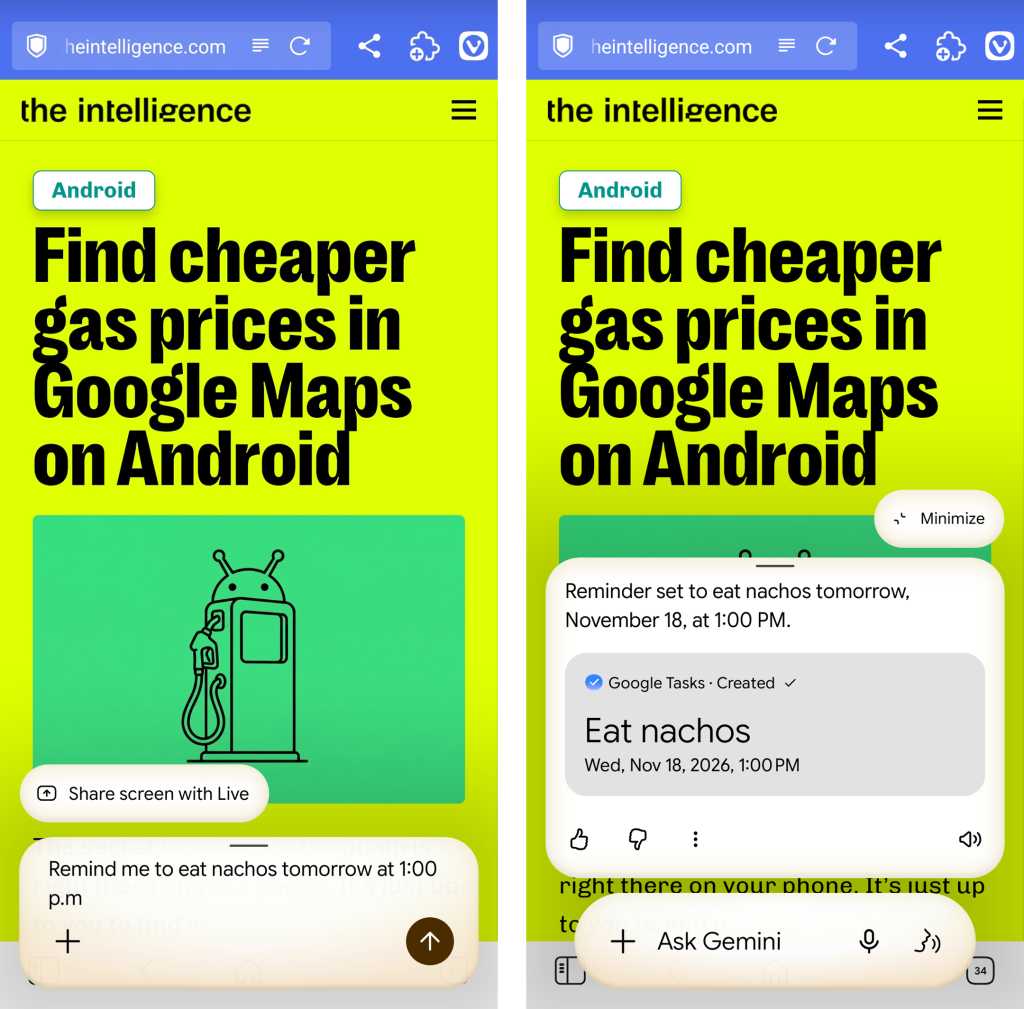
- Dynamic Reminders: Much like the legacy Google Assistant, Gemini is highly effective at managing time-sensitive tasks. A command like "Remind me to submit the quarterly report at 4 PM" is handled with consistent, error-free accuracy.
- Contextual Recall: You can treat Gemini as a private, localized database. By telling it, "Remember that the door code is 90210," or "Remember that my rental car license plate is WIGGLES77," you create a searchable index of personal information that you can query later.
- Note Integration: Gemini functions as a voice-to-text gateway for Google Keep. A simple instruction to "Create a note" allows you to dump information directly into your digital filing system without manual input.
Part II: Spatial Awareness and Scheduling
Navigating the physical and digital world is a cornerstone of mobile utility.
- Location Tracking: When in an unfamiliar environment, asking "Where am I?" provides an immediate, precise address.
- Custom Geofencing: You can "tag" locations for future reference, such as, "Remember this location as the best place to park."
- Navigation and Timing: Beyond simple routing, you can ask, "How long will it take to get to the grocery store right now?" providing real-time utility based on current traffic conditions.
- Agenda Management: Gemini provides a rapid interface for your calendar. Queries like "What is on my agenda for today?" or "When is my next haircut?" yield accurate, non-hallucinated results pulled directly from your synced Google Calendar.
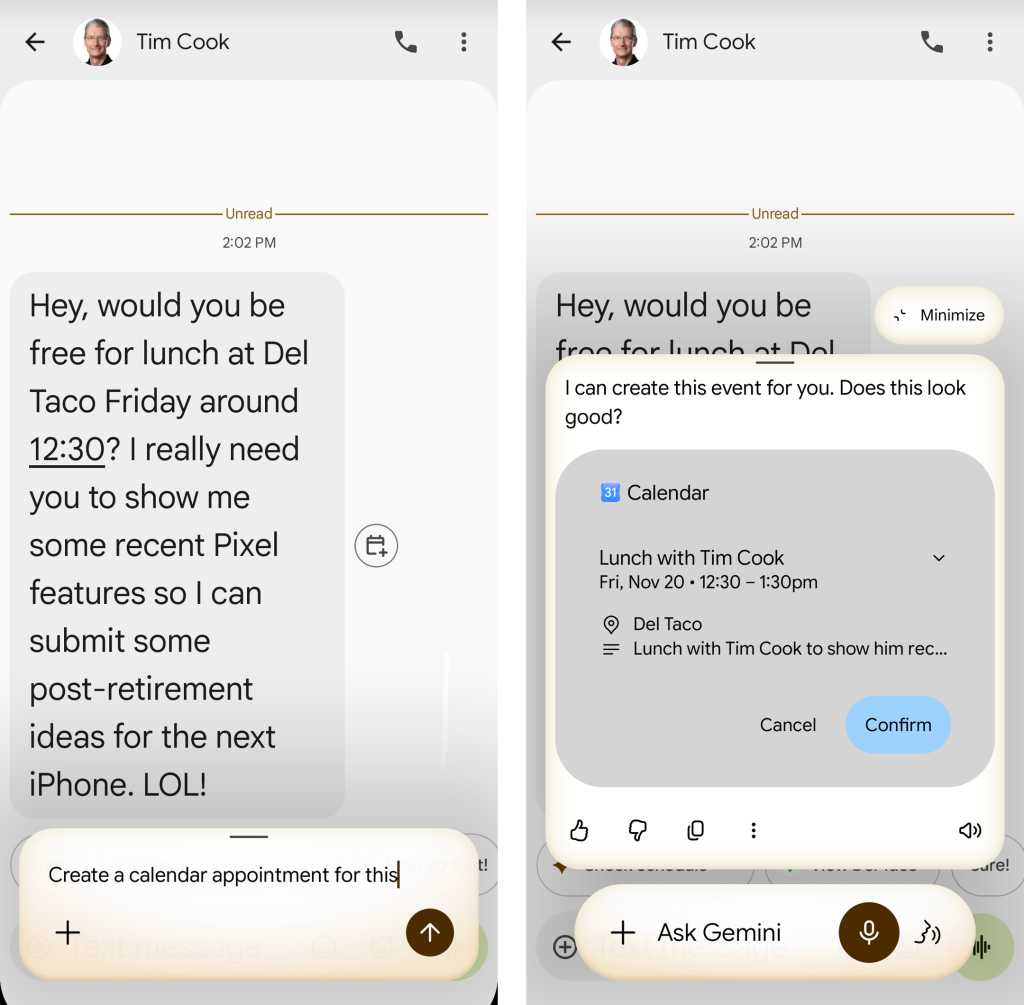
- Contextual Event Creation: Perhaps the most powerful feature is the ability to scrape information from your current screen. If you are viewing a confirmation email for a flight or a dinner reservation, you can command, "Create a calendar appointment for this," and Gemini will intelligently parse the date, time, and location into a new event.
Part III: Intelligent Interactions and Synthesis
While LLMs fail at high-level reasoning, they are excellent at condensing existing data.
- Contact Management: Skip the manual data entry when you receive a business card. By using the camera icon within the Gemini prompt, you can snap a photo of a physical card and instruct Gemini to "Save this as a contact."
- Document Summarization: When reading lengthy PDFs or articles, you can use the Android share menu to send the content to Gemini and ask it to "Summarize this." This is a high-utility, low-risk task that saves significant time.
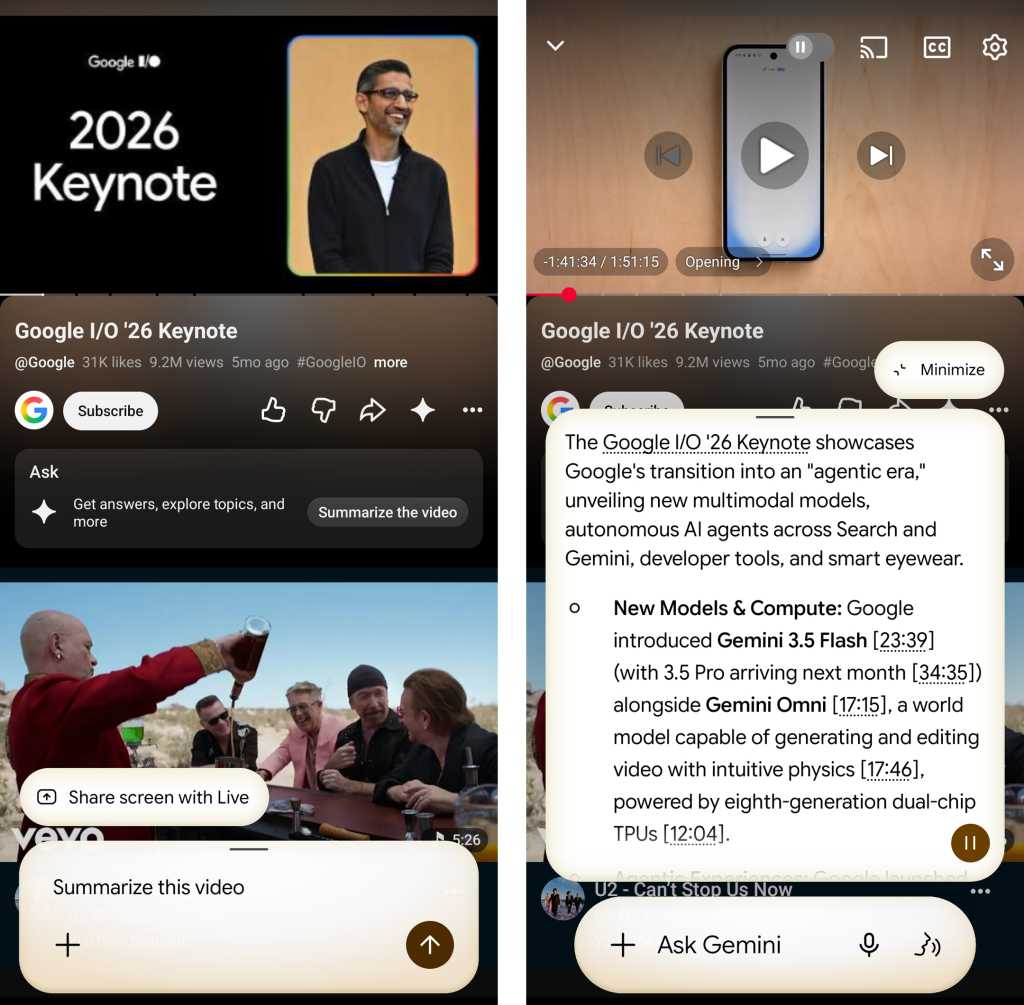
- Video Condensation: YouTube is a primary source of information, but it is time-consuming to consume. Gemini can generate a text summary of a video, allowing you to ascertain the value of a tutorial or lecture without watching the full runtime.
- Inbox Triage: With the Gmail/Google Workspace integration enabled, Gemini can provide a "bird’s-eye view" of your most recent emails, filtering the noise from your inbox.
- Visual Identification: Leveraging the technology behind Google Lens, you can point your camera at plants, landmarks, or objects and ask, "What is this?" to receive an immediate identification.
Part IV: System-Level Control
The final frontier of utility is the ability to bypass the Android UI settings menu entirely.
- Battery Monitoring: A quick "What is my battery level?" provides an instant, accurate status check.
- Screenshot Automation: You can trigger a screen capture via voice, which is helpful when your hands are otherwise occupied.
- Screenshot Retrieval: "Show my screenshots" pulls up your recent captures instantly.
- Communication Efficiency: You can dictate and send text messages in one fluid motion: "Send a text to John saying I’ll be there in ten minutes."
- Hands-Free Dialing: Gemini simplifies the phone interface, allowing you to initiate calls through simple, direct commands.
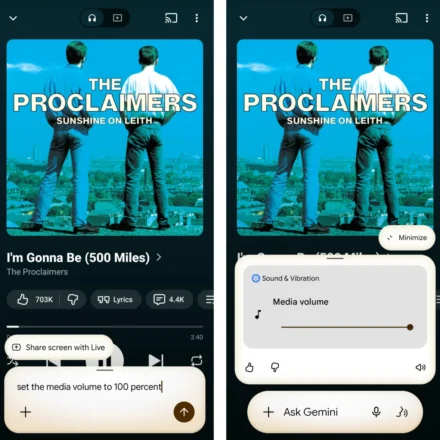
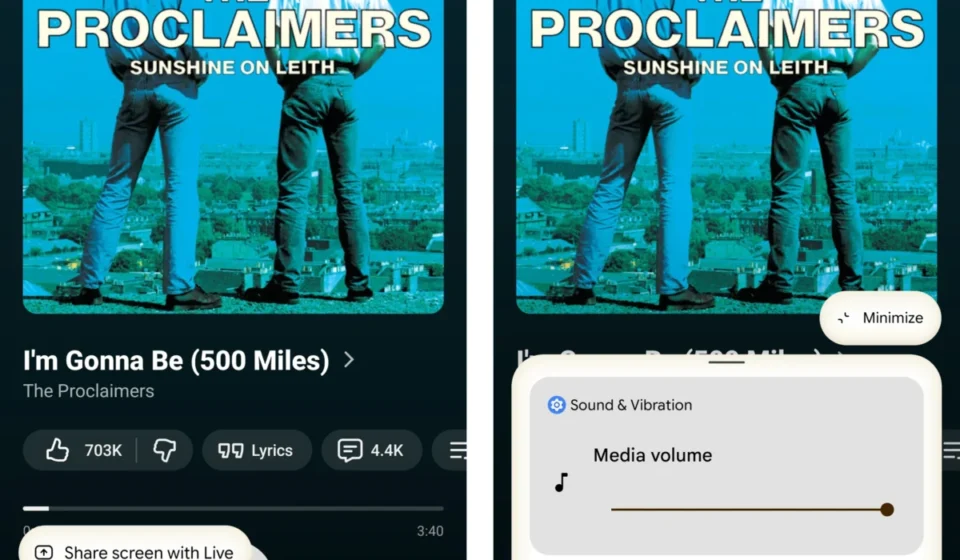
- Audio Precision: Rather than fumbling with physical buttons, you can command Gemini to "Set the media volume to 40%."
- Hardware Toggle: Managing device radios is trivial: "Turn on the flashlight," "Turn off Bluetooth," or "Turn on Airplane mode" are executed instantly.
- System Navigation: If you are hunting for a buried setting, simply ask Gemini to "Open Accessibility settings," and it will navigate to the specific page for you.
Implications for the Future of Android
The transition to Gemini on Android represents a pivotal moment for Google. While the industry is obsessed with the generative "wow factor," the true value for the end user lies in the background integration of these models with the operating system’s API.
The implications are clear: the most successful AI tools will not be those that attempt to mimic human creativity or intelligence, but those that function as invisible, efficient, and reliable interfaces for the devices we already own. By treating Gemini as a sophisticated command-line tool—and avoiding its pitfalls as a source of truth—users can actually reclaim their time, rather than spending it fact-checking an AI that was never designed to be an encyclopedia in the first place.
As we move forward, the metric for success for these technologies should not be the "creativity" of the output, but the friction removed from the user’s daily routine. Gemini is, in its current state, a powerful assistant—provided you know how to ignore the noise and ask the right questions.