
















































The Great Return: Target Mandate and the Revitalization of Downtown Minneapolis

MINNEAPOLIS — For years, the Monday morning rhythm at Corner Coffee in downtown Minneapolis was a quiet affair, a stark reminder of the hushed streets and vacant office towers that defined the post-pandemic era. However, the first week of September 2025 marked a definitive shift in the city’s economic and social pulse. Store manager Mia Pariseau, who had grown accustomed to the slow trickle of remote workers, suddenly found herself at the center of a caffeine-fueled whirlwind.
“We got just slammed,” Pariseau remarked, describing a scene where at least five people remained in line for over an hour straight. “And it was just me and one other person here.”
The catalyst for this sudden surge is located just down the street: Target Corporation’s headquarters. On September 2, the retail giant’s commercial unit began a new mandate requiring employees to work in person at least three days a week. As one of the city’s largest employers, Target’s return-to-office (RTO) policy is doing more than just filling cubicles; it is acting as a primary engine for the long-awaited revitalization of the Minneapolis urban core.
Main Facts: A Corporate Catalyst for Urban Recovery
The resurgence of foot traffic in downtown Minneapolis is not an isolated incident but a calculated result of corporate policy shifts. Target, the second-largest employer in the downtown area behind Hennepin Healthcare, serves as a bellwether for the city’s economic health. When Target’s commercial unit—a massive division responsible for the company’s core business operations—was ordered back to the office, the ripple effects were felt immediately by small business owners and transit officials alike.
According to Kittie Fahey, senior director of advancement for the Minneapolis Downtown Council, in-person work has climbed to nearly 75% of pre-pandemic levels. This figure is expected to rise further as the full impact of Target’s latest policy is realized. The influx of thousands of employees has transformed the "energy" of the city, shifting it from a quiet residential and service hub back toward its roots as a bustling commercial center.
For employees like Madelyn Dunn-Lammert, an associate designer for Target, the transition represents a return to professional normalcy. Having worked primarily remotely since starting her role three years ago, Dunn-Lammert noted that the "vibrant and exciting" atmosphere of the daytime city facilitates a level of collaboration that digital tools cannot replicate.
“Being able to grab lunch with co-workers or work through a project in-person helps build team connections,” she said, emphasizing that for creative fields, the serendipity of face-to-face interaction is an essential resource.
Chronology: From "Ghost Town" to the 2025 Resurgence
The path to this recovery has been long and fraught with setbacks. To understand the significance of the current surge, one must look at the timeline of the city’s vacancy and gradual re-population:

- 2020–2021: The "Ghost Town" Era. Following the onset of the COVID-19 pandemic, Minneapolis saw one of the most dramatic shifts toward remote work in the country. Attorney Jenny Lissarrague, who has worked downtown since 2012, recalls the period as eerie. “I came down here during some of those high pandemic years, and it was a ghost town. It was just nobody.”
- 2021–2022: The Remote Work Peak. In 2021, Minnesota’s share of primarily remote workers stood at 21%, significantly higher than the national average of 17.9%. While other states began aggressive RTO pushes in 2022, Minnesota’s remote share only dropped slightly to 16.9%, as the Twin Cities’ large corporate base—including Ameriprise Financial and Wells Fargo—maintained flexible postures.
- June 1, 2025: The Public Sector Push. The momentum began to shift in early summer when the State of Minnesota required state government employees to spend 50% of their workdays in the office. This move was met with significant resistance, including strike threats from labor unions, but it established a precedent for the "hybrid" standard.
- September 2, 2025: The Target Mandate. The implementation of the three-day-a-week requirement for Target’s commercial unit acted as the final "tipping point" for the downtown ecosystem, leading to the "slam" experienced by businesses like Corner Coffee.
Supporting Data: The Metrics of a Hybrid City
The recovery of downtown Minneapolis is being tracked closely by the Federal Reserve Bank of Minneapolis and the Downtown Council. The data reveals a state that was slow to return but is now catching up with aggressive momentum.
The Top Employer Influence
Of the top 15 downtown employers, 12 have now implemented formal back-to-office policies. This includes:
- Hennepin Healthcare: Maintained a consistent presence due to the nature of medical work.
- Target Corp: The primary driver of the September surge.
- Wells Fargo & Ameriprise Financial: Both have transitioned to hybrid models requiring 2–3 days in the office.
The Transit and Traffic Shift
The data suggests that while the volume of people is returning, the timing of their presence has changed. Kittie Fahey noted that traffic hours are more "spread out" than they were in 2019. Rather than a concentrated 8:00 AM rush, many workers are commuting closer to noon or leaving earlier to finish their day at home. This "flex-commuting" has created a more sustained, albeit less intense, flow of people throughout the day.
However, the transit infrastructure has struggled to keep pace. For commuters like Lissarrague, the reduction in bus routes—a carryover from the pandemic-era budget cuts—has made the physical act of getting downtown more challenging. The "transportation gap" remains one of the primary hurdles to reaching 100% of pre-pandemic occupancy.
Official Responses: Seeking a "24/7" Community
The Minneapolis Downtown Council is optimistic but cautious. Kittie Fahey’s primary concern is ensuring that the return to work translates into a return to living in the city. The goal is to move beyond the "9-to-5" model and foster a community where the 60,000 downtown residents and the commuting workforce engage with the city after hours.
“Go out for lunch, stay after and go meet friends, go do some things,” Fahey urged. “Use all the resources we have.”
The challenge, according to Fahey, is a "chicken and egg" problem regarding the city’s evening economy. During the pandemic, many restaurants and service providers slashed their hours. Today, it is difficult to find a restaurant in the central business district open until 11:00 PM. “That’s crazy different than pre-pandemic,” Fahey noted. Without late-night amenities, workers are more likely to head straight to the suburbs once they clock out, preventing the "vibrancy" from lasting into the night.
State officials have also faced friction. The June 1 mandate for state workers was criticized by labor leaders who argued that remote work had increased productivity and that the RTO push was more about real estate interests than operational efficiency. Despite this, the state has held firm, citing the need for public service accessibility and the health of the state’s capital city.

Implications: The Future of the Urban Core
The return of Target employees marks a new chapter for Minneapolis, but the city that is emerging is fundamentally different from the one that existed in 2019. Several long-term implications are becoming clear:
1. The Death of the "Slow Monday"
Traditionally, Mondays and Fridays were the slowest days for urban retail. With Target and other corporations mandating three days a week, Tuesday through Thursday have become "peak" days, but as Mia Pariseau’s experience shows, even Mondays are seeing a resurgence as workers front-load their office hours.
2. The Evolution of the Skyway System
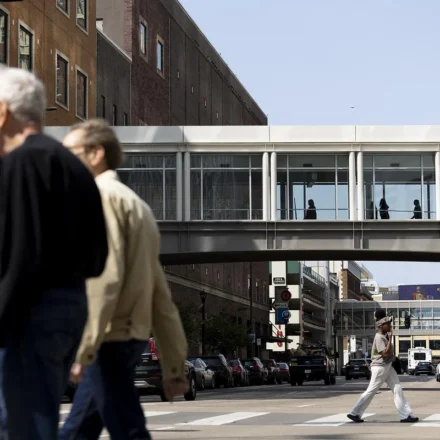
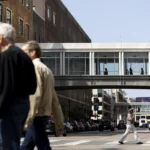
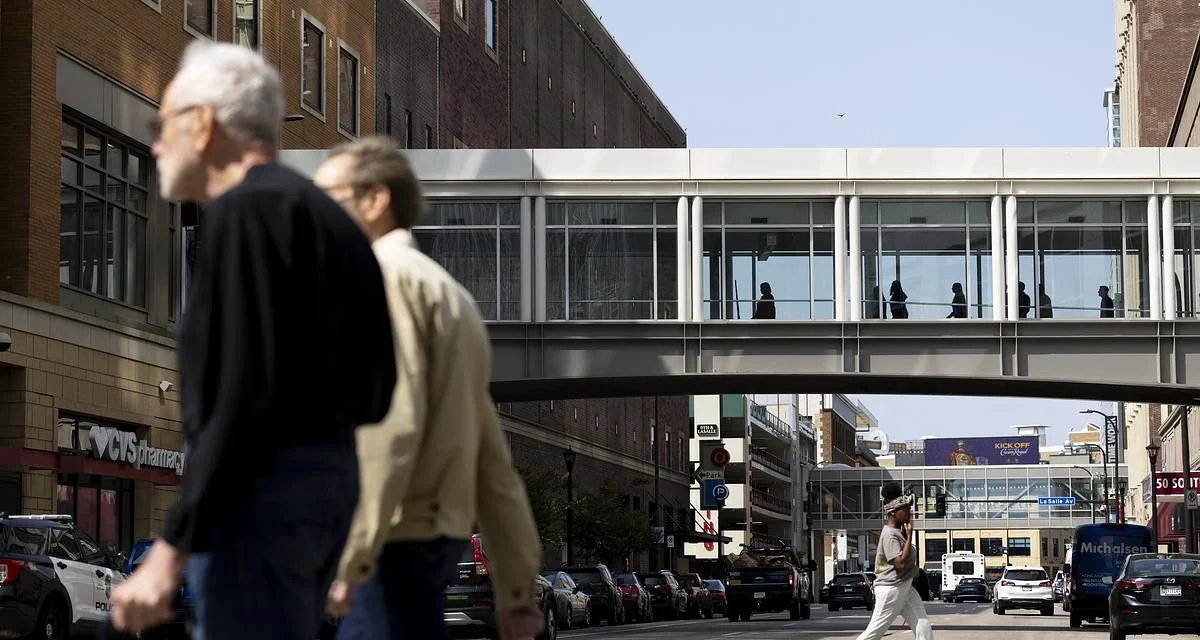
The Minneapolis Skyway System, the largest contiguous system of enclosed second-level bridges in the world, is seeing a rebirth. Once a "ghost town," the Skyways are again becoming the primary arteries for white-collar socialization and commerce. This puts pressure on Skyway-level businesses to expand their staffing and inventory.
3. The "Hybrid" Equilibrium
Minneapolis is unlikely to ever return to a five-day-a-week office culture. The current 75% occupancy rate may represent the new "ceiling." The city’s future economic stability will depend on whether it can diversify its downtown usage—moving away from a reliance on office workers and toward more residential, entertainment, and tourism-based revenue.
4. Small Business Resilience
For entrepreneurs like Pariseau, the current trend is a lifeline. After years of uncertainty, the "slam" of customers represents more than just profit; it represents a return of confidence.
“The future is bright,” Pariseau said, echoing a sentiment that is slowly but surely spreading through the streets of downtown Minneapolis. While the city still faces hurdles—ranging from transit frequency to the late-night economy—the return of its largest corporate citizens has provided the spark necessary to reignite the heart of the Twin Cities.