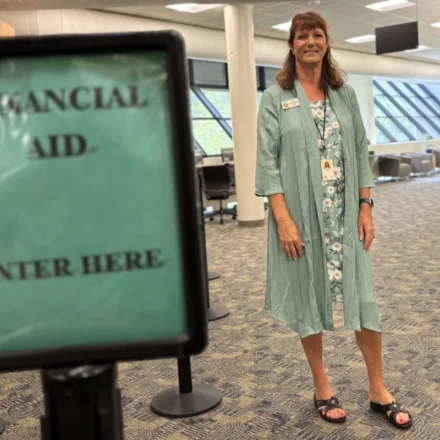













































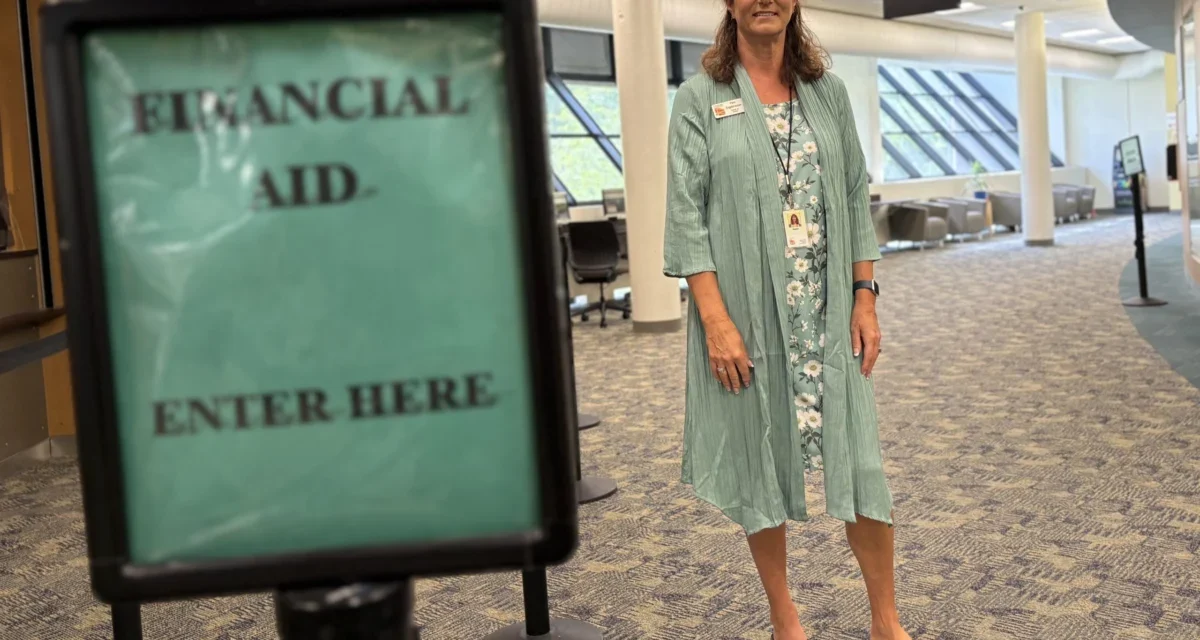





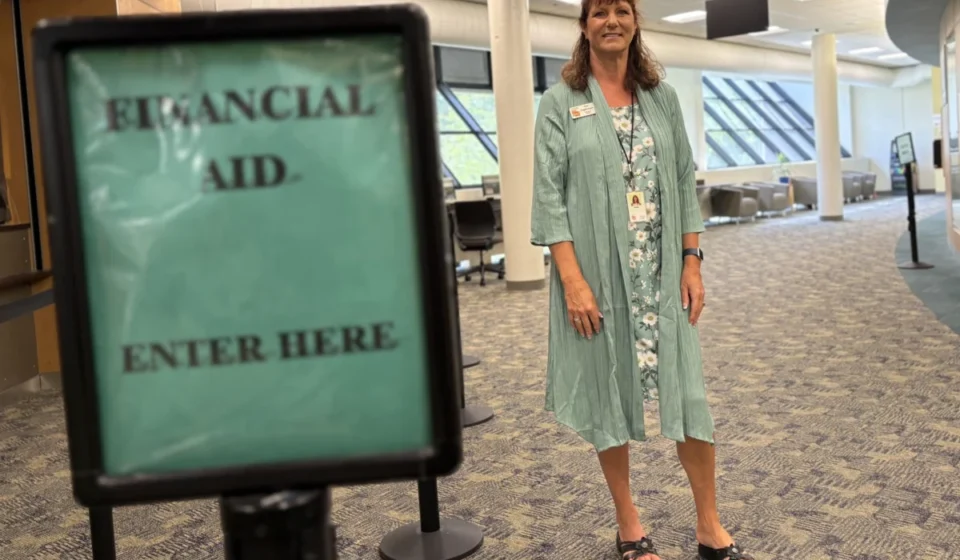

At Century College in White Bear Lake, Minnesota, a quiet, high-stakes battle is being waged behind glowing computer screens. With a student body of roughly 8,700, the institution—like many across the United States—finds itself on the front lines of an escalating financial crisis. Employees here dedicate approximately 60 hours every week to a singular, grueling task: fending off sophisticated criminal syndicates that have turned the federal financial aid system into a lucrative target.
These criminals are not traditional learners. They are "ghost students"—non-existent entities or real people whose identities have been stolen to facilitate fraud. They enroll in online courses just long enough to trigger the disbursement of federal financial aid, only to vanish once the funds hit their accounts. For the staff at Century College and beyond, this isn’t just a bureaucratic hurdle; it is an exhausting, persistent theft of taxpayer dollars and institutional resources.
The Anatomy of the Fraud
The mechanics of the scam are as simple as they are destructive. Perpetrators use stolen or fabricated identities to complete the Free Application for Federal Student Aid (FAFSA). Once admitted under open-enrollment policies common at community colleges, these "students" register for classes. When the U.S. Department of Education distributes financial aid, the college retains the necessary funds for tuition and fees and remits the remaining balance—intended for books and living expenses—to the applicant.
The money disappears into a web of shell accounts, leaving the college to reconcile the loss.
History professor Joe Haker first encountered the reality of this phenomenon three years ago. While reviewing coursework, he noticed a startling pattern: a student in his gender studies class had submitted an assignment that was identical to one turned in by a student in his history course. "I thought, ‘Well, that’s weird. That probably could only happen if they were the same person,’" Haker recalled.

His suspicion proved correct. What began as a curiosity revealed a systemic intrusion; nine of his students turned out to be the same individual. By this past summer, Haker estimated that nearly one-third of his 90 online students were likely fraudulent. "It’s so maddening," he said. "You can’t help but feel very, very strange when you realize that this student you’re devoting time to is just scamming."
A Chronology of Escalation
While financial aid fraud is not a new concept, the scale and sophistication of the problem shifted dramatically around 2021 and 2022. The rapid, necessary expansion of online learning platforms during the COVID-19 pandemic inadvertently opened a "digital door" that criminals were quick to exploit.
"We believe they were testing our system to see how easy it was to get financial aid," said Pam Engebretson, Century College’s director of financial aid. "And the answer was, it was easy."
As the realization of this vulnerability set in, the burden of defense fell almost entirely on the shoulders of individual institutions. In 2023, the Minnesota State system established a work group on enrollment fraud to formalize a response. By the spring of 2026, the issue had reached the Minnesota Legislature, which allocated $3 million to develop an automated identity verification system. While this investment provides a much-needed lifeline, many staff members feel it is a reactive measure for a problem that has already become deeply entrenched.
Supporting Data: The Scope of the Crisis
The financial toll is staggering. The U.S. Department of Education estimates that it has lost nearly $90 million to ghost student schemes. However, many experts suggest this figure is merely the tip of the iceberg.

- National Impact: A Detroit man recently pleaded guilty to a scheme involving 1,300 fraudulent FAFSA claims across 100 schools, resulting in $10 million in losses. A North Carolina woman was sentenced to five years in prison for a similar $3.5 million scheme.
- The California Bellwether: As the nation’s largest community college system, California has become a primary case study. Between 2022 and 2025, its 116 public colleges paid out over $17.5 million in aid to fraudulent accounts.
- The Minnesota Landscape: While the Minnesota State system reported flagging 2,696 suspicious applications in the 2025-26 school year—down from 7,715 the previous year—the true dollar amount lost remains obscured by security concerns. Despite a 2025 letter from U.S. Education Secretary Linda McMahon alleging that 1,834 fake students in Minnesota received $12.5 million, state officials have been unable to verify the source of that data.
At Century College, insiders who requested anonymity suggested that approximately $500,000 was paid out to fraudulent actors in a single academic year. When asked, the college declined to confirm the figure, deferring to the state system office.
The Patchwork Response and Official Stance
The response to this crisis has been uneven, dictated largely by the resources available to individual campuses.
Craig Munson, who oversees information security for the Minnesota State system, acknowledges that the current manual verification process is "a lot of labor." The system’s strategy is to "rightsize" these efforts through new automation while avoiding the creation of barriers that might exclude legitimate, often marginalized, students. "We aren’t satisfied until we get that as close to zero as humanly possible," Munson stated.
However, faculty members on the ground argue that they are left to fend for themselves. Mark Grant, a communication studies professor at Dakota County Technical College, noted that the disparity between campuses is profound. "We have campuses that are doing an enormous amount because they have the resources," he said. "We have campuses that are less equipped because they have less resources."
Some colleges, like Minneapolis College, experimented with outside vendors to verify IDs but eventually returned to internal processes, finding them more effective at identifying evolving fraud tactics. Others, like Normandale Community College, have implemented robust screening software. Since 2023, Normandale has flagged roughly 29,000 applications—a massive undertaking for a school of 11,000 students.

Implications for Higher Education
The implications of this fraud extend far beyond the direct loss of federal funds.
1. The Human and Resource Cost
Every hour spent by a financial aid officer or a professor like Joe Haker vetting an identity is an hour taken away from supporting legitimate students. "We’re taking time that is meant for real students to get an education… and there’s somebody who is working against that," said Susan Ant, director of financial aid at Normandale.
2. Policy and Security Pressures
The federal government has made it clear that while it is providing tools for verification, the ultimate responsibility—and the financial liability for misdirected funds—lies with the schools. This creates a high-pressure environment where colleges must balance strict security measures with the mandate of open-access education.
3. The Booming "Fraud-Tech" Industry
As colleges struggle to keep up, a new market has emerged. Private companies specializing in identity verification, such as AMSimpkins & Associates, have seen explosive growth. Founder Maurice Simpkins notes that he receives inquiries from a dozen or more schools every week. However, he warns that this is an arms race: "Fraud trends change weekly, sometimes daily, sometimes hourly."
4. The Erosion of Trust
Perhaps the most damaging long-term effect is the erosion of trust in the financial aid process itself. When victims of identity theft reach out to financial aid offices, they often discover that their personal information has been used to commit fraud, causing significant personal and legal stress.

Moving Forward: A Systemic Solution
State Senator Heather Gustafson, who sponsored the legislation to address enrollment fraud, views the problem as a critical juncture for Minnesota. She emphasizes that the state is not "open for business" for criminals. "Even if we don’t get it perfect, the more we do, the more it sends the signal that we are not an easy target anymore," she said.
As Minnesota State prepares to pilot its new systemwide verification software, the mood among college staff is one of cautious, desperate optimism. For administrators like Heidi Aldes, the arrival of automated tools cannot come soon enough. "We’re doing everything we can on a local level, and any systemic changes that alleviate some of the manual work would be awesome," she noted.
Until then, the "ghosts" remain in the system—a persistent, phantom presence in classrooms, draining the resources intended to build the next generation of the workforce. For the dedicated staff at colleges like Century, the fight continues, one spreadsheet and one verification at a time.